
 E-Paper



India’s elderly women need better social security cover
The concerns of elderly women find little space in policy, with much of the discourse focussing on health and nutrition for pregnant women & education for girls

 Prefer HTon Google


India’s population is ageing rapidly, and with little social protection, poverty, and destitution, old age is emerging as a new development challenge. As per the India Ageing Report, older persons (above 60 years) currently constitute roughly 10.5% of the country’s population — and are set to reach 20.8% by 2050. This International Day for Older Persons (October 1) should remind us that India is experiencing a feminisation of ageing, i.e., women outnumbering men in the elderly population. Nearly 54% of elderly women outlive their partners compared to only 16% elderly men. There are nearly 1,065 elderly women per 1,000 elderly men, higher in urban areas (1,084) compared to rural areas (1,055).
Women live longer but they typically have higher morbidities, poorer nutrition, and find basic tasks more challenging than men. The bulk of older women are uneducated and lack assets or a regular source of income, making them heavily dependent on family members. Nearly 68.2% of women aged 60-75 years are illiterate, compared to only 40% of men in the same age group. The small number of educated elderly women also lack digital and financial skills, which undermines their financial independence. Pension coverage is extremely low. Only 7.8% of elderly women who have ever worked in the organised sector receive a pension — much lower than the 23.2% figure for men.
The National Social Assistance Programme (NSAP) was launched in 1995 to assist poor households in case of old age or disability. There are currently three schemes for elderly persons under NSAP: the Indira Gandhi National Old Age Pension Scheme (IGNOAPS), the Indira Gandhi National Widow Pension Scheme (IGNWPS), and the Annapurna Scheme. Under IGNOAPS, the Union government provides a pension of ₹200 per month for beneficiaries aged 60-79 years, and ₹500 for those above 80 years. IGNWPS provides ₹300 per month to widows from below poverty line households. State governments also contribute. Consequently, the actual pension received depends upon the combined contribution of the Centre and the states. Sadly, the Centre’s contribution has remained static for years, due to which, pension amounts vary significantly across states and Union territories. Elderly women in states such as Manipur, Nagaland, and Assam receive only ₹200-300 per month as state governments make little or no contributions. On the other hand, elderly women from Andhra Pradesh, Haryana, and Telangana receive much higher pensions due to substantial contributions from the state governments. Pension coverage under the NSAP is also low.
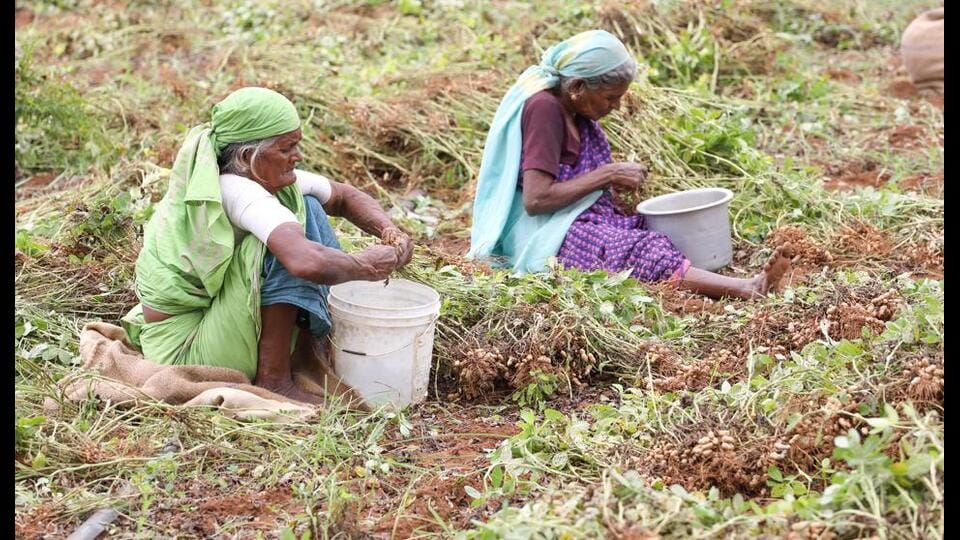
Elderly women play a critical role to the Indian economy through their paid and unpaid care work. They are engaged in agriculture, petty production, and informal jobs. In states such as Kerala, elderly women constituted the bulk of the labour force under the MG-NREGS. According to the Longitudinal Ageing Study in India (LASI), nearly 22% of elderly women are currently working, with the bulk of them engaged in agriculture. They also spend nearly 20 hours per week caring for their grandchildren, husbands, and disabled or dependent family members.
The concerns of elderly women find little space in the policy or political realm. Much of the policy discourse on gender prioritises health and nutrition for pregnant and lactating mothers and education for girls. The health and financial concerns of older women are rarely discussed. In recent years, women have also emerged as an important political force, and many governments have instituted cash transfer programmes. These welfare schemes provide monthly assistance of ₹1,000-1,500 to women aged 18-65 years leaving out older women, often living with chronic disability or disease. This is a lopsided welfare model that favours younger/relatively younger women.
This should serve as a wake-up call regarding the challenges elderly women face. First, elderly women must be viewed not as dependents, but as active contributors to the economy. Second, governments at all levels must assume greater responsibility for caring for older citizens, notably elderly women, often living in poverty and destitution. India urgently needs a universal social pension that is inflation indexed for older persons, particularly older women, who lack economic independence. It also needs a comprehensive care programme that includes health, nutrition, and social protection for elders, particularly women living alone in rural areas.
Malancha Chakrabarty is a senior fellow at the Observer Research Foundation, and is a member of the NITI Aayog’s Committee to develop a Comprehensive Strategy for Senior Citizen Care in India. The views expressed are original


