Key changes to the country’s main anti-graft law, passed by both houses of Parliament in the current session, make bribe-giving a clear offence, require the police to obtain permission before probing an official and redefine “criminal misconduct” by a public servant.
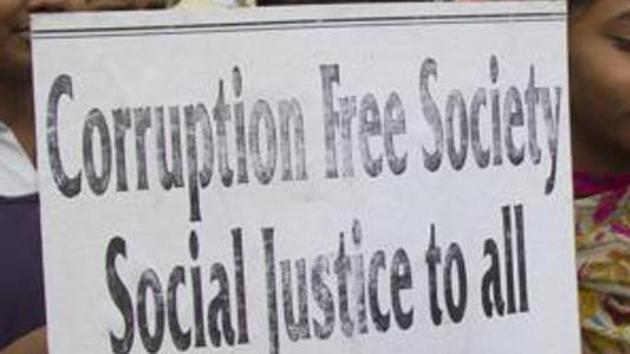
The Prevention of Corruption (Amendment) Bill, 2018, which amends the 1988 Act, was originally tabled in 2013. It was then referred to a select committee of Rajya Sabha, which gave its report on August 12, 2016. It had been pending since then.
The tweaked law inserts a new section, 17A, requiring a police officer to obtain prior permission of a relevant authority before launching an anti-graft probe against government officials. The relevant authority will have to give or deny permission to police within three months, which may be extended by one more month.
Police, however, will not need permission in cases that involve arresting an official “on the spot” for “accepting or attempting to accept” a bribe.
Under the new law, anybody offering a bribe is liable to be jailed for up to seven years, along with a fine. This will not apply to a person who can prove he was “compelled” to give a bribe and reports the matter within seven days. The new law protects officials and will speed up the decision-making process, some say.
“There were little safeguards in the earlier law to protect honest officials,” said KM Abraham, former chief secretary of Kerala. According to him, one of primary reasons for delay in decision-making was that a bureaucrat “could be at the mercy of anybody while taking financial decisions, especially in matters of procurement done through bidding”.
{{/usCountry}}“There were little safeguards in the earlier law to protect honest officials,” said KM Abraham, former chief secretary of Kerala. According to him, one of primary reasons for delay in decision-making was that a bureaucrat “could be at the mercy of anybody while taking financial decisions, especially in matters of procurement done through bidding”.
{{/usCountry}}Others disagree. “The bureaucrats are already adequately protected. Investigating authorities need sanction for prosecuting an official. The moment you are required to take permission to even launch a probe, then you are pre-empting the probe itself,” said Supreme Court lawyer Gyanand Singh.