New Delhi: The 2023-24 Economic Survey, tabled in Parliament on Monday, called for adaptive strategies and policies to provide cost-effective and sustainable housing. It noted that the demand for affordable housing will increase as the United Nations estimates that more than half of India’s population will live in urban areas by 2050, compared to 31% in 2011.
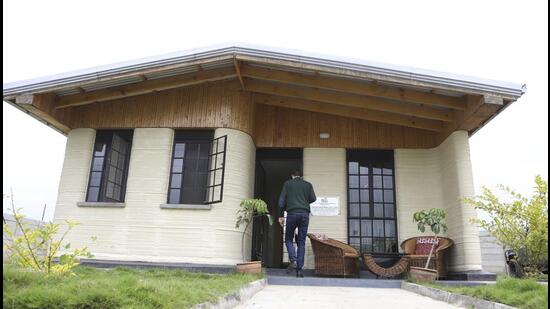
The survey said the real estate sector witnessed “a robust recovery” post-pandemic, with the sale of residential real estate in 2023 recording a 33% year-on-year growth, the highest since 2013. This growth was propelled by “rapid urbanisation, rising incomes, the emergence of nuclear families, new entrants in the market, and improved financial options for developers and homebuyers. The strong desire for home ownership was reinforced during the pandemic, acting as a catalyst.”
While projecting a positive outlook, the survey also noted that legacy stalled projects were a “challenge”.
The survey noted that Affordable Rental Housing Complexes (a sub-scheme of Pradhan Mantri Awas Yojana-Urban or PMAY-U) were being implemented for the first time in the country to improve living conditions and help urban migrants and the poor living in slums, informal settlements, or peri-urban areas.
It said 5,648 houses have been made operational, and another 7,413 were in process. Approvals for 82,273 new units have been approved for seven states. Construction of nearly half of those units started with an additional technological innovation grant of ₹173.89 crore. Of these, 3,969 houses have been built in Sriperumbudur in Tamil Nadu.
{{/usCountry}}It said 5,648 houses have been made operational, and another 7,413 were in process. Approvals for 82,273 new units have been approved for seven states. Construction of nearly half of those units started with an additional technological innovation grant of ₹173.89 crore. Of these, 3,969 houses have been built in Sriperumbudur in Tamil Nadu.
{{/usCountry}}The survey said over 11.8 million houses have been sanctioned, of which about 11.4 million have been grounded for construction and more than 8.4 million have been completed as part of the (PMAY-U) since 2015. It added the scheme got a push after Narendra Modi assumed the prime minister’s office for the third time and announced another 10 million urban houses under the scheme at the first Cabinet meeting.
The survey noted the challenge for approximately 410,000 housing units whose construction has been stalled primarily due to financial lapses and legal disputes. It added the Union housing and urban affairs ministry has established a committee to recommend solutions for completing stalled projects to address this issue, and the recommendations are being followed to achieve a steady remedy.
It stated that single window clearance systems for construction would lead to shorter timelines for government initiatives to digitise land records, improve transparency in land transactions, diminish property ownership conflicts, and enhance the efficiency of land management. It added that a single window should address the growing demand.
The survey said that as of June 8, multi-sectoral projects worth around ₹1.64 lakh crore had been undertaken under the Smart Cities Mission. The mission was poised to adopt tech-based solutions to urban management. However, statistics given in the survey showed that a large chunk of funds spent and projects completed were in the conventional sectors of waste, sanitation and hygiene, and public spaces.
The survey noted that efficient planning, robust project frameworks, and strengthening urban local bodies could prepare cities to create the necessary infrastructure to cater to the expected rise in population while emphasising that ring-fenced revenue streams can help civic bodies access the necessary funding mechanisms and credit and capital from the market.
Commenting on the survey, Srikanth Vishwanathan, CEO of Janaagraha, a non-profit trust working on city systems, said the reference to the urban sector is a mixed bag. “It does not do full justice to one of India’s most critical yet underserved public policy agendas, transforming India’s cities, given that over 800 million Indians are expected to live and work in cities by 2050. Cities are not an infrastructure sector alone nor merely labour or consumption markets. Cities are distinct units of economy, governance and human development.”
He added that the vision of Viksit Bharat 2047 can only be accomplished if Indian cities compete globally, attract capital and talent, and drive economic productivity and job creation. “We therefore need a separate chapter on cities in the future editions of the Economic Survey to delve into the 3 Es of economic growth and jobs, equitable access to opportunities and services, and environment sustainability,” he said.