
 E-Paper



Chhattisgarh: About 80% of registered APL families took benefits of PDS
Chhattisgarh has a universal PDS and everyone is entitled to benefit from the system. In June 2019, the state government decided to provide rice at subsidised prices to APL families in the state.


About 80% of above poverty level (APL) families in Chhattisgarh have accessed ration shops for rations distributed under the public distribution system (PDS) during the Covid-19 lockdown, according to figures from the state government.
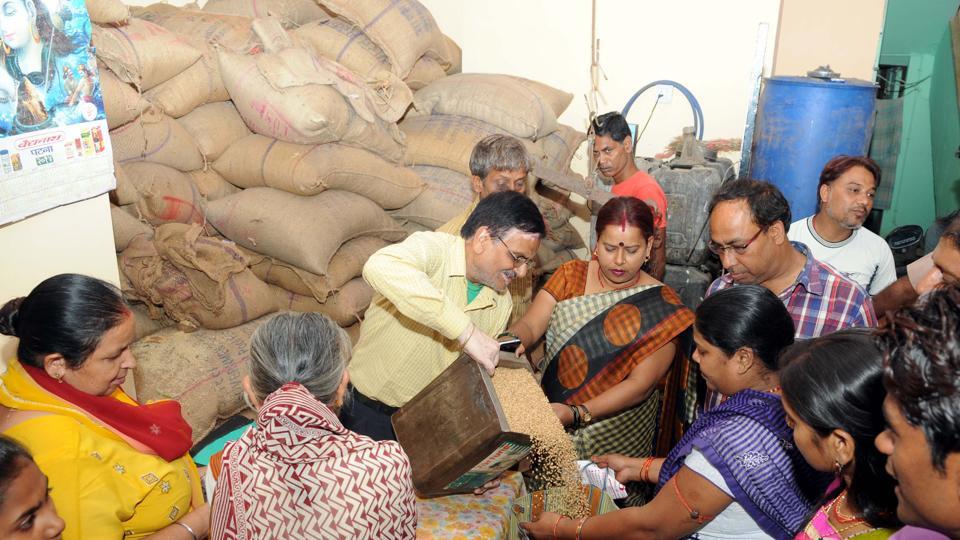
Senior officers believe there was an increase in registration of APL and blow poverty line (BPL) families since large numbers of migrant workers returned to Chhattisgarh from other states, and the average increase in purchase of PDS rations by APL families shows that the quality of rations is good and no hoarding has taken place.
People who get ration at Rs1 per kg under the National Food Security Act, Antyodaya Anna Yojana and a state government scheme for disabled come under the BPL category and people who take ration at Rs10 per kg are considered as APL families.
Chhattisgarh has a universal PDS and everyone is entitled to benefit from the system. In June 2019, the state government decided to provide rice at subsidised prices to APL families in the state.
Food and civil supplies secretary Kamalpreet Singh said that though there is no concept of BPL and APL families since the implementation of the National Food Security Act, the state government has categorised families according to the rate at which rations are provided since everyone in Chhattisgarh benefits from PDS.
“In Chhattisgarh, the National Food Security Act is being implemented but it doesn’t cover everyone. Plus, we give double the rations [allocated under] the Act. We have two other schemes – Antyodaya Scheme and a scheme for disabled people – and they all get rations for Rs 1 per kg,” he said.
“The second category is for the middle class, where people can register themselves and can get rations at Rs10 per kg. They are considered as APL,” Singh said, adding that 2.47 crore people are provided rations under PDS in the state.
APL card holders who went to ration shops during the lockdown said they were saving money since the government was providing rations at a subsidy.
“I am from a middle-class family. I am in a private job and have an APL card. I picked up 70 kg of rice from a ration shop during the lockdown because I wanted to save money,” said Sattu Chandrakar, a resident of Raipur.
Official figures show that in January, the total number of APL cards was 838,719 and rations were distributed to 613,405 card holders. In February, the number of APL cards increased to 862,197 and rations were provided to 655,936 card holders.
In March, the number of APL cards again increased to 869,405 and rations were distributed to 661,334 card holders. In April, the number of cards was 881,028, and rations were provided to 744,848 people, and the number of cards in May was 894,637 and rations were given to 688,496 people.
The figures show the number of APL cards has been increasing every month and more people in this category are going to ration shops to buy grains under PDS.
An average of about 80% of APL cards holders were provided rations in March, April and May, with March recording the highest figure of about 84% of the total APL cards.
On the other hand, registration of BPL category families has increased because of migrant workers returning to the state and an average of 97% of registered families are getting rations under the scheme, a senior officer said.
Commenting on the figures, Singh said: “About 80% of APL families reached ration shops. There are reports that people went to ration shops in cars. We believe that PDS works in times of crisis and secondly, the quality of rice has improved and that is why APL families preferred using PDS rations during this lockdown.”
“We have distributed about 14 lakh metric tonnes of rice under PDS till now, of which the Central government’s share is about 50%,” he added.
-kW0H-U20214218012MgB-250x250%40HT-Web.jpg)


