New Delhi: Even though External Affairs Minister S Jaishankar has known his Chinese counterpart Qin Gang during his tenure as Indian Ambassador to Beijing in the past decade when the latter was first head of external publicity and then the chief of protocol, their first meeting was cautious with focus on bringing back peace and tranquility on the 3488 km still to be demarcated border.
While Minister Qin, who is known to have the ears of President Xi Jinping, was apparently hesitant in his new role as China’s Foreign Minister, EAM Jaishankar made it quite evident that present bilateral ties were abnormal and detrimental to the past peace and tranquility agreements and mechanisms.
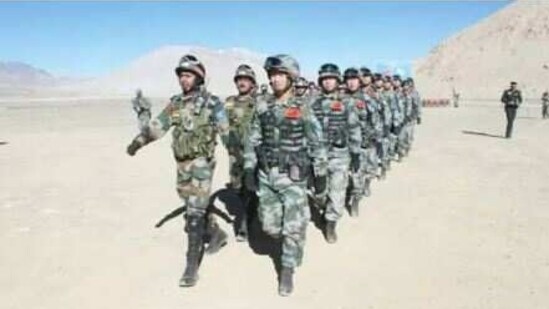
Eversince the PLA unilaterally tried to change the ground situation in May 2020 with transgressions in north Pangong Tso, Gogra-Hot Springs, Khugrang nullah and Galwan Valley, the two armies are locked in a stand-off in East Ladakh with men, missiles, rockets and armor on both sides. While the potential explosive situation on the 1597 km long Line of Actual Control (LAC) has been averted with both armies creating buffer zones or no patrolling areas on all the friction points, there has been no de-escalation of forces on either side for the past three years. In fact, the Indian Army was forced to strengthen its deployment in the middle and eastern sector of the LAC with the PLA bringing in additional troops before the 20th National Congress of the Chinese Communist Party last October. These additional forces are still to return to their barracks though some thinning of PLA forces has been seen across the easternmost side of the border across Arunachal Pradesh.
However, the key to resumption of normal bilateral ties between the two countries lies in PLA allowing resumption of legitimate patrolling rights of Indian Army in Depsang Plains in Daulet Beg Oldi (DBO) sector and at Charding Nullah junction in Demchok area in East Ladakh followed by de-escalation.
{{/usCountry}}However, the key to resumption of normal bilateral ties between the two countries lies in PLA allowing resumption of legitimate patrolling rights of Indian Army in Depsang Plains in Daulet Beg Oldi (DBO) sector and at Charding Nullah junction in Demchok area in East Ladakh followed by de-escalation.
{{/usCountry}}Fact is that with the Indian Army used to high altitude deployment since Operation Meghdoot in Siachen on April 13, 1984, the officers and troopers are gung-ho in East Ladakh and prepared to contest every inch of Indian territory. Pressure is now on the PLA, which has deployed conscripts in frozen East Ladakh for the past three years without any relief. The weather in East Ladakh is extreme with howling winds, below zero temperatures and direct sun in a land devoid of trees and grass.
Even though both the countries are constantly in touch with each other through institutionalized military and diplomatic channels, the Narendra Modi government is clear that the PLA must reverse its aggression all along the LAC and de-escalate forces to the past levels. The national security planners are constantly monitoring the situation on the LAC and will defend Indian territory but without provoking the other side despite taunts from the Indian opposition parties especially Congress. With both sides in dialogue while holding positions on ground, it is a long haul to peace and tranquility.