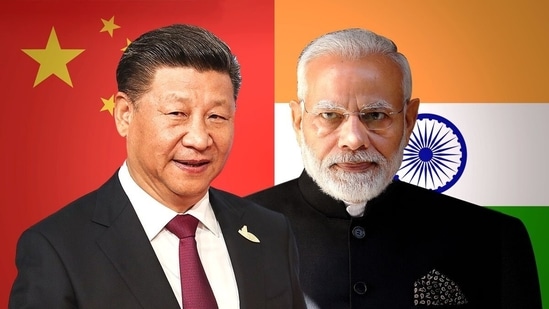
For all the Chinese talk about Prime Minister Narendra Modi reaching a “consensus” with President Xi Jinping at the G20 Bali summit dinner on stabilizing relations, the issuance of stapled visas to Indian Wushu athletes from Arunachal Pradesh for the Chengdu games shows that Beijing wants to keep bilateral ties permanently on the edge. Basically, consensus on Chinese terms.
While India has rightly decided to pull out the entire Wushu team from University games as a mark of protest on stapled visas, the Chinese decision is part of its wolf warrior diplomacy that began in August 2010 when they refused to issue a visa to the then Northern Army Commander Lt Gen B S Jaswal for military dialogue stating that Jammu and Kashmir was disputed territory.
Even though much has been made out of the Chinese readout of meeting between National Security Advisor Ajit Doval and his Chinese counterpart Wang Yi on the sidelines of the BRICS NSA meeting in Johannesburg, fact is that since there was no agreed text, Beijing and New Delhi can interpret the meetings on their own terms and issue a statement. The same happened during External Affairs Minister S Jaishankar’s meeting with Wang Yi in his Foreign Minister avatar on the sidelines of the G-20 Ministerial in Bali. EAM Jaishankar described the meeting in a simple tweet, while Beijing issued a multi-page statement. Simply put, “consensus” is the Chinese description, perhaps mischievous, of PM Modi's informal exchange with President Xi Jinping over the dinner table and may have to do with the Chinese leader’s visit to India for the G-20 summit in September. New Delhi, on its part, is not even wasting a breath on this description of bilateral ties as there was no agreed text, just a positive mandarin spin on an informal meeting.
However, India has taken the stapled visa issue very seriously as clearly with China the more things change, the more they remain the same with Beijing not moving a millimeter from its stated past positions on the LAC, Arunachal Pradesh or CPEC in Occupied Kashmir via Shaksgam Valley, illegally ceded by tributary state Pakistan to the Middle Kingdom. But the matters have got more complicated since the 2017 Doklam stand-off on India-Bhutan-China trijunction and after the May 2020 PLA belligerence on Pangong Tso in East Ladakh as Beijing threw out the 1993 and 1996 bilateral agreements out of the window.
{{/usCountry}}However, India has taken the stapled visa issue very seriously as clearly with China the more things change, the more they remain the same with Beijing not moving a millimeter from its stated past positions on the LAC, Arunachal Pradesh or CPEC in Occupied Kashmir via Shaksgam Valley, illegally ceded by tributary state Pakistan to the Middle Kingdom. But the matters have got more complicated since the 2017 Doklam stand-off on India-Bhutan-China trijunction and after the May 2020 PLA belligerence on Pangong Tso in East Ladakh as Beijing threw out the 1993 and 1996 bilateral agreements out of the window.
{{/usCountry}}In this context, the Narendra Modi government is under no illusions about expansionist China as there is PLA posturing all along the 3488 km LAC as well as the Indian Ocean, where Chinese surveillance and ballistic missile tracking ships are busy mapping route and ocean floor for Chinese nuclear submarines in the near future. Even though New Delhi has not found any evidence of Chinese involvement in the Manipur violence, this aspect cannot be ruled out as the Indian Army will be forced to pull-out troops from the eastern sector if ever the worst case scenario takes place in either of the seven North-eastern states.
Given the weak control of Myanmar junta and Army on its western borders, India has no options but to fence the 1300 km long border or else face the deluge of synthetic drugs and heroin from liberated zones within Burma and arms from Yunnan province of China. One must remember that a number of armed extremist groups within Manipur have linkages to China and that international pariah Myanmar only receives international support from Beijing in return for its precious national resources and strategic geographical location.
With PLA making inroads into Bhutanese territory through infra expansion along Amu Chu (which is called Teesta river in India), New Delhi has a number of security concerns with China and the relationship is anything but stabilized or even headed towards stabilization. The PLA posture both in western and eastern sector is dominant if not a threat to India. Perhaps, the only thing that Chinese want is Indian business and businessmen who are looking towards cheaper products from Beijing for use in India without even so much as a glance on mounting bilateral trade deficits in favour of the adversary. Now that China has opened for business after 2020 coronavirus with clear cut origins in Wuhan, New Delhi has a leverage on visas provided it chooses to exercise it.