...
...
Next Story

Climate report unlikely to lead to extra efforts

A senior environment ministry official, who has been part of the climate negotiating team for long, said the IPCC report will not alter India’s climate negotiating strategy.

Updated on: Aug 10, 2021 02:37 AM IST
By , Hindustan Times, New Delhi
Prefer HTon Google
Advertisement

The Intergovernmental Panel on Climate Change (IPCC) report on Monday, which said that extreme weather events have increased due to the rise in carbon emissions and the planet will reach 1.5 degrees Celsius warming threshold much earlier than anticipated, may not result in higher ambition at the Glasgow climate conference in November, said experts on climate change negotiations.
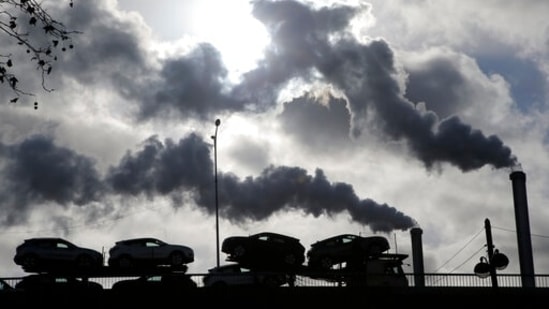
PREMIUMIndia and China, the world’s two biggest emitters have opposed net zero, saying it would go against the United Nations Climate Framework that provides for differentiated responsibility among developed and developing world and equity to carbon space. (AP | Representational image)
India and China, the world’s two biggest emitters have opposed net zero, saying it would go against the United Nations Climate Framework that provides for differentiated responsibility among developed and developing world and equity to carbon space. (AP | Representational image)

IPCC’s Physical Science Basis report, the first of its three sixth assessment report, tells the world that oceans could rise by 1-2

The report clearly mentioned that limiting temperature rise to 1.5 degree Celsius by turn of the century is becoming beyond reach. “Earlier, we had given 20 years for 1.5 degree temperature rise, now it is 10 years,” he said, adding that carbon emissions have already increased the temperature by 1.1 degree Celsius in the last 100 years. So, the world has window for only 0.4 degree C.

To ensure that window remains open, Bala said the five scenarios presented by the report clearly show that there is no longer an option of a peaking year (when a country’s carbon emissions would peak) available with the planet to save it from dramatic danger of climate change.

“We have to go for emission reduction and that is net zero,” he said.

In the net zero concept, the world, as a whole, theoretically, will stop emitting carbon dioxide by 2050. A country will be able to emit carbon equal to the carbon sinks it has and the amount of carbon credits it can buy.

Several European countries such as France, United Kingdom and Sweden have brought law to achieve net zero by 2050 and many others are on way to have similar laws.

However, India and China, the world’s two biggest emitters have opposed net zero, saying it would go against the United Nations Climate Framework that provides for differentiated responsibility among developed and developing world and equity to carbon space. Net zero, they said, would impose binding restrictions on the developing world, which is historically not responsible for the problem of climate change.

Sunita Narain, director general of Centre for Science and Environment (CSE) said net zero was zero gain for developing countries as it would benefit the rich world, which has already exhausted its carbon space, and the developing world would continue to suffer in the absence of free technology transfer. “This report from global scientists must be a wake-up call. We can no longer lose time in prevarication or in finding new excuses not to act—including empty promises of net zero by 2050,” she said.

Bala, however, said climate science supports net zero as the world cannot look at 2 or higher degree C climate scenarios anymore. “We have to aim for 1.5 degree temperature rise. Time to first allow emissions to rise and then reduce is not there.”

A senior environment ministry official, who has been part of the climate negotiating team for long, said the IPCC report will not alter India’s climate negotiating strategy. “It is clear to us and several other developing countries that the Glasgow conference is to make Paris agreement operational. That will happen,” the official said. He added that the review of the target under the Paris climate deal would happen in 2023-24 and anything before that would depend on enhanced climate finance by the developed world.

Climate talks have got more impetus in 2021 with appointment of John Kerry as US President Joe Biden’s special climate envoy. Kerry, since taking over in March, has visited several important countries for climate talks including biggest carbon emitters after United States, China and India. The US is keen to have higher ambition for Paris agreement, which becomes operational from January 2022.

Kerry was in New Delhi in April 2021 for three days, but environment ministry officials said former environment minister Prakash Javadekar was very clear that the net zero concept was alien to the Paris agreement.

Dr. Arunabha Ghosh, CEO of Council on Energy, Environment and Water, said, “Given that India is one of the most climate-vulnerable countries, we must recognise that even geographically faraway climatic changes can have consequences for our monsoons and intensity of extreme events. India should nudge the international community to capitalise a Global Resilience Reserve Fund to help lower the peaks of climate risks for the most vulnerable countries and create an insurance cushion against severe climate shocks.”

The Intergovernmental Panel on Climate Change (IPCC) report on Monday, which said that extreme weather events have increased due to the rise in carbon emissions and the planet will reach 1.5 degrees Celsius warming threshold much earlier than anticipated, may not result in higher ambition at the Glasgow climate conference in November, said experts on climate change negotiations.

PREMIUMIndia and China, the world’s two biggest emitters have opposed net zero, saying it would go against the United Nations Climate Framework that provides for differentiated responsibility among developed and developing world and equity to carbon space. (AP | Representational image)
India and China, the world’s two biggest emitters have opposed net zero, saying it would go against the United Nations Climate Framework that provides for differentiated responsibility among developed and developing world and equity to carbon space. (AP | Representational image)

IPCC’s Physical Science Basis report, the first of its three sixth assessment report, tells the world that oceans could rise by 1-2 feet even in one of the better scenarios (it considered five) by turn of this century, and heat waves occur 14 times as often if warming touches 2 degrees C.

“The report tells us, we have a small window to act,” said Govindasamy Bala, professor at the Center for Atmospheric and Oceanic Sciences in Indian Institute of Sciences, Bangalore, and one of the lead authors of the report.

The report clearly mentioned that limiting temperature rise to 1.5 degree Celsius by turn of the century is becoming beyond reach. “Earlier, we had given 20 years for 1.5 degree temperature rise, now it is 10 years,” he said, adding that carbon emissions have already increased the temperature by 1.1 degree Celsius in the last 100 years. So, the world has window for only 0.4 degree C.

To ensure that window remains open, Bala said the five scenarios presented by the report clearly show that there is no longer an option of a peaking year (when a country’s carbon emissions would peak) available with the planet to save it from dramatic danger of climate change.

“We have to go for emission reduction and that is net zero,” he said.

In the net zero concept, the world, as a whole, theoretically, will stop emitting carbon dioxide by 2050. A country will be able to emit carbon equal to the carbon sinks it has and the amount of carbon credits it can buy.

Several European countries such as France, United Kingdom and Sweden have brought law to achieve net zero by 2050 and many others are on way to have similar laws.

However, India and China, the world’s two biggest emitters have opposed net zero, saying it would go against the United Nations Climate Framework that provides for differentiated responsibility among developed and developing world and equity to carbon space. Net zero, they said, would impose binding restrictions on the developing world, which is historically not responsible for the problem of climate change.

Sunita Narain, director general of Centre for Science and Environment (CSE) said net zero was zero gain for developing countries as it would benefit the rich world, which has already exhausted its carbon space, and the developing world would continue to suffer in the absence of free technology transfer. “This report from global scientists must be a wake-up call. We can no longer lose time in prevarication or in finding new excuses not to act—including empty promises of net zero by 2050,” she said.

Bala, however, said climate science supports net zero as the world cannot look at 2 or higher degree C climate scenarios anymore. “We have to aim for 1.5 degree temperature rise. Time to first allow emissions to rise and then reduce is not there.”

A senior environment ministry official, who has been part of the climate negotiating team for long, said the IPCC report will not alter India’s climate negotiating strategy. “It is clear to us and several other developing countries that the Glasgow conference is to make Paris agreement operational. That will happen,” the official said. He added that the review of the target under the Paris climate deal would happen in 2023-24 and anything before that would depend on enhanced climate finance by the developed world.

Climate talks have got more impetus in 2021 with appointment of John Kerry as US President Joe Biden’s special climate envoy. Kerry, since taking over in March, has visited several important countries for climate talks including biggest carbon emitters after United States, China and India. The US is keen to have higher ambition for Paris agreement, which becomes operational from January 2022.

Kerry was in New Delhi in April 2021 for three days, but environment ministry officials said former environment minister Prakash Javadekar was very clear that the net zero concept was alien to the Paris agreement.

Dr. Arunabha Ghosh, CEO of Council on Energy, Environment and Water, said, “Given that India is one of the most climate-vulnerable countries, we must recognise that even geographically faraway climatic changes can have consequences for our monsoons and intensity of extreme events. India should nudge the international community to capitalise a Global Resilience Reserve Fund to help lower the peaks of climate risks for the most vulnerable countries and create an insurance cushion against severe climate shocks.”

All Access.
One Subscription.

Get 360° coverage—from daily headlines
to 100 year archives.

E-Paper
Full
Archives
Full Access to
HT App & Website
Games
 
ABOUT THE AUTHOR
Chetan Chauhan

Chetan Chauhan is the National Affairs Editor looking into all aspects of news and features from across India. A Chevening scholar with over three decades of experience in reporting and news management, Chetan has extensively covered all important aspects of the social sector, political economy, environment and climate change nationally and internationally. He did a journalism course at the Reuters Institute of Journalism in Oxford and Digital Media training at Nanyang Technological University in Singapore. He started as a reporter with The Statesman in 1996 and joined the Hindustan Times in 2000 in the metro bureau covering environment, crime and Delhi politics. He covered hot local news, from the Jessica Lal murder case to the rebellion of Delhi Congress MLAs against then Chief Minister Sheila Dikshit, to the replacement of toxic vehicle fuel with cleaner compressed natural gas (CNG) in the national capital. Some of his stories on air pollution became part of the Supreme Court’s landmark MC Mehta versus Government of India case in the National Capital Region (NCR), forcing the government to take corrective measures. As part of the national political bureau since 2004, he covered important central sectors such as environment, education, social justice, labour, rural development, water resources, renewable energy, agriculture, broadcasting and the Planning Commission for more than a decade producing several exclusive and investigative breaking stories. His specialisation is the environment, having covered at least a dozen United Nations global conferences on climate change, biodiversity and wildlife including climate summits in Paris, Copenhagen and Bali. He also covered India’s two five-year plans ---11th and 12th and reported on drafting and execution of right based laws such as Right to Education, Right to Information and rural job guarantee law, MG-NREGA, now being introduced in new format as VG-RAM-G Act. He has in-depth knowledge of social sector issues. He was one of the first to report on tigers vanishing from Sariska and Panna wildlife reserves in 2004 and 2008, respectively, leading to the setting up of the National Tiger Conservation Authority (NTCA) and the introduction of stringent penal provisions for poaching. He has written extensively on the rising human-animal conflict in India and the degradation of India’s biodiversity hotspots because of mining and other activities. Since 2004, Chetan has covered Parliament comprehensively and participated in training on the nuanced coverage of Parliament proceedings. He has travelled extensively across India to cover national and provincial elections since 1998, especially in the Hindi heartland states, considered India’s road to power. He writes a regular column for Hindustan Times, Ecostani, on important national politics, economy, Himalayan ecology and environmental issues. His other responsibilities include providing inputs for edits and edit page articles for the publication, apart from managing news flow from across India.

Follow India news real-time updates and the latest news covered on Hindustan Times, featuring today's critical updates on Sonam Wangchuk LIVE and more across India.
SHARE THIS ARTICLE ON
Hindustantimes wants to start sending you push notifications. Click allow to subscribe