E-Paper



Collegium is unfair to SC/ST/OBC: Ex-HC chief justice
Suresh Kumar Kait said that in institutions with no reservation, such as the judiciary, there was very less representation of the underprivileged


Former chief justice of Madhya Pradesh high court, Suresh Kumar Kait, on Sunday demanded reservation for underprivileged sections in the judiciary, and said the collegium system for selection of judges to constitutional courts is “dishonest” in its treatment of people from the scheduled castes (SC), scheduled tribes (ST) and other backward classes (OBC).
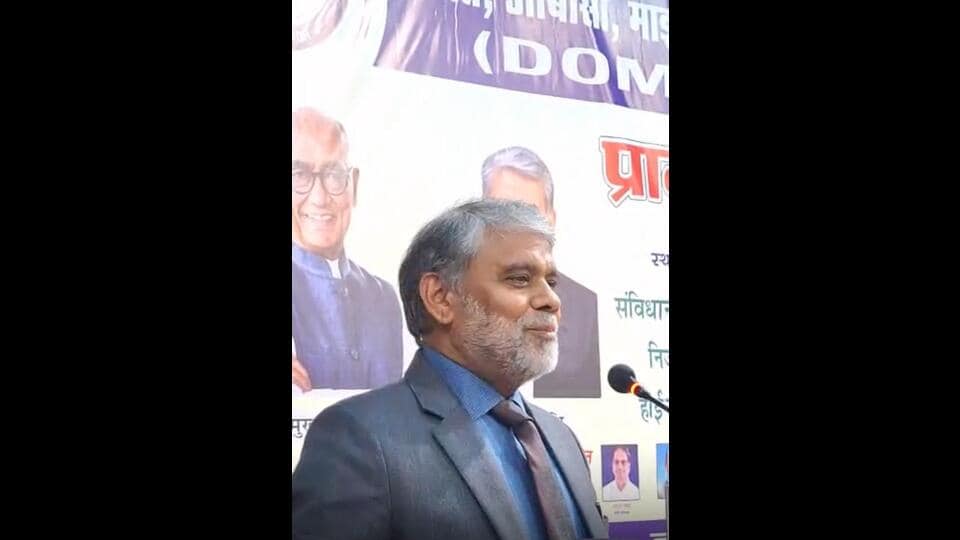
Addressing a programme in Bhopal organised by the Confederation of Dalit, OBC, Minorities and Adivasi Organisations (DOMA), Kait said, “I was a judge of Delhi high court and I was the only one from these groups. There was no judge from SC, ST and OBC (backward class). Till date, no other SC, ST and BC advocate has become a judge. This is something that we need to think about.”
To be sure, a database of Supreme Court judges created by Hindustan Times showed that there wasn’t much change in the proportion of OBC and SC judges appointed by the collegium system, when compared to that appointed by the executive till the collegium system was adopted in 1993. No such database exists for high court judges.
In his speech, Kait sought proportionate representation: “This country does not belong to any one caste but to all castes and all religions. The participation in it should be as much as the number (proportion in population.”
He added that in institutions with no reservation, such as the judiciary, there was very less representation of the underprivileged. “I am considering only the judiciary. In the Supreme Court, only eight judges including Justice Gavai became judge from SC/ST and backward classes. It is not like that there are no lawyers from the backward classes.”
That may be a bit of an underestimate. HT’s database showed that 27 out of the 279 Supreme Court judges so far have been from OBC, SC or ST backgrounds. To be sure, that is still a low proportion.
Kait added that OBCs, SCs and STs account for 90% of Madhya Pradesh’s population. “But, till date, not a single ST-SC judge has come to the Madhya Pradesh High Court from service nor has become an advocate judge.”
In the 2011 census, SCs were 15.6% of the state’s population and STs were 21.6% of the population. There are no estimates for OBC numbers in the state.
Raising the demand for reservation, he said, “If I talk about the high courts of the whole country, then SC, ST and backward class together make up 15 to 16% of judges as of today. This will continue until you raise your voice.”