With the introduction of twin-engine operation, the Indian Railways will soon be able to add two more passenger coaches to Rajdhani and other air-conditioned express trains besides cutting their travel time by several minutes, two officials familiar with the matter said.
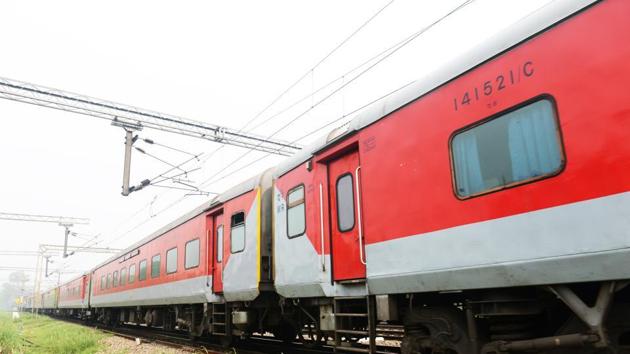
With this system, the electricity required to run the train’s air-conditioning system is sourced from the overhead cable, instead of two power cars currently attached to the train. This will enable the railways to attach two more 3-tier AC coaches to the train, creating space for another 100 plus passengers, the officials explained. Currently, the Rajdhani Express has 22 coaches that can carry 1,200 passengers.
The Research Design and Standards Organisation of the Indian Railways certified the twin-engine operation on express trains on February 7. The first commercial run of the Mumbai-Delhi Rajdhani train with twin engines took place on February 13. It saved 106 minutes from the usual travel time of 19 hours — the 1,543-km journey was covered in around 17 hours. The railways’ internal report says another 10 minutes can be saved through minor changes. “By push-pull arrangement of locomotives equipped with hotel load converter, both end power car may also be replaced by passenger coaches. We have proposed all Rajdhanis to be operated under push-pull method as it will not only save time but also increase the revenue by giving space for more passengers,” said one of the persons, a senior railway official. The railways have started installing “converters” on Rajdhanis to draw electricity from overhead cable in order to run the AC system in the trains. Following this, the two power cars attached to the train will be replaced by two AC coaches.
With one engine at the front and another at the back, the train will be able to accelerate faster saving not only time but also ensuring passenger comfort as the application of brakes from both ends will reduce vibration, the official added. “This [twin-engine operation] is a tested method across the world and we are hopeful of implementing it in a big way. The operation of twin WAP7 loco in push-pull mode has been planned and for this one pair of WAP7 loco and rake has been modified. It will result in significant saving in running time around 116 minutes between New Delhi-Mumbai,” said the second railway official.
{{/usCountry}}With one engine at the front and another at the back, the train will be able to accelerate faster saving not only time but also ensuring passenger comfort as the application of brakes from both ends will reduce vibration, the official added. “This [twin-engine operation] is a tested method across the world and we are hopeful of implementing it in a big way. The operation of twin WAP7 loco in push-pull mode has been planned and for this one pair of WAP7 loco and rake has been modified. It will result in significant saving in running time around 116 minutes between New Delhi-Mumbai,” said the second railway official.
{{/usCountry}}The Railways’ had tested the twin-engine operation first on a special Rajdhani train between Nizamuddin and Mumbai about a year ago. But at that time, both the engines were placed together at the front leading to excessive vibration every time the driver applied the brakes.
“Coupler forces [that connect two coaches] are universally distributed when one engine is at the front and one at the back. They have been synched through wire which runs from front to back. Once the decision is approved, the Railway Board can take a call on manufacturing of more engines,” the person added.