The government is preparing a comprehensive export support strategy with immediate measures to counter the liquidity crisis triggered by 50% US tariffs, after stakeholders identified delayed payments, cancelled orders and working capital stress as the most pressing challenges facing Indian exporters.
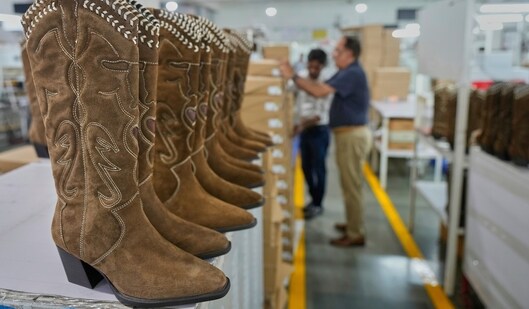
The government sees the tariff shock leading to some immediate liquidity problems, and in order to protect exports and employment, it is planning for Covid-style liquidity relief measures along with medium and long-term strategies for market diversification and global supply chain integration are underway, two officials said.
“It is anticipated that exporters may face delayed payments, stretched receivable cycles, and cancelled orders due to the tariff shock. To prevent working capital stress and protect employment, the government is considering several steps to ease liquidity, prevent insolvencies, and allow exporters to sustain operations until new markets are tapped,” the first official said, asking not to be named.
Among immediate-term measures, addressing the liquidity crisis remains the foremost priority, with the government expected to announce support packages soon, the second official added. “Even at the time of Covid crisis the government came up with well-calibrated support packages to protect lives and livelihood. It immediately addressed the severe liquidity crunch faced by the industry, particularly small and medium enterprises. Similar calibrated measures are expected now,” he said.
The government is drawing inspiration from its pandemic response, including the Emergency Credit Line Guarantee Scheme (ECLGS) which provided collateral-free loans with 100% guarantee, saving millions of MSMEs from bankruptcy during the outbreak of Covid-19, when the country virtually came to a halt during a 68-day hard lockdown.
{{/usCountry}}The government is drawing inspiration from its pandemic response, including the Emergency Credit Line Guarantee Scheme (ECLGS) which provided collateral-free loans with 100% guarantee, saving millions of MSMEs from bankruptcy during the outbreak of Covid-19, when the country virtually came to a halt during a 68-day hard lockdown.
{{/usCountry}}However, officials stressed that new schemes would be suitably modified to address the different nature and magnitude of the current crisis compared to the 2020-21 pandemic period.
The government is contemplating a “phased approach” with short, medium and long-term strategies guided by principles of providing immediate liquidity relief, maintaining employment in vulnerable sectors, and building supply chain resilience through structural reforms.
Beyond liquidity support, officials outlined plans for leveraging existing trade agreements, creating new market access opportunities, and supporting exporters with non-financial enablers including market access initiatives, branding support, export compliance assistance and capacity building.
Several financial and non-financial measures, including Goods and Services Tax (GST) rate rationalisation, are under active consideration in consultation with various ministries and stakeholders, officials said.
The apex GST Council is meeting next week to introduce next-generation reforms (GST 2.0), aiming to reduce tax rates and compliance burdens to boost domestic consumption and spur growth.
Officials argued that India’s economy remains resilient due to its domestic strength, suggesting external factors like tariff escalation would not disrupt growth momentum.
“While exports are critical, India remains a domestically anchored economy, with merchandise exports ($438 billion) accounting for a moderate share (10.4%) of GDP ($4.12 trillion) and with limited value addition in some sectors,” the first official said.
This assessment aligns with an EY report published by HT on Thursday suggesting that with appropriate countermeasures, the impact of Trump’s 50% tariff could be limited to 0.1% of GDP.
The strategy unfolds against the backdrop of robust economic performance, with latest government data showing the Indian economy grew 7.8% in the quarter ending June—the highest in five quarters—underlining strong domestic growth drivers despite mounting external headwinds from US tariffs.
Officials emphasised that the response would be calibrated based on evolving market conditions and stakeholder feedback, with final details expected to be announced once consultations with industry bodies and export promotion councils are completed.