The highly infectious XBB subvariant of Omicron that drove the recent Covid-19 surge in Singapore continues to circulate in India, with around 15% of the samples sequenced in recent weeks found the subvariant, according to people familiar with the matter. There was no reason to panic as there has been no unusual surge in cases reported from any part of the country, they added.
As per the whole genome sequencing data of the past two months, where results of at least 400 samples have been shared with GISAID, the open access repository of genomic data of influenza viruses, 13% reported the XBB subvariant.
XBB, which is a combination of Omicron’s BA.2.75 and BJ.1 subvariants, was first detected in Singapore in August, and since then has been responsible for a sharp surge in Covid-19 infections there.
In India, the first positive sample of the subvariant was reported in October last year.
To be sure, thus far, the country has not seen any notable surge despite the presence of the abovementioned variant and others such as the BF.7, which is currently driving the surge in China. Experts have said several reasons, including India’s hybrid immunity achieved through a wide vaccine coverage and an early-2022 Omicron surge, appear to be protecting the population well for now.
“Most of the sub-lineages that have shown to drive the surge in other countries have also been reported from India, and fortunately for us, there has not been reported higher hospitalisation or death rates owing to these sub-lineages in the country. It goes on to show that we do not need to panic. Having said that, it is also important to not drop the guard just yet, as there could always be a new subvariant on the horizon as the pandemic is not over yet,” a member of INSACOG said, requesting anonymity.
{{/usCountry}}“Most of the sub-lineages that have shown to drive the surge in other countries have also been reported from India, and fortunately for us, there has not been reported higher hospitalisation or death rates owing to these sub-lineages in the country. It goes on to show that we do not need to panic. Having said that, it is also important to not drop the guard just yet, as there could always be a new subvariant on the horizon as the pandemic is not over yet,” a member of INSACOG said, requesting anonymity.
{{/usCountry}}The Indian SARS-CoV-2 Genomics Consortium (INSACOG) is a group of 54 labs that monitor the genomic variations in Covid-19.
Another subvariant – BQ.1, which is a BA.5 sub-lineage – that has been responsible for spike in Covid-19 cases in the United States and Europe towards the end of 2022, was seen in 1% (six out of 406) of the samples sequenced. BA.2, however, has largely been the dominant strain in India for over a year, according to experts in INSACOG.
XBB has also been the dominant subvariant present in international passengers who tested positive for the disease on arrival, according to the whole genome sequencing report that HT accessed.
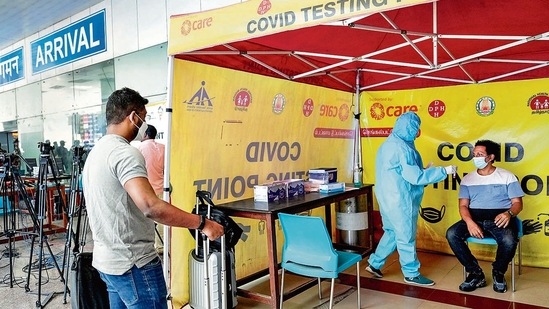
According to health ministry, 11 Omicron subvariants were found among 124 international travellers who tested positive for Covid-19 among 19,000 passengers – nearly 0.65% – who were screened between December 24 and January 3.
The presence of all the identified variants has already been reported in India with no unusual surge in cases.
All 124 passengers have been isolated at health facilities in different parts of the country, and none showed severe disease symptoms. Of the 124 samples, the genome-sequencing results of 40 were received, of which XBB was found in 14 samples and BF 7.4.1 in one sample.
According to health ministry data, 19,227 international travellers were screened at airports, seaports and land ports in the said period, of which 124 were found to be Covid-19 positive.
The data from the genome sequencing laboratories is analysed as per the field data trends to study the linkages between the genomic variants and epidemiological trends. According to experts working for the consortium, this helps to understand super spreader events, outbreaks and strengthen public health interventions across the country to help in breaking the chains of transmission.
Linking this data with the Integrated Disease Surveillance Programme data and patient’s symptoms allows a better understanding of the viral infection dynamics, morbidity and mortality trends.
Experts also said there has been no increase in hospitalisations owing to Covid-19.
“There have been hardly any hospitalisations as a result of Covid over the past few months, which highlights the fact that our immune system is able to fight the strains that are currently under circulation. The reason probably could be because we are an omicron exposed community and our vaccines have proven to be effective against most sub-variants so far,” said Dr Rommel Tickoo, director, internal medicine department, Max Healthcare.
“So far there does not seem to be a cause for concern but we must remain vigilant as this is an RNA virus that mutates at a greater rate. There is always a possibility of getting a new mutant that could spell trouble,” he added.