The first coronavirus vaccine developed in India has an efficacy rate of 81%, Covaxin’s maker Bharat Biotech said on Wednesday. Here is all you need to know about it and what it means:
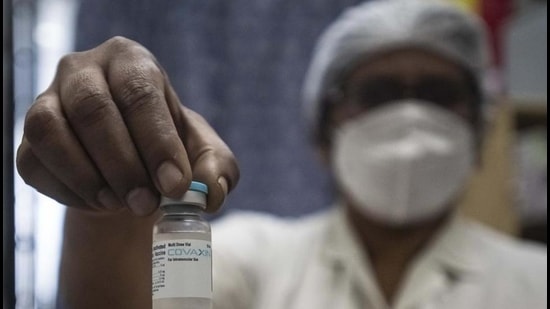
• The announcement based on preliminary results from Covaxin’s Phase 3 clinical trials is expected to come as a shot in the arm for India’s vaccination drive.
• The vaccine was approved for an emergency roll-out on January 16 before it was established to be effective in preventing Covid-19.
• Experts, as well as authorities, pointed to Phase 1 and 2 trials that showed that Covaxin was safe and produced an adequate immune response.
• Phase 1, 2, and 3 trials involved around 27,000 participants.
Also Read | ‘People criticised us’: Bharat Biotech head on Covaxin’s journey from March 2020
• Covaxin demonstrates a high clinical efficacy trend against Covid-19 but also significant immunogenicity against the rapidly emerging variants, said Krishna Ella, chairman, and managing director, Bharat Biotech.
• The detailed data is yet to be released or peer-reviewed.
{{/usCountry}}• The detailed data is yet to be released or peer-reviewed.
{{/usCountry}}• The results are based on an interim analysis when 43 infections took place among the 25,800 people who were part of the trials.
• Of these, 36 were among those given a placebo, while seven got the vaccine, translating to an efficacy rate of 80.6%, the company said.
• The indigenous vaccine has met with severe hesitancy, particularly among health care workers, for want of the efficacy data.
• Disaggregated data from Delhi, for example, showed in January that turnout at locations administering Covaxin was as low as 25%, while it was 75% for those using Covishield, the domestically produced version of the Oxford-AstraZeneca vaccine.
• As of Wednesday, 16.3 million doses of the two vaccines have been administered to people across the country.
• Covaxin uses an inactivated virus paired with an adjuvant – a chemical that boosts immune response.
• Covaxin is based on a tried-and-tested platform, the other vaccine India is giving to its people – Covishield – makes use of a newer Trojan horse-like technique known as the adenovirus platform.
• An efficacy higher than 50% is considered acceptable, according to World Health Organization (WHO) norms.
• Two other vaccines that are being used widely around the world use a breakthrough technology known as the mRNA platform and report an efficacy rate above 95%. But both of these require freezing temperatures to be stored or transported.
• Covaxin is stable at 2°C to 8°C, temperatures that can be typically achieved by refrigerators, and is shipped in a ready-to-use liquid formulation that permits distribution using existing vaccine supply chain channels.
• The Phase 3 study enrolled 25,800 participants between 18 and 98 years of age, including 2,433 over the age of 60 and 4,500 with comorbidities.
• The primary endpoint of Phase 3 clinical trial is based on the first occurrence of PCR-confirmed symptomatic (mild, moderate, or severe) Covid-19 with onset at least 14 days after the second dose is given.