By the end of October, we were supposed to have at least some data from the Pfizer/BioNTech Covid-19 vaccine’s Phase 3 trials. That’s been delayed (not by much, according to some reports) even as it is increasingly becoming clear that the timelines most of us (and this includes executives in Big Pharma, government officials, health care experts, analysts, and journalists) have in mind for the availability of the first Covid-19 vaccines are far too aggressive, perhaps even impossible.
It could well turn out that I am wrong – it’s happened before – but many experts agree that a mid-2021 timeline for the vaccine is more realistic. Then there is the question of capacity and availability, and the challenges of distributing a vaccine. And at least for the first vaccines that will be available, there’s a very high likelihood that people who are fortunate enough to get a shot early will need a second shot before everyone in the world has had their first.
Which brings us to the question I have been leading up to: What’s Plan B?
{{/usCountry}}Which brings us to the question I have been leading up to: What’s Plan B?
{{/usCountry}}Last Wednesday (October 28), provided one answer (actually, to my mind, the only one). That day, the Australian city of Melbourne emerged from a lockdown that lasted 112 days. It was a lockdown that involved shelter-in-place rules; closure of most stores, restaurants, and gyms; bar on social gatherings, indoor and outdoor, including weddings; and out-of-city travel restrictions (people couldn’t travel beyond 5km of their homes).
Other parts of the state of Victoria also saw lockdowns, but none as stringent as Melbourne. The city’s hard lockdown (which was progressively eased) was controversial , but, imposed in the wake of a second wave of cases in Melbourne and Victoria, it was successful, with the number of cases going down to zero by last week. It isn’t just Australia which has depended on lockdowns to crush the virus; its neighbour New Zealand has, too, in what its recently re-elected Prime Minister Jacinda Ardern terms the country’s “go hard, go early” strategy.
With most European nations now imposing stringent lockdowns – France’s is near total – to cope with a near-debilitating second wave of the pandemic, more people are beginning to look to the Australian and New Zealand approach (sure, it helps that both are relatively remote, sparsely populated, and islands). Not too long ago, many of these leaders wouldn’t even consider a second lockdown. The UK’s Boris Johnson, for instance, said a second lockdown in the country would be “disastrous”, especially in terms of its impact on the economy; over the weekend, he announced a stringent four-week one as it became clear that the country’s health system was within weeks of being drowned in cases.
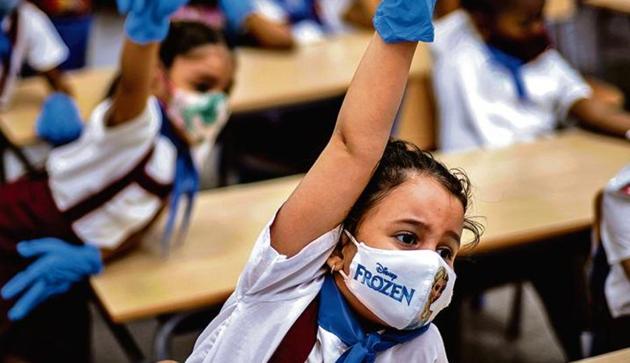
Interestingly, schools, even in France and the UK – both countries are seeing far more cases in the second round than they did in the first; the seven-day average of new cases in France is 43,000, around 10 times what it was during the peak of the first wave; in the UK, it is 22,000, around four times -- will remain open during the lockdown. And when Melbourne started easing restrictions, schools were among the first things it opened. Research conducted in several countries shows that in regions where there is no community transmission (or limited community transmission, a term preferred by India’s health ministry), it is alright to open schools, especially for young children (this would mean primary and middle school) because they are unlikely to spread the virus. It is older children who are more vulnerable, and could also end up transmitting the virus more. But I digress; the debate over whether or not schools are safe could fill an entire edition of Hindustan Times.
The only viable Plan B, the only way to manage a sharp spike in cases that comes with a new wave of the pandemic, is a lockdown. No one likes lockdowns, but they seem to work.