France imposed a near-total lockdown on Wednesday, and Germany a partial one, as the countries continue to be roiled by the second wave of the coronavirus pandemic. From Italy to the Czech Republic and from Belgium to Spain, much of Europe is now under some form of lockdown or curfew. According to the World Health Organization (WHO), on October 28, nearly 50% (201,588) of the daily new cases around the world (404,159) came from Europe.
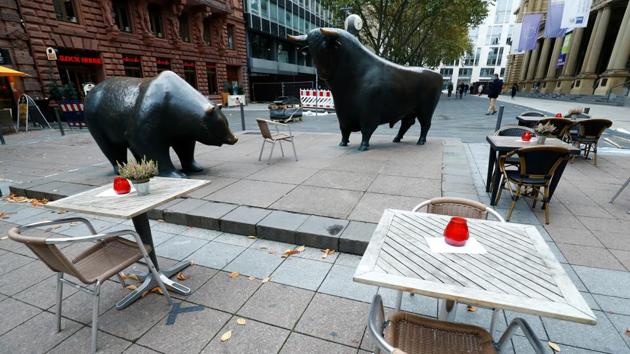
The second wave of Covid-19 infections in Europe has been gathering momentum for weeks now. Countries initially responded by imposing some emergency measures, but most steered clear of enforcing lockdowns, worried about the impact of more stringent restrictions on already struggling economies (and, consequently, on people). That’s changed now. The hardest lockdown is in France, which, along with Spain, is the worst hit by the second wave — only schools and essential businesses will remain open from Friday till December 1.
Also Read: Future pandemics could be deadlier, warns study
There was always an inevitability about the second wave. As countries ease restrictions on movement and activities, populations waiting to exhale do so collectively — one enormous exhalation. And everyone knows the connection between exhalations and this particular viral infection.
Despite protestations to the contrary by governments in Europe, there was also always an inevitability about a second wave of lockdowns. With their health systems overwhelmed by the surge of hospitalisations, European countries needed to break the chain of infection — and the only sure way to do so is a lockdown. Technically, masks and social distancing can also break the chain, but not when faced with the all-too-human instincts to not wear masks (or wear them every other way but the right one), and to socialise.
{{/usCountry}}Despite protestations to the contrary by governments in Europe, there was also always an inevitability about a second wave of lockdowns. With their health systems overwhelmed by the surge of hospitalisations, European countries needed to break the chain of infection — and the only sure way to do so is a lockdown. Technically, masks and social distancing can also break the chain, but not when faced with the all-too-human instincts to not wear masks (or wear them every other way but the right one), and to socialise.
{{/usCountry}}So, what should Delhi (which saw a record number of cases on Wednesday) do?
The trajectory of the pandemic in Delhi shows that the Capital is now experiencing the third wave of the pandemic, although as HT’s Covid-19 data specialist Jamie Mullick insists, this is likely misleading. His argument is that Delhi’s inadequate testing through August (and some part of July), and its continued reliance on rapid antigen tests (although it has increased the number of RT-PCR tests in the past week, almost 29% of its tests were antigen tests) skews the picture (and the curve).
Also Read: Elderly who live with working-age people at higher Covid-19 risk, says Lancet study
In Dispatch 104, on July 14, I referred to this skew (which was already evident). “Delhi has definitely flattened the curve, although the peak is a little too narrow for my liking (in general, the peaks of many distributions, including infections, are more rounded and gradual),” was what I wrote then.
To return to the original question: what should Delhi do?
One, it should test even more aggressively, increasing the proportion of RT-PCR tests, and try to either source more accurate rapid antigen tests, or enhance the accuracy of the existing tests (a previous instalment of Dispatch suggested a simple hack -- two samples tested simultaneously, with the subject administered the RT-PCR tests if there is a discrepancy between the results of the two).
Two, it needs to screen and trace as diligently as it was doing in May and June. Even visitors flying in from hot spots such as Bengaluru are not always screened at the airport, for instance.
Three, it should ensure that its hospitals and hospital staff are ready to deal with the rush of patients that can be expected (and that it has enough critical care beds, oxygen, and ventilators).
Four, it should convene a meeting of the state disaster management authority and consider imposing restrictions on social, cultural and religious activities; movement; and on businesses and establishments. I would recommend a complete ban on the first till December 1 (starting immediately); the re-imposition of a curfew; late opening and early closing of shops and restaurants; and a four-day week for businesses that have restarted WFO (work from office) — the other day or two days can be WFH — with a cap of 20% or 25% on staff in office.
And the time to do these things is now.