India has expressed its “deep displeasure” at the World Health Organisation’s maps that inaccurately depict the boundaries of the country in the map used by the organisation’s web portals and asked director-general Tedros Adhanom Ghebreyesus to immediately replace them with fresh maps, people familiar with the matter said.
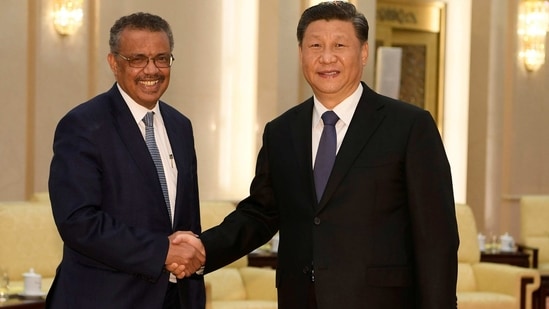
New Delhi’s strongly-worded letter to the WHO is the third in a month. The other two, on 3 and 30 December, were addressed to the WHO director general’s office. These communications pointed out that videos and maps including the coronavirus dashboard did not accurately reflect India’s boundaries.
Last week, India’s Permanent Representative to the UN Indra Mani Pandey escalated the request to Tedros Adhanom.
“I write to express my deep displeasure at the inaccurate depiction of the boundaries of India in the maps of various web portals of WHO. In this regard, I draw your attention to our previous messages sent to WHO pointing out similar inaccuracies. I again request your immediate intervention for removal of maps inaccurately depicting the boundaries of India from various web portals of WHO and their replacement with accurate maps,” Indra Mani Pandey said in his 8 January letter to Tedros accessed by Hindustan Times.
WHO maps show the union territories of Jammu and Kashmir and Ladakh in a different shade than the rest of India. The Shaksgam Valley spread across 5,168 sq km, which was illegally ceded by Pakistan to China in 1963, is shown as part of China. The Aksai Chin region occupied by China in 1954 is shown in light blue strips, a shade similar to the colour used to depict Chinese territory.
{{/usCountry}}WHO maps show the union territories of Jammu and Kashmir and Ladakh in a different shade than the rest of India. The Shaksgam Valley spread across 5,168 sq km, which was illegally ceded by Pakistan to China in 1963, is shown as part of China. The Aksai Chin region occupied by China in 1954 is shown in light blue strips, a shade similar to the colour used to depict Chinese territory.
{{/usCountry}}Publishing inaccurate maps of India is a criminal offence under Indian law, punishable with a six-month jail term and fine. In 2016, the government had proposed to raise the jail term to 7 years and give judges the power to impose a ₹100 crore fine. But the proposal, part of a geospatial information law proposed by the government in 2016, wasn’t pursued by the government.
A senior government official said WHO’s use of distorted maps for its widely-publicised and closely-watched Covid-19 tracker is very unfortunate. “The government will follow up with WHO and all relevant authorities to get the correct maps to be used,” he said.
The official added that he was confident the WHO chief, who was accused by the US of siding with China to play down the coronavirus disease that was first reported in China’s Wuhan city, would not let politics stand in the way of fixing inaccuracies in the map.
The World Health Assembly had, primarily under pressure from the United States, decided in May last year to send a team of experts to China to probe the origins of the disease. The 10-member team of experts was able to land in China on Thursday, seven months after the WHO director-general had committed to the probe. The experts will, however, have to spend two weeks in quarantine before President Xi Jinping’s government will allow them to step out of their hotels to start their mission.
Beijing allowed the visit days after Tedros publicly said he was disappointed with the delay, an unusual public complaint by the head of the WHO.