
 E-Paper



Delhi AQI recorded at 349, slips into ‘very poor’ category amid rising air pollution; schools to be closed soon?
The AQI of Delhi on October 23 slipped into the ‘very poor’ category and was recorded at over 340 in majority of the regions in the capital.

 Prefer HTon Google


The air quality of Delhi worsened on Wednesday, October 23, as the Air Quality Index (AQI) of the national capital slipped into the ‘very poor’ category. Delhi's air quality index was recorded at 349 on Wednesday morning around 7:30am, with several areas across the capital recording an AQI of over 400 in the early hours of the day.
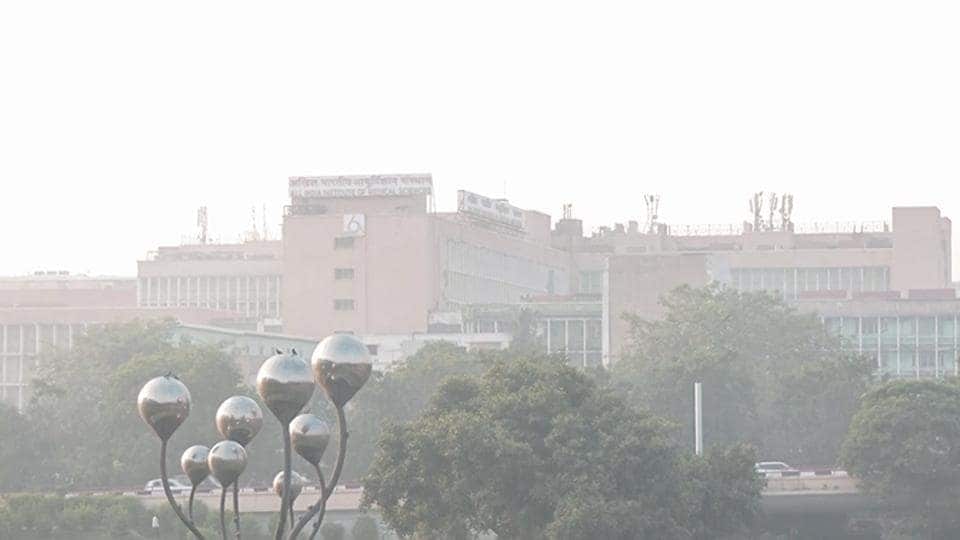
Areas in Delhi such as Kashmiri Gate and Civil Lines saw an AQI of less than 300 in the morning, while some areas such as Mayur Vihar, Ashok Vihar, Greater Kailash, Kalkaji, Model Town and IP Extension saw an AQI of more than 400, touching ‘hazardous’ levels even before the winter chill in the capital settles in.
According to SAFAR India, the AQI of Delhi's IGI airport stood at 365 and that of Jahangirpuri stood at 417, with a thick layer of smog engulfing the locality.
The AQI of Ashok Vihar was recorded at 359, Bawana at 391, Dwarka-Sector 8 at 367, NSIT Dwarka at 379, Najafgarh at 342, Narela at 357, Nehru Nagar at 365, Okhla Phase 2 at 346, Patparganj at 373, Punjabi Bagh at 365, Pusa at 305, RK Puram at 352, Rohini at 388, Shadipur at 322, Sirifort at 334, Sri Aurobindo Marg at 322, Vivek Vihar at 399, while Wazirpur at 387, according to the SAFAR India website.
Read more: Delhi dust pollution: MCD in shortfall of mechanical sweeping machines
In view of the rising air pollution in Delhi and adjoining cities, the Aam Aadmi Party government in the capital announced a few measures to be taken by the authorities and neighbouring states to control the deteriorating air quality.
Delhi environment minister Gopal Rai said he has written to his counterparts in Uttar Pradesh, Haryana and Rajasthan to not send diesel buses to Delhi. He also said that 1,800 additional traffic personnel will be deployed at 97 congestion points across the city.
“The Commission for Air Quality Management (CAQM) has established four levels to control pollution. Currently, the Air Quality Index (AQI) is above 300, which has led to the implementation of GRAP Stage II,” Rai said.
He also said that water spraying across the national capital will increase with the assistance of MCD, and inspections of constructions sites will continue.
Sudha Acharya, principal of ITL Public School, Dwarka, told The Indian Express that although the school was yet to receive an advisory from the directorate of education, the school authorities have taken the initiative to hold awareness camps for students and parents.
“We have minimised outdoor activities at school. We have also organised rallies to raise awareness about refraining from bursting crackers this Diwali. The school has already started receiving concerns about congestion and coughing symptoms among students and staff due to rising pollution and changing weather,” Sudha Acharya told newspaper.
Modern Public School, Shalimar Bagh, principal Alka Kapur said the school has started using air purifiers in areas exposed to the outdoors and corridors.
According to Manisha Sharma, principal of Venkateshwar International School, Dwarka Sector 10, activities and classes, including yoga, have now been shifted indoors, The Indian Express reported.
Last November, all primary schools were briefly closed due to increasing pollution levels in the city. Each year, the Directorate of Education releases a winter action plan for Delhi schools, though it has yet to be announced this year.
(With inputs from PTI)


