When a Delhi court granted bail on September 27 to Gaganpreet Makkad — the accused driver in the Dhaula Kuan BMW crash that killed finance ministry employee Navjot Singh — it pointed out two major points that could be key to the case.
In the 19-page order, judicial magistrate (first class) Ankit Garg's contentions have questioned the very premise of the matter.
The order raises doubts over the prosecution’s core argument that Gaganpreet Makkad's conduct after the accident attracts charges of “culpable homicide” (not amounting to murder) under Section 105 of the Bharatiya Nyaya Suraksha Sanhita (BNSS).
On ‘wrong choice’ of hospital
The prosecution had argued that Makkad took Navjot, 52, and his wife, Sandeep, to a faraway hospital instead of the nearest one. That hospital, it noted, was linked to her relatives.
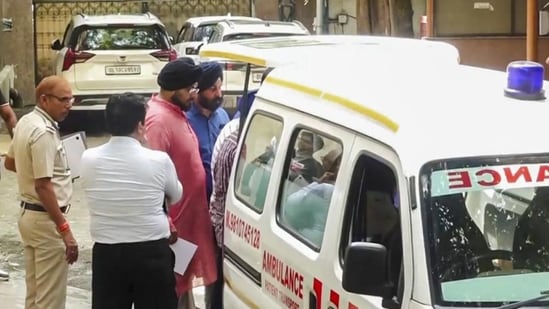
Here, the court pointed towards an ambulance's presence on the spot.
“An official ambulance, empty and immediately behind the vehicles involved, is seen arriving within two seconds," the order said. "The ambulance, after watching the incident, stops at some distance; the driver and the paramedic rush towards the scene but, without offering any help or assistance, come back in a relaxed manner within 40 seconds,” it added, citing the CCTV footage.
Did Makkad's BMW crash straight into Navjot's vehicle?
{{/usCountry}}“An official ambulance, empty and immediately behind the vehicles involved, is seen arriving within two seconds," the order said. "The ambulance, after watching the incident, stops at some distance; the driver and the paramedic rush towards the scene but, without offering any help or assistance, come back in a relaxed manner within 40 seconds,” it added, citing the CCTV footage.
Did Makkad's BMW crash straight into Navjot's vehicle?
{{/usCountry}}The CCTV footage also contradicted the theory of a direct collision and questionable conduct, the court noted. The footage instead showed that the BMW first crashed into a divider, overturned, and then hit Navjot’s two-wheeler, which further collided with a DTC bus.
The bus did not stop after the accident.
The court said the prosecution failed to establish the BMW’s speed despite speed cameras on the road, weakening its case as the accused's “knowledge” that something could cause death is key to proving culpable homicide against them.
The order noted that the incident was closer to a case of rash and negligent driving.
Did Makkad refuse help from ambulance?
Moments later, the ambulance appeared. The paramedics in it, the court said, neither checked Navjot’s pulse nor administered first aid. They left hastily despite the victim lying unconscious beneath the BMW car.
The court rejected the paramedic’s version that Makkad refused help from the paramedics, pointing out that the CCTV footage showed her rescuing her children and husband from the overturned vehicle.
“The video also shows bystanders palpating and then moving the injured to the side, but the paramedics do not help either of the injured persons and quickly leave the scene in a hush manner,” the order said, terming their conduct “highly unprofessional”.
What court asked the prosecution
Before delivering the order, the court pointedly questioned the prosecution on the paramedics’ failure to act. When Additional Public Prosecutor Dishank Dhawan argued that the vehicle was a hearse van without first-aid facilities, the court replied that it could have transported the injured.
On the prosecution’s claim that timely medical aid could have saved Navjot, the court noted there were no records of his pulse or respiration, making survival chances unproven.
The victims were taken the hospital in a transport van instead.