
 E-Paper



Delhi chokes under toxic smog, AQI over 1,000 in these areas
The AQI in some areas of Delhi stood between 800-1100 - ‘hazardous’ category - at the time of last update in this report, as per Swiss air tech company IQAir.

 Prefer HTon Google


Most parts of Delhi and its adjoining areas like Noida, Ghaziabad and Gurugram remained smoggy for the third straight day on Friday, with anti-pollution curbs under Graded Response Action Plan (GRAP) Stage III coming into effect amid 'severe' Air Quality Index (AQI) in several areas.
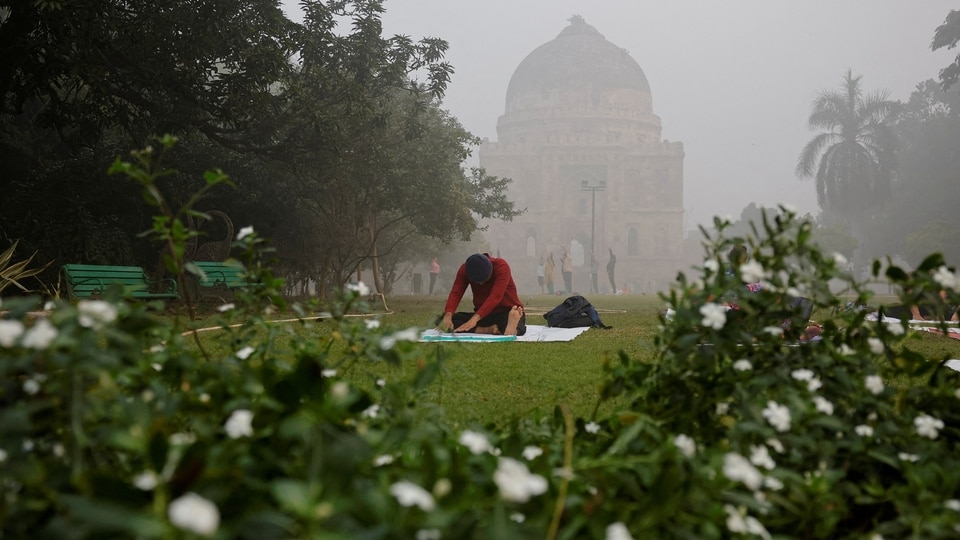
The AQI in some areas of Delhi stood between 800-1100 - ‘hazardous’ category - at the time of last update in this report, as per Swiss air technology company IQAir. Anand Vihar, Dwarka-Sector 8 and VV (Vasant Vihar) Block C were the stations with the worst AQI - 1105, 1057 and 1041, respectively, as per readings of IQAir , which calculates the Air Quality Index using measurements from a global network of government monitoring stations and its own sensors.
Also read: Delhi air pollution: AQI ‘severe’, visibility low in NCR; primary schools shift to online as GRAP-3 imposed
Meanwhile, the Sameer app, which provides hourly update of the National Air Quality Index published by Central Pollution Control Board (CPCB), measured the overall AQI of Delhi at 413 around the same time, with the air quality in most areas hovering between 401 and 500 - what the CPCB considers as 'severe' category.
10 areas with worst AQI in Delhi
As per IQAir, the top 10 areas with the worst AQI in Delhi at around 11 am on Friday were:
Anand Vihar (DPCC) - 1105
VV Block C Station (DPCC) -1057
Dwarka-Sector 8 (DPCC) 1041
Burari Crossing (IMD) - 967
Mundka (DPCC) 945
Rohini (DPCC) 836
Narela (DPCC) 808
DTU (CPCB) - 766
ITO (CPCB) - 749
Najafgarh (DPCC) - 613
Why AQI readings differ
AQI figures differ across portals as the numbers reported around the world are being derived from a mix of computer modeling and satellite data.
IQAir calculates the Air Quality Index using measurements from a global network of government monitoring stations and its own sensors.
Platforms such as IQAir update the AQI of a city and its different regions much faster with real-time data, while the CPCB gives one reading which applies to the region for a day. Due to this, the AQI readings in IQAir are likely to always be fluctuating as it is reacting to changes on an hourly basis.
According to CPCB measures, an AQI between zero and 50 is considered "good", 51 and 100 "satisfactory", 101 and 200 "moderate", 201 and 300 "poor", 301 and 400 "very poor", 401 and 450 "severe" and above 450 "severe plus". IQAir lists an AQI of 301 and above under the hazardous category.
GRAP III Restrictions in Delhi
GRAP Stage III restrictions came into effect on Friday in Delhi amid ‘severe’ category AQI for the third consecutive day. GRAP for the National Capital Region (NCR) is classified under four different stages of adverse air quality in Delhi: Stage I -- 'poor' (AQI 201-300); Stage II -- 'very poor' (AQI 301-400); Stage III -- 'severe' (AQI 401-450); and Stage IV -- 'severe plus' (AQI >450).
Curbs under Stage III include a ban on non-essential construction and demolition, closure of stone crushers and mining activities and ban on plying of BS-lll petrol and BS-IV diesel light motor vehicles in Delhi-National Capital Region (NCR).
Under the Stage-IV curbs of GRAP, all inter-state buses from NCR states — except electric vehicles, CNG vehicles and BS-VI diesel buses—will be prohibited from entering Delhi, alongside a stringent ban on construction and demolition activities, suspension of mining-related activities, consideration of shifting to online classes for students up to Class V and daily water sprinkling on major roads.


