
 E-Paper



Delhi air pollution: AQI ‘severe’, visibility low in NCR; primary schools shift to online; GRAP-3 from today | 10 points
Delhi AQI today: GRAP stage 3 came into force at 8am on Friday. The Delhi government announced that classes for primary schools will be shifted to online.

 Prefer HTon Google


Delhi AQI today: The air quality across several parts of Delhi remained in the “severe” category on Friday, November 15, with a thick layer of smog once again blanketing the National Capital Region, including Noida, Ghaziabad and Gurugram.
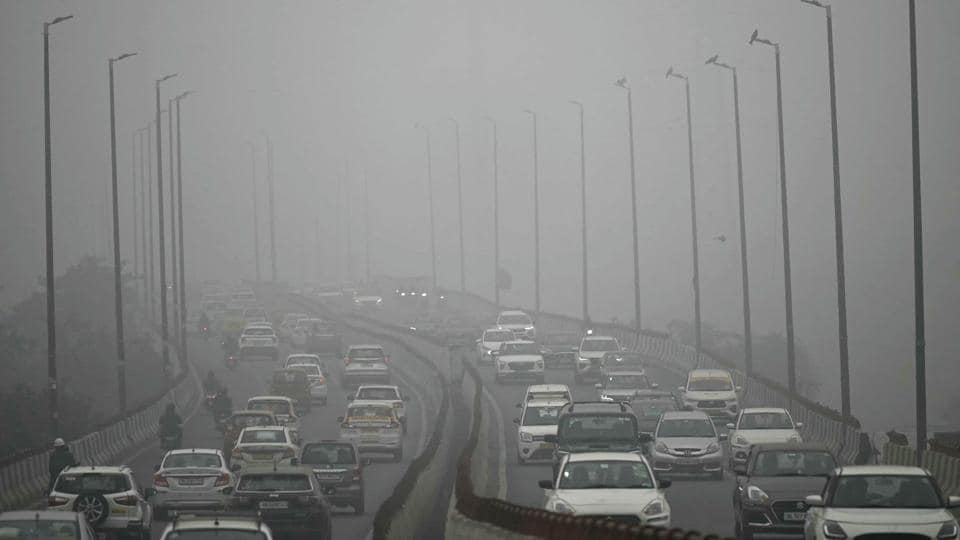
The deteriorating air quality index or AQI prompted the Commission for Air Quality Management (CAQM), the central pollution watchdog, to invoke restrictions under the third stage of the graded response action plan (GRAP), including a ban on construction activities and plying vehicles on BS-III petrol and BS-IV diesel vehicles in the city and NCR.
The restrictions came into force at 8am on Friday. The Delhi government also announced that due to the alarming levels of pollution, physical classes for primary schools will not be held till further orders, but online classes can continue.
Also Read | GRAP 3 curbs in Delhi amid ‘severe’ AQI | What's allowed, what's not
According to the Central Pollution Control Board (CPCB) data, the AQI in Delhi's Anand Vihar was 460 ('severe plus') at 3pm on Thursday.
Bawana (460), Wazirpur (459) and Jahangiruri (466) are some of the areas that recorded the worst air quality in Delhi. The air quality crosses over 400, which falls under the severe category.
Also Read | GRAP 3 curbs in Delhi amid ‘severe’ AQI | What's allowed, what's not
Delhi air pollution: Top 10 developments
- What's not allowed? In an order, the Commission for Air Quality Management said the Delhi government and NCR states will impose strict restrictions on BS-III petrol and BS-IV diesel (four-wheelers) in the national capital and neighbouring Gurugram, Faridabad, Ghaziabad and Gautam Budh Nagar. Any violation will attract a fine of ₹20,000.
- Under the third stage of the GRAP, all inter-state buses from NCR states will be prohibited from entering Delhi, alongside a stringent ban on construction and demolition activities, mining-related activities are suspended, water is sprinkled on major roads daily and students up to class 5 can be considered for online classes.
- What's allowed? Electric vehicles, CNG vehicles and BS-VI diesel buses will allowed to ply in the NCR. The CAQM said construction-related activities, which are relatively less polluting and less dust-generating, will be permitted in the NCR, subject to strict compliance with the C&D Waste Management Rules.
- What DMRC said: The Delhi Metro Rail Corporation (DMRC) said in view of the implementation of GRAP-III, 20 extra trips (in addition to 40 already in place since GRAP-II was implemented) will be inducted into services on weekdays, starting Friday, and added that thus.
- Delhi's 24-hour AQI: The city's AQI recorded at 4pm every day, stood at 424, up from 418 the previous day. Out of Delhi’s 39 monitoring stations, 27 reported air quality in the 'severe' category. These stations include Anand Vihar, Ashok Vihar, Aya Nagar, Bawana, Dwarka Sector 8, IGI Airport, ITO, Jahangirpuri, Mandir Marg, Mundka, Najafgarh, Narela, Nehru Nagar, North Campus, Patparganj and Punjabi Bagh.
- Blame game: On Thursday, a political blame game erupted over the deteriorating levels of pollution. The Bharatiya Janata Party lashed out at Delhi environment minister Gopal Rai and demanded his resignation, saying the air quality in the city is moving towards hazardous levels.
- Gopal Rai hit back and accused the BJP-led governments in the neighbouring states of doing nothing to prevent air pollution.
- What is GRAP? The GRAP for Delhi-NCR is divided into four stages of air quality – Stage 1 for "poor" Air Quality Index (AQI) ranging between 201 and 300, Stage 2 for "very poor" AQI of 301-400, Stage 3 for "severe" AQI of 401-450 and Stage 4 for "severe plus" AQI (more than 450).
- The air quality in Delhi had been in the 'very poor' category since October 30 and the capital recorded the first severe air quality of this season on Wednesday.
- Top contributors to Delhi’s pollution: According to the Centre’s Decision Support System for Air Quality Management, vehicular emissions were the top contributor to Delhi’s pollution, accounting for approximately 12.2 per cent of the total. Apart from vehicular pollution, another major source of Delhi’s air pollution is stubble burning. Data showed that on Thursday, a total of five farm fires were reported in Punjab, 11 in Haryana, and the highest number, 202, in Uttar Pradesh, according to satellite data shared by the Indian Agricultural Research Institute (IARI).


