E-Paper



1,200 rescued from Umargam as flood situation worsens in south Gujarat
Relief commissioner Gaurav Makwana said around 1,200 people were rescued from Umargam, with the Centre deploying Army personnel and additional NDRF teams.

 Prefer HTon Google


Torrential rain continued to batter Gujarat on Thursday, triggering flood-like conditions in parts of south Gujarat and prompting the evacuation of thousands of people. Umargam in Valsad district recorded nearly 43 inches of rainfall in 28 hours, leading to the deployment of Army personnel and additional National Disaster Response Force (NDRF) teams for rescue operations.
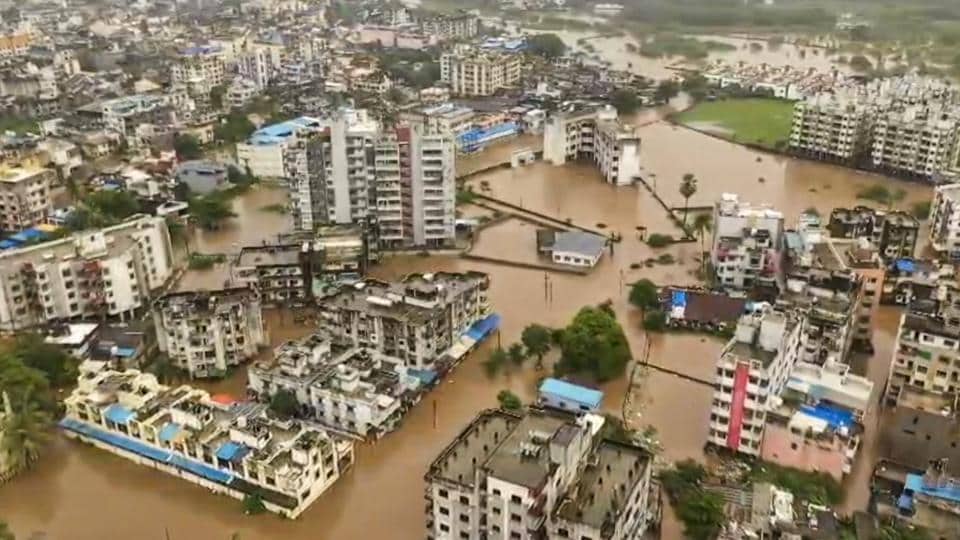
Relief commissioner Gaurav Makwana said around 1,200 people were rescued from Umargam, with the Centre deploying Army personnel and additional NDRF teams. Umargam received the highest rainfall during the spell, while Kaprada and Vapi also witnessed heavy showers.
Around 1,500 people were shifted to safer places in Surat city, while 200 people stranded in 11 villages in Navsari after flooding in the Kaveri River were rescued and evacuated. A drowning in Tapi was the only rain-related fatality reported so far, he said.
Chief minister Bhupendra Patel reviewed the flood situation at the State Emergency Operations Centre (SEOC) in Gandhinagar and spoke to the collectors of Surat, Valsad, Navsari and Tapi districts to assess rescue and relief operations, according to an official release.
Prime Minister Narendra Modi and Union Home Minister Amit Shah separately spoke to Patel and assured him of the Centre’s full support for rescue, relief and evacuation efforts, according to the government release.
According to officials, the Centre has deployed a 70-member Army team, five boats and a 25-member fire services team to Valsad, besides dispatching two additional NDRF teams from New Delhi.
The heavy rain also disrupted normal life in Ahmedabad, where all government, grant-in-aid and self-financed secondary and higher secondary schools will remain closed on Thursday and Friday. Ahmedabad district also witnessed heavy rain, with Mandal recording 166 mm (6.54 inches), Viramgam 144 mm (5.67 inches), Detroj-Rampura 106 mm (4.17 inches) and Ahmedabad city 89 mm (3.50 inches) between 6 am and 2 pm on Thursday, according to data released by the State Emergency Operations Centre (SEOC).
Officials said Surat currently has three NDRF and five SDRF teams, while Valsad has two NDRF and four SDRF teams, with one additional NDRF team and one SDRF team being rushed there. Navsari has two SDRF teams, while one NDRF team is being redeployed from Surat. They added that the Air Force and Coast Guard had also been kept on standby and that stranded people would be airlifted if weather conditions permitted.
As per SEOC data, Umarpada in Surat district recorded the state’s highest rainfall of 328 mm (12.91 inches) between 6 am and 2 pm on Thursday. Khergam in Navsari received 274 mm (10.79 inches), followed by Pardi in Valsad with 268 mm (10.55 inches), Umbergaon 251 mm (9.88 inches), Netrang in Bharuch 249 mm (9.80 inches), Valsad town 224 mm (8.82 inches), and Mehmedabad in Kheda and Nanapondha in Valsad 204 mm (8.03 inches) each. Vapi recorded 182 mm (7.17 inches), Becharaji in Mehsana 181 mm (7.13 inches), Dharampur 172 mm (6.77 inches), Vaghai 169 mm (6.65 inches), and Kaprada 167 mm (6.57 inches).
Officials said more than 300 panchayat roads had been temporarily closed because of overtopping, while over 200 Gujarat State Road Transport Corporation bus trips had been suspended.