
 E-Paper



How NHAI's new toll fee collection formula could make your highway journey cheaper
The revised formula will apply to highway stretches containing one or more independent bridges, tunnels, flyovers or elevated highways.

 Prefer HTon Google


Motorists using national highways with bridges, tunnels, flyovers and elevated stretches are set to pay less tolls under a new formula, with the National Highways Authority of India (NHAI) on Friday directing all its field offices to begin processing toll notifications and revisions under the amended rules.
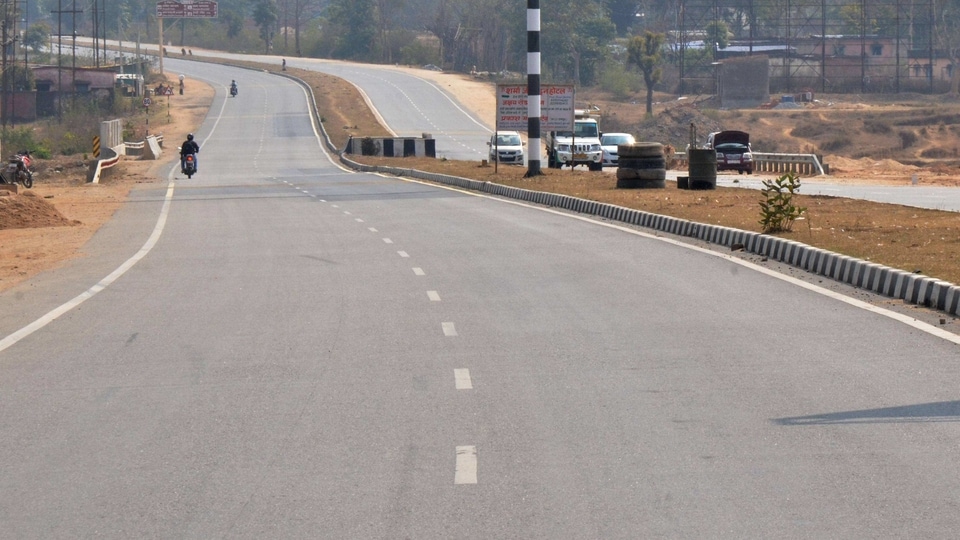
The move follows the Ministry of Road Transport and Highways' July 1 amendment to the National Highways Fee (Determination of Rates and Collection) Rules, 2008, which changes how user fees are calculated for highway stretches involving one or more independent bridges, tunnels, flyovers or elevated highways.
What is the revised rule?
Under the revised rule, toll will be calculated by adding 10 times the length of such structures to the length of the remaining highway section, or five times the total length of the highway section, whichever is lower. Structures measuring 60 metres or less will not be treated separately for this purpose.
Also read | NHAI identifies three alignment options for Gurugram-Farrukhnagar-Jhajjar highway
The revised formula will apply to highway stretches containing one or more independent bridges, tunnels, flyovers or elevated highways. The amendment also places a ceiling on the chargeable distance by requiring authorities to adopt whichever of the two prescribed calculations results in the lower tollable length. Earlier, the fee for such stretches was generally linked to ten times the length of the structure, a provision intended to account for their higher construction and maintenance costs.
The Gazette notification provides illustrations of how the revised formula would work. For example, on a 40-km highway section with 30 km of structures and 10 km of ordinary road, toll would be calculated on a chargeable length of 200 km instead of 310 km because the lower of the two prescribed calculations must be adopted. Similarly, where a 40-km section includes 10 km of structures and 30 km of ordinary road, the chargeable length would be 130 km rather than 200 km.
Also read | Lucknow-Kanpur travel: Commute to be costlier as NHAI raises toll on both e-way, NH-27
Akhilesh Srivastava, a former NHAI official and current president, ITS India Forum, said, "Until now, a highway stretch that was mostly bridge or tunnel could see its toll calculated at ten times the structure's length, with no upper limit. A hard cap now ensures the fee is always whichever is lower."
The amended rules will take effect for existing publicly funded toll plazas from their next scheduled user fee revision. For concessionaire-operated toll plazas, the revised formula will apply after the concession period ends or the project is transferred back to the authority, while newly operational toll plazas will adopt the formula from the date toll collection begins.


