The Delhi high court on Wednesday directed the Centre, Delhi Police and the Delhi government to take steps to formulate a comprehensive Standard Operating Procedure (SOP) governing the arrest, detention, search, interrogation and imprisonment of transgender persons.
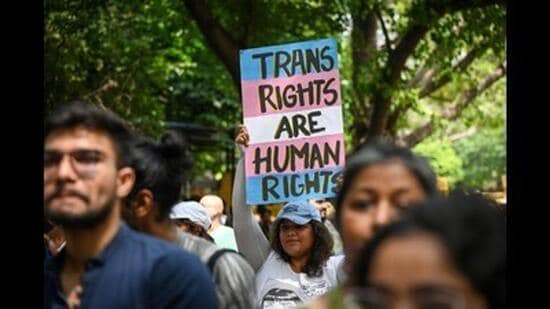
“We direct that the advisory issued (by the National Human Rights Commission read as Advisory for Ensuring the Welfare of Transgender Persons 2.0) in May 2026, shall be considered and steps permissible under law shall be taken by the respondents. Let the respondents file an affidavit detailing what steps have been taken to ensure compliance of the advisory by the NHRC,” a bench of Chief Justice DK Upadhyaya and Justice Tejas Karia said in the order.
Also Read: Eroding transformative rights for trans people
The direction was issued in a petition filed by student Taaran Chandna, seeking directions to the Centre, Delhi Police and the Delhi government to formulate and implement an SOP for the arrest and search of a transgender person.
The petition said that while the Bharatiya Nagarik Suraksha Sanhita, 2023, comprehensively governs arrest procedures for men and women, it contains no specific provisions concerning transgender persons.
{{/usCountry}}The petition said that while the Bharatiya Nagarik Suraksha Sanhita, 2023, comprehensively governs arrest procedures for men and women, it contains no specific provisions concerning transgender persons.
{{/usCountry}}Chandna further said that the Transgender Persons (Protection of Rights) Amendment Act, 2026, despite substantially revising the definition of a transgender person and the certification process, remains silent on police arrest and search protocols.
Chandna also relied on the National Human Rights Commission’s May 2026 advisory, Ensuring the Welfare of Transgender Persons, 2.0, which calls for a comprehensive SOP on the issue, but alleged that the same had not been implemented yet.
Also read: In Supreme Court, govt flags concerns over gender self-identification
The arrest and personal search of transgender persons without any procedure for ascertaining, acknowledging or accommodating their gender identity, the petition said, constituted a direct, concrete and continuing violation of multiple fundamental rights guaranteed under Part III of the Constitution of India, as interpreted by the Hon’ble Supreme Court across decades of authoritative jurisprudence.
The Delhi government, represented by standing counsel Sameer Vashisht, submitted that adequate provisions have already been made for transgender inmates in Delhi’s prisons, including arrangements for housing them in separate cells or designated facilities.
The matter will next be heard on November 18.