In my 10 years in Delhi-NCR, I have been mocked and abused for the way I look more times than I can count. Someone would say something, I would say something back, and that was usually the end of it. Some days I won, some days I just walked off angry. But it was always one person, and I always knew what to do with one person.
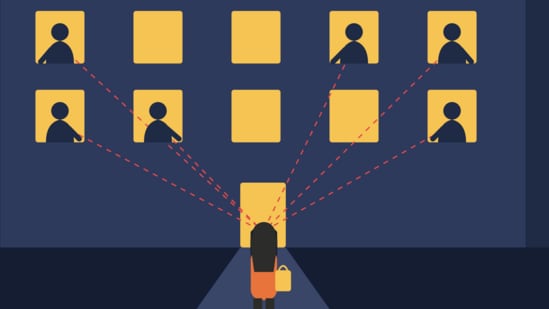
But I had no idea what to do when that one person became a crowd, inside the very residential complex I call home.
It was on the evening of September 7. Not in some far-flung corner of the city but in south Delhi, in a large residential colony off Outer Ring Road, minutes from Greater Kailash 1. This is the part of Delhi known to be upscale and relatively more safe, the part of Delhi free of the biases that beset so much of the city.
I had left home early that morning for work, then stopped briefly at a mall afterwards. By the time I got back around 9pm, all I wanted was to park my vehicle and head home. The parking space is narrow and awkward, with drains and battered sidewalks on either side. I was still navigating this everyday challenge inside the cramped society when the remarks started. There was no argument and no exchange that went wrong. They came straight at me, from the first second.
"Kya kar rahi hai tu? Gaadi park nahi karna aata hai kya? Nikal yahan se (What are you doing here? Don't you know how to park a car? Go away)!" – the voice was loud and came from right beside my car. I stopped, rolled down the window and put my head out to see who was shouting. It was an elderly woman, stepping out of her ground-floor house with her husband.
{{/usCountry}}"Kya kar rahi hai tu? Gaadi park nahi karna aata hai kya? Nikal yahan se (What are you doing here? Don't you know how to park a car? Go away)!" – the voice was loud and came from right beside my car. I stopped, rolled down the window and put my head out to see who was shouting. It was an elderly woman, stepping out of her ground-floor house with her husband.
{{/usCountry}}I saw no reason for this to go further inside a residential colony, so I kept my voice calm: “Kya ho gaya? Park kar rahi hoon main. Aap aise chilla kyun rahe ho (What happened? I am parking my car. Why are you shouting)?”
I thought restraint would end it. But it only made it worse.
“Ae ladki, tu hai kaun? Tameez nahi hai kya? Hum tumhe society se bahar fek denge (Woman, who are you? Do you not know how to respect others? We will throw you out of the society),” the couple answered together, one voice on top of the other.
Their voices carried, and soon other residents out on their after-dinner walks began to gather. I knew the couple by sight, nothing more. We had never exchanged a word. I could not understand why they were coming at me like this.
For two minutes I tried to reason with them. They said I had broken their flower pots. My car wasn't anywhere near them. They said I had hit the meter box. I showed my car was a good metre or so away from it. Each time the charge changed, and the screams got worse. “Ek jhaapad padegi tumhe,” the woman yelled, raising her left hand.
I knew by now that nothing I said would cool this down. When I objected to their language, the woman threatened me: “Chappal se marunga tumhe idhar sabke saamne. Gaadi todh dungi tumhari (I will thrash you with slippers in front of everyone here and smash your car).”
Then they turned to the crowd: "Hamesha nashe mein rehti hai yeh ladki. Chaubeez ghante peeti hai. Byas nashe karti rehti hai. Pata nahi ladko ke saath flat mein kya karti hai (She is never in her senses and drinks all day. No one knows what she does with men inside the flat)." These were comments made about a practical teetotaler (not to say they would be justified remarks about anyone else).
For the first time that evening, I shouted. I gave it everything I had, the way I had a hundred times on the street. But there were two of them, and my voice was lost in the noise.
“Bhagwan jaane India ke bahar se aakar kya kar rahi hai yeh idhar. Pata nahi paise kaise kamati hai. Kisiko pata nahi teen-teen gaadiya ke saath kya karti hai. Pata nahi iske maa-baap kaun hai (God knows what she is doing here after coming from outside India. No one knows her source of income. No one knows what she does with three cars. No one knows who her parents are),” the old woman said.
The couple showed no sign of stopping. The old man threatened to have me thrown out of my flat. I told him he was welcome to try, and he stepped away and called the landlord.
When he came back to the crowd, he announced: "Maine baat kar li hai. Sharma (name changed) ne kaha hai ki yeh ladki ko aaj raat hi utha kar ghar se bahar fenk denge. Yeh aaj raat hi jayegi idhar se. Yeh iss kabil nahi hai ki humare saath idhar rahe. Aap log tension na lo, isse aaj raat ko hi bahar fenk diya jayega (I have spoken to the landlord. He said this woman will be thrown out of the house. She will leave tonight itself. She does not deserve to stay with us. Do not worry, she will be thrown out tonight itself).”
The turn of events kept stunning me. I had never imagined I would be insulted like this in public. I had certainly never imagined that people would laugh at me while it happened.
When I called my flatmate to tell him to return home immediately, I broke down. The couple seized on it. “Dekho sab, ladki ro rahi hai. Darr gayi hai ab. Ab usse sabak seekhaongi (See everyone, the woman is crying. She has gotten scared. Now we will teach her a lesson,” they said, cheering and laughing loudly.
****
Fighting back has never been a problem for me. In this city, with a face like mine, I have had to defend myself for years. When I got my first job in Delhi in 2015, my family was not happy. They feared for my safety, most of all because of how I looked. But I had made up my mind. I was going to work in this city.
But this was not a fight over anything real. They questioned my character. They sneered at how I earn my money. They dragged in my parents. Every word was invented, and I stood there struggling to answer, because you cannot rebut a story that was never true to begin with.
But more importantly, this was not the first time residents of the colony had come after me. Weeks earlier, I had stepped in to settle an argument that was spiralling out of control between my flatmate and another neighbour over garbage. The women of that family turned on me and hurled abuses. "Pata nahi isse kidhar se utha kar ghar pe le aaye hain (no one knows where she was picked from and brought to the flat),” she added.
What was happening? Yesterday, it was that family; today, it was this couple. Next week, it could be someone else. I realised these were not arguments over parking or flower pots or garbage. Nobody who is merely angry reaches for a racial slur. Nobody who is merely angry sets out to destroy the reputation of a woman they have never exchanged a word with.
Over time, I had grown used to the stares from the residents. Not the innocently curious kind, or the kind that wonders where you are from. These were stares steeped in suspicion and prejudice.
I lived alone in Noida for years. In all that time, I faced just one major incident of this kind, when a man tried to pick a fight with me over the India-China tensions then. I did not fight him, but I did enough to get him to whimper away.
Sitting in my flat inside the Delhi society that night, I kept going back to the faces in that crowd. Not one of them stepped forward. Not one asked whether what the couple was saying could possibly be true. Some laughed, some appeared to sympathise with the couple’s “distress” and the rest watched dispassionately – for them, it was just an evening's entertainment.
I realised then that the mask had slipped. These were not angry neighbours, this was just society closing in on someone they thought was different. The residents did not see a neighbour or a woman who had come home tired after a long day. They saw an “outsider” who they felt had no business being there, and they felt entitled to say so aloud, to an audience.
And because I was different, I was also the opposite of everything that they thought was pure and true about them. They believed they were pious, so I must have been drunk. They believed they were well-educated so I must be "illiterate". They believed they were civilised, so I must have been uncivilised and brash.
I also realised that as a relatively young woman who earns an honest living, drives her own car, wears what she wants and is fiercely independent, I am still an affront to so many of the orthodoxies that our society still holds dear. The same orthodoxies feed biases against people who look like me.
I always believed that residential areas were safe spaces, and a colony in South Delhi especially so. These are families who boast of their own houses and cars, who have seen generation after generation grow up in the same lanes. I never imagined that I would be stripped of my dignity, in public, for no fault of mine.
****
The next morning, when I woke up to a phone call from the police asking me to come in and give a statement as a follow-up to my complaint, I saw the front page of major newspapers carrying the story of a Manipuri guitarist killed in Delhi.
A racial motive was not established, but protests erupted instantly among people from the northeast, angered at yet another instance of mindless violence meted out against people who look a certain way.
My heart sank further. Consumed by what had happened to me, the news hit me in a way I can’t explain. Part of it was surreal. Yet I had to move on, joining work and going about my life, hoping there would be no repeat.