Dialogue and Diplomacy as Solutions
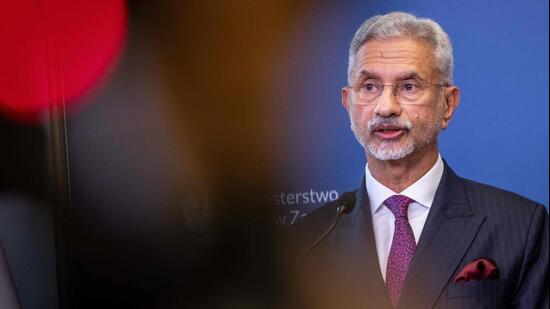
The Russia-Ukraine conflict can be resolved only through dialogue and diplomacy and not through stopping the purchase of commodities such as oil, fertilisers and minerals, external affairs minister S Jaishankar said on Friday after his talks with his Polish counterpart Radosław Sikorski in Warsaw.
Reinforcing Messages
Jaishankar doubled down on the message he had conveyed to his Ukrainian counterpart, Andrii Sybiha, a day earlier in Kyiv, while responding to media questions about India’s energy purchases helping finance the Russian aggression. Poland is among Ukraine’s strongest supporters in the war against Russia, largely due to concerns about the conflict spilling over the border.
Jaishankar held talks with Sikorski, who is also the deputy prime minister, in Warsaw after concluding his visit to Ukraine. He also met Polish President Karol Nawrocki and discussions between the two sides focused on cooperation in trade, defence, digitalisation, innovation and mobility of professionals. The safety of maritime commerce also figured in the talks as both India and Poland contribute a large number of seafarers to the merchant shipping industry.
Global and Regional Issues Discussed
The Russia-Ukraine war was among the global and regional issues discussed by Sikorski and Jaishankar, who reiterated Prime Minister Narendra Modi’s message to Russian President Vladimir Putin earlier this week that endless war must give way to the end of war.
{{/usCountry}}The Russia-Ukraine war was among the global and regional issues discussed by Sikorski and Jaishankar, who reiterated Prime Minister Narendra Modi’s message to Russian President Vladimir Putin earlier this week that endless war must give way to the end of war.
{{/usCountry}}“These are wars without winners. Every additional day means more death, more destruction, more loss to the parties themselves, and more cost to the rest of the world,” Jaishankar told a joint media briefing.
“Our efforts must therefore focus on promoting dialogue and diplomacy. We must each do what we can, in whichever way we believe would be most effective. And support the efforts of others to bring this conflict to an end. This is India’s strong conviction and we are acting on it,” he said.
Jaishankar responded to a question about Poland’s belief that energy revenues are helping Russia finance the aggression by reiterating his comments in Kyiv that India has a responsibility to meet the energy security needs of its 1.4 billion people in a global situation that is “very difficult.”
He said, “My point was this conflict, which is now in its fifth year, is not going to end not because somebody chose to or not to buy oil, alumina, fertilisers or metals and minerals. It will end when there is diplomacy, dialogue [and] negotiation.
Jaishankar added, “Let’s diagnose the problem right — the issue is a conflict, it’s a war, and the solution to that is not in trade, the solution to that is in negotiations.”
He responded to another question about India’s specific plans to end the conflict, saying he could not go into details. India has been in continuous touch with Ukraine and Russia and there have been detailed discussions with both sides. “What we are trying to do is to see if there are ideas and suggestions which can be developed in some way in which they would contribute to the mitigation, ideally the cessation, of the conflict,” Jaishankar said.
The two foreign ministers reviewed the joint action plan for 2024-28, and Jaishankar noted there was an uptick in trade and investments while defence collaboration has deepened. The two sides are expanding in traditional areas such as mining and energy, and also working on agreements in cybersecurity, space, clean coal, classified information and critical minerals, he said.
The two sides also discussed the West Asia conflict, and Sikorski described the safety of Indian and Polish mariners on board vessels in the Persian Gulf as a common concern. “Our people are often targeted, are sometimes kidnapped in some places, so safety [and] security on the high seas is a common concern to both of our countries,” he said.
Jaishankar responded to a question on the possible illegal recruitment of Indian workers in Poland by saying that the Indian government unambiguously supports legalised mobility and opposes illegal migration or mobility. At the same time, he said, a globalised economy is not only about the flow of capital and goods but also about facilitating the flow of talent and skills in a regulated and mutually beneficial manner.