
 E-Paper





Follow the latest breaking news, major developments and agenda-setting stories from India and around the world with the newsdesk at Hindustan Times. Operating round the clock, the desk brings together experienced editors, reporters and correspondents to deliver fast, accurate and contextual reporting across subjects that influence public policy, governance, business, society and international affairs. The HT News Desk covers politics, elections, government policies, the economy, business and markets, science and technology, the environment, law and order, infrastructure, education, climate issues and geopolitics, while closely tracking developments across states, institutions and global capitals. The team also leads coverage of major breaking news events, policy announcements, court proceedings, natural disasters, public emergencies and significant international developments. Reports published by the newsdesk are based on information gathered from reporters on the ground, official statements, government agencies, court records, regulatory filings, recognised institutions and other authoritative sources. Stories undergo editorial scrutiny and verification processes to ensure accuracy, fairness and relevance, and are updated as events evolve and additional information becomes available. Whether covering a key political decision in New Delhi, an economic policy shift affecting millions, a landmark court ruling or a major global event, the HT News Desk aims to provide readers with reliable, fact-based journalism that delivers not only the latest developments but also the context and analysis needed to understand their wider implications.
DMK challenges recently-passed 10% quota for poor bill
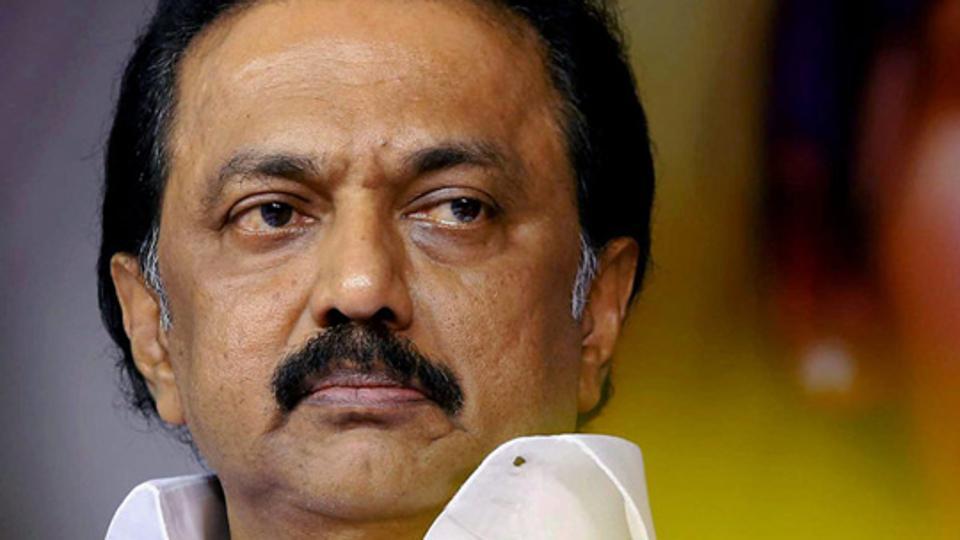
DMK chief MK Stalin had declared well before the debate started that his party opposes the bill because the quota should be based on social backwardness and not economic status. .


Tamil Nadu political party Dravida Munnetra Kazhagam (DMK) on Friday filed a writ petition in Madras High Court challenging recent constitutional amendment for granting 10% reservation to economically weaker sections of society, reports news agency ANI.
The petition was filed by DMK’s organising secretary RS Bharathi.
DMK had earlier this month voted against the bill in Parliament with party leader Kanimozhi demanding that the bill be sent to a select committee for further scrutiny.
DMK chief MK Stalin had declared well before the debate started that his party opposes the bill because the quota should be based on social backwardness and not economic status.
The bill on quota for the poor, which Prime Minister Narendra Modi said would bring social harmony, was tabled and passed on the penultimate days of the recently-concluded winter session.
The Constitution (124th amendment) bill, envisaging a 10% quota in jobs and education for the economically weaker section, was largely supported by parties with some smaller parties saying it was against the Constitution.
Another Tamil Nadu party AIADMK, largely supportive of the BJP, has raised question about the quota. Party leader M Thambidurai said, “You (the government) have so many programmes for economic development of the poor such as skill development, Mudra scheme (of loans for small businesses) or the scholarships. Now, this government wants to give reservation to economically weaker section [that] means all these programmes are not properly implemented.”


