The International Air Transport Association (IATA) on Wednesday said any significant reduction in Mumbai airport capacity should be based on a transparent demand-capacity assessment, apart from consulting the airlines.
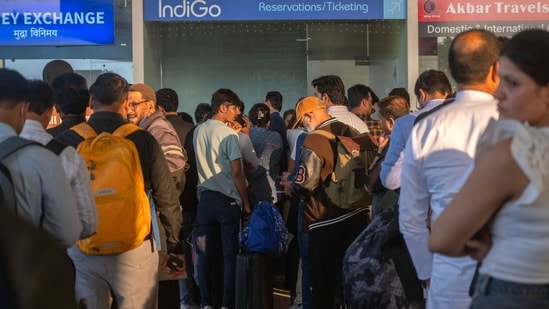
This comes a day after the civil aviation ministry (MoCA) asked the Mumbai airport operator, Adani Airport Holdings Ltd (AAHL), to postpone its plan to shift some of its international flights to Navi Mumbai.
“Any significant reduction in airport capacity or other measure impacting airline operations should be based on a transparent demand-capacity assessment, meaningful consultation with affected airlines, and sufficient time to develop workable transition arrangements that minimise disruption to airlines and their passengers,” Albert Tjoeng, head of corporate communications at IATA, said.
The issue
Mumbai International Airport Ltd (MIAL), which operates Mumbai airport, had sought a reduction of around 33% in international departure slots from October 25, affecting 265 of 770 weekly international departures, as part of the transition linked to the phased redevelopment of Terminal 1 (T1).
Airlines described the proposed timelines for the shift as “unachievable”, according to people aware of the matter, citing concerns over the lack of consultation with the affected airlines.
IATA, which represents more than 360 airlines globally, said, “The discussion now provides an opportunity for stakeholders using the airport to review the underlying capacity requirements, understand the basis of any proposed capacity reduction, examine alternatives that may mitigate such reductions, and work collaboratively on a transition plan that protects passenger interests, airline operations and the international connectivity of the Mumbai Metropolitan Region.
{{/usCountry}}IATA, which represents more than 360 airlines globally, said, “The discussion now provides an opportunity for stakeholders using the airport to review the underlying capacity requirements, understand the basis of any proposed capacity reduction, examine alternatives that may mitigate such reductions, and work collaboratively on a transition plan that protects passenger interests, airline operations and the international connectivity of the Mumbai Metropolitan Region.
{{/usCountry}}“The key thing is to reach an agreement on the revised approach among all parties – MIAL and airlines operating at Mumbai Airport – through consultation,” Tjoeng said.
He said that IATA has consistently supported the redevelopment of T1, the modernisation of Mumbai airport and the development of Navi Mumbai International Airport, “all of which are important to the long-term growth of aviation and international connectivity across the Mumbai Metropolitan region.”
The government intervention
The government’s intervention came at a meeting chaired by civil aviation secretary Samir Kumar Sinha on Tuesday, with representatives of IndiGo, Air India, Akasa Air, the Airports Authority of India, the Federation of Indian Airlines, and IATA.
“We thank MoCA for its intervention, and welcome its decision that the airport operator defer its current proposal and re-engage with all stakeholders before returning with a revised and collaborative transition approach for T1 redevelopment,” Tjoeng stated.
The next consultation meeting is scheduled for October 13, while a meeting to discuss the final plan is expected on October 20.
Currently, AAHL’s T1 redevelopment is expected to begin in January 2027, increasing its annual capacity from 15 million to 20 million passengers.