
 E-Paper



‘Don’t punish community': Punjab leaders on US visa pause after driver's u-turn kills 3 in Florida
There is a wider worry dogging Punjabis after the incident; that Harjinder Singh's wrong turn now essentially means no more US work visas for truckers

 Prefer HTon Google


Calls for leniency have poured in from several quarters in Punjab for 28-year-old Harjinder Singh, the Indian-origin truck driver facing a potential 45-year jail sentence in the US after his illegal u-turn on a highway in Florida resulted in three deaths.
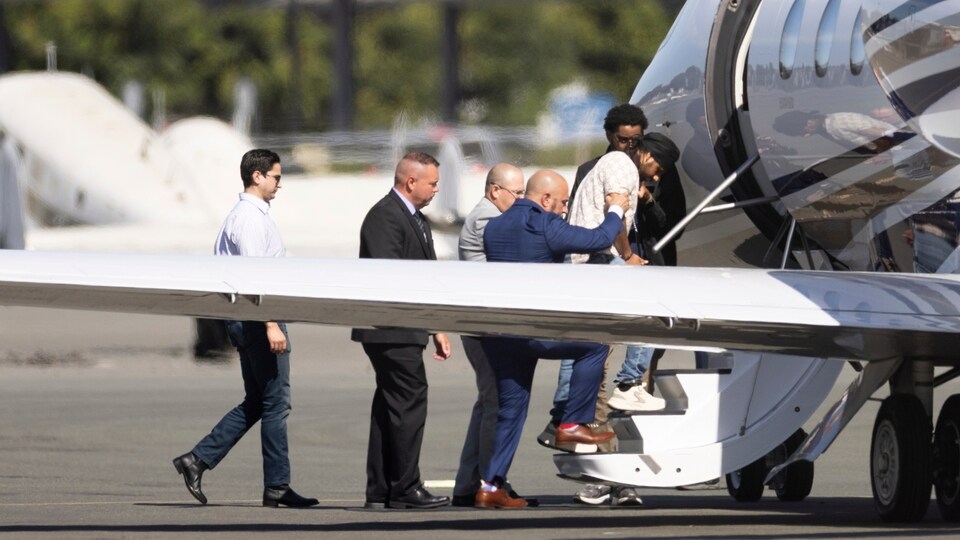
Plus, there is a wider worry dogging Punjabis after the incident; that Harjinder's wrong turn now essentially means no more US work visas for truckers.
Leaders from the state's ruling and opposition parties have taken it up immediately, given the sheer scale of Punjabi drivers' participation in the trucking sector at home and abroad.
Cabinet minister Sanjeev Arora of the Aam Aadmi Party (AAP) wrote to the union government that the US government's decision to suspend visa issuance has put the livelihood of 1.5 lakh Punjabi drivers at risk in the US.
It was on August 22, ten days after the accident caused by Harjinder Singh, that the US government reacted angrily. It paused the issuance of worker visas for commercial truck drivers, citing reasons of road safety and loss of jobs for Americans at the hands of foreign drivers.
NRI affairs minister Sanjeev Arora, writing on behalf of the state government, said foreign minister S Jaishankar should talk to the US government about this. He said the whole Punjabi community is being punished based on one incident.
Former union minister Harsimrat Kaur Badal of the Shiromani Akali Dal (SAD), which is a bitter opponent of the AAP in the state, sought a similar intervention.
She wrote pointedly to Jaishankar, saying that one tragic accident involving a Punjabi driver should not lead to mass action against the entire community.
In her post on X, Harsimrat Badal shared her letter and said mass level action would be discriminatory in nature “considering the fact that Punjabis have built and sustained trucking logistics and trucking networks over decades”.
She also said: “Punjabi and Sikh drivers make up 20 per cent of the United States' trucking industry, with around 1.5 lakh Sikh drivers engaging in trucking in the US.”
Arora said in his post on X: “We must ensure that justice for one case does not translate into collective punishment for thousands of law-abiding workers!”
The visa pause could affect specific regions in Punjab such as Majha, Doaba, and the Puadh belt, where remittances sustain families of a large number of truck drivers in the US, a report in The Tribune noted.
She also reacted to a new US executive order for English language proficiency for all truckers. "Those failing such proficiency tests should be allowed to apply for the same again so that their means of livelihood are not taken away from them completely," she added.
Harjinder's family, meanwhile, cited his young age and “bad luck” to call for lenient treatment in the case. "We are also saddened over the death of three persons in the accident. Similar incidents have taken place earlier as well," Dilbagh Singh, one of his relatives, told reporters.
Harsimrat Badal requested the foreign minister to ensure that counsellor access was provided to Harjinder Singh, who had been arrested on three counts of vehicular homicide, so that his case could be pleaded appropriately.
Harjinder had fled to California after the incident, and has since been arrested and brought to Florida.


