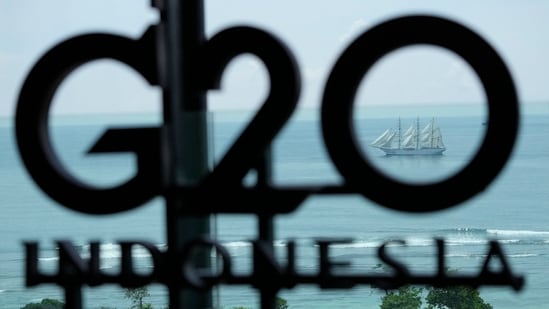
At the closing session of the G20 summit in Bali, Indonesia, Prime Minister Narendra Modi officially took over the presidency of the group and promised to make it a “catalyst for global change” at a “time when the world is simultaneously grappling with geopolitical tensions, economic slowdown, rising food and energy prices and the long-term ill-effects of the pandemic”. India’s official presidency of the G20 will start from December and India will host the next annual meeting of the group
Emerging markets and India have increased their economic weight within G20
Data from the IMF also shows that the emerging economies that are part of G20 have significantly increased their economic importance in the past two decades; Ten emerging economies that are part of G20 include China, India, Brazil, South Korea, Saudi Arabia, Argentina, Indonesia, Mexico, Russia and Turkey. While these emerging economies have significantly increased their output share in total G20 output from 13.6% in 1999 to 36.5% in 2022, India has more than doubled its share in G20 output from 1.6% in 1999 to 4% in 2022.
{{^htLoading}} {{/htLoading}} Pandemic’s differential impact on G-20 countries
The pandemic has affected the economies of these G20 nations differently. A comparison of the latest GDP numbers with the GDP numbers before the beginning of the pandemic shows this. While few advanced countries (Australia, South Korea) and few emerging economies (Turkey, China, Indonesia) showed significant economic recovery, some countries still lag behind their pre-pandemic levels. To be sure, even in 2022, the GDP of Mexico, Russia and Turkey are expected to be behind their 2019 levels by 1.6, 1.5 and 1.4 percentage points respectively, shows IMF data. India’s GDP in 2022-23 is expected to be 8.5%, higher than its 2019-20 GDP according to IMF projections.
{{^htLoading}} {{/htLoading}} Even the Ukraine war’s impact has been different on G20 countries
Just as the global economy was making a recovery from the impact of the pandemic, the Russia-Ukraine war caused yet another disruption. Once again, the impact has been different across member countries. A comparison of growth projections for the major G20 nations before the rise of the war in Ukraine, and the latest projections clearly shows this. If one takes IMF’s World Economic Outlook published in January 2022 as the benchmark for growth outlook before the beginning of the war and compares them with IMF World Economic Outlook’s October 2022 projections, it can be seen that projections for 2022 have been revised down for major G20 economies, except Brazil, Saudi Arabia and South Africa. Even among the group of economies whose projections were revised down in October, the growth revision for the US and Germany in 2022 are the highest (2.4 and 2.3 percentage points respectively). This comparison excludes Russia.
{{^htLoading}} {{/htLoading}} India takes the presidency of the G20 at a time when it is expected to be the fastest growing major economy in the world . It remains to be seen whether it can convince the leaders of this important group to take coordinated action on economic issues that include both short term problems such as the energy price crisis as well as structural problems such as finding common ground on issues of climate finance.
{{^htLoading}} {{/htLoading}}