
 E-Paper



ED summons KCR's daughter K Kavitha in Delhi excise policy case
The ED has alleged that Kavitha was in touch with AAP’s communication in-charge who had met liquor businessmen and politicians at the time of policy formulation

 Prefer HTon Google


The Enforcement Directorate (ED) has issued summons to K Kavitha, Bharat Rashtra Samithi (BRS) leader and daughter of Telangana chief minister K Chandrasekhar Rao, asking her to appear before it on Friday for questioning in the now-scrapped Delhi excise policy and paying kickbacks to Aam Aadmi Party (AAP) leaders, officials familiar with the development said on Thursday.
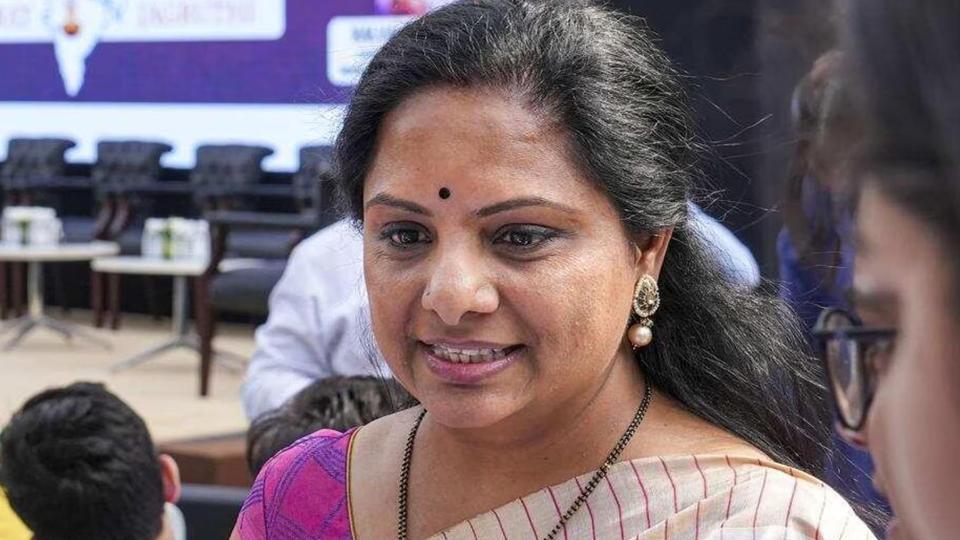
The BRS leader was earlier questioned by ED in March in connection with the case.
The federal anti-money laundering probe agency is trying to unearth her role in influencing the policy and alleged bribery allegations, said officials.
The ED has alleged that Kavitha was in touch with AAP’s communication in-charge Vijay Nair, who had met liquor businessmen and politicians at the time of policy formulation and implementation.
Also Read: Delhi excise policy scam: CBI summons 10 Punjab officials
Officials mentioned above said that Kavitha is expected to be also questioned about her association with Sameer Mahendru’s Indospirits Group to control multiple retail zones in Delhi, and advance payment of kickbacks worth Rs.100 crore to the AAP leaders by an alleged South Group of which she was a member.
People familiar with the developments said during her previous interrogation session, Kavitha was confronted with the statements of Butchibabu Gorantla, her former chartered accountant and Arun Ramchandra Pillai, who represented her interests during multiple meetings with Nair and others.
Both Gorantla and Pillai were arrested arrested by the Central Bureau of Investigation (CBI), in February and March, respectively. Former Delhi deputy chief minister Manish Sisodia, who has been portrayed as the main accused in the formulation of the now-scrapped 2021-22 exercise policy, was arrested in February.
Butchibabu, in his statement recorded before the ED officials on February 23 stated that “There was a political understanding between K Kavitha and the chief minister of Delhi (Arvind Kejriwal) and (former) deputy CM (Manish Sisodia) of Delhi. In that process, K Kavitha has also met Vijay Nair on 19th-20th March 2021”.
“Vijay Nair was trying to impress K Kavitha with what he could do in the policy. Vijay Nair was acting on behalf of the CM of Delhi Arvind Kejriwal and Dy CM Manish Sisodia. The understanding was that in exchange for the favours that can be done in the policy and the Delhi liquor business for K Kavitha, some funds would given to the AAP,” Butchibabu stated in his statement to ED, reviewed by HT.
“Out of the deal that was between K Kavitha and top AAP leaders, she was given stakes in partnership with Sameer (Mahendru) and distribution of Pernod Ricard,” ED said in one of its court documents earlier.
Also Read: CBI files FIR against ED assistant director in Delhi excise policy case
Pillai, according to investigators, represented the benami investments of Kavitha. He was allegedly actively involved in cartel formation and was an accomplice in the payment of bribe money on behalf of South Group.
ED has alleged that a part of the Rs.100 crore kickbacks generated in the Delhi excise policy was used in the AAP campaign in the 2022 Goa assembly election.
The agency has also pegged the loss in the excise policy irregularities at Rs.2,873 crore.
The South Group comprises Yuvajana Sramika Rythu Congress Party MP Magunta Srinivasulu Reddy, his son Raghav Magunta, Sarath Reddy (promoter of Aurobindo Group), K Kavitha and Delhi-based businessman Sameer Mahendru.
Kavitha has rubbished the allegations against her.
Kavitha has maintained that “these tactics of intimidation against the fight of my father and chief minister K Chandrashekar Rao, and the BRS will not deter us.”
Kejriwal has also termed the charges as “fake”.
The Delhi government’s 2021-22 excise policy aimed to revitalise the city’s flagging liquor business. It aimed to replace a sales-volume-based regime with a license fee for traders, and promised swankier stores, free of the infamous metal grilles, ultimately giving customers a better buying experience. The policy also introduced discounts and offers on the purchase of liquor, a first for Delhi.
The plan, however, came to an abrupt end, with Delhi’s lieutenant governor Vinai Kumar Saxena recommending a probe into alleged irregularities in the regime.
This ultimately resulted in the policy being scrapped prematurely and being replaced by the 2020-21 regime, with the Aam Aadmi Party (AAP) alleging that Saxena’s predecessor sabotaged the move with a few last-minute changes that resulted in lower-than-expected revenues.


