Outlining a 10-point agenda for renewing efforts for disaster risk reduction, Prime Minister Narendra Modi on Thursday stressed on encouraging involvement of women volunteers and sought greater cohesion in international response to deal with all kinds of calamities.
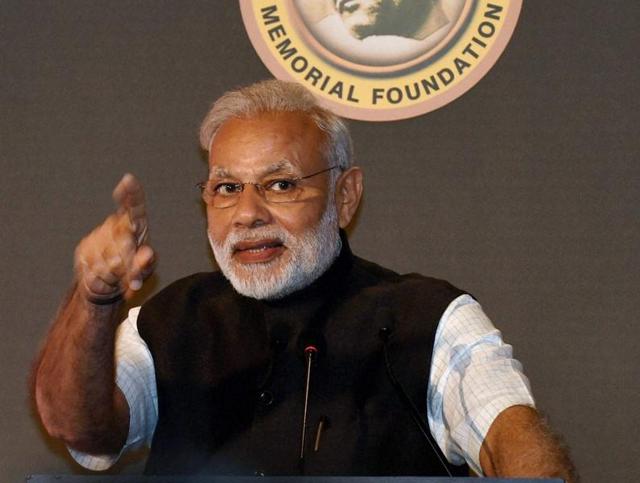
Inaugurating the Asian Ministerial Conference on Disaster Risk Reduction (AMCDRR) here, he emphasised on working towards risk coverage for all, starting from poor households to small and medium enterprises and multi-national corporations to nation states.
He said all development sectors must imbibe the principles of disaster risk management and encourage involvement and leadership of women as they are the biggest sufferers of any disaster.
“”Women are disproportionately affected by disasters. They also have unique strengths and insights. We must train a large number of women volunteers to support special needs of women affected by disasters.
“We need women engineers, masons and building artisans supporting reconstruction, and women self help groups assisting livelihood recovery,” he said.
The Prime Minister said there should be investment in risk mapping globally, leveraging of technology to enhance the efficiency of the disaster risk management efforts and utilising the opportunities provided by social media and mobile technologies.
{{/usCountry}}The Prime Minister said there should be investment in risk mapping globally, leveraging of technology to enhance the efficiency of the disaster risk management efforts and utilising the opportunities provided by social media and mobile technologies.
{{/usCountry}}He also spoke of building local capacity and initiative, ensuring that the opportunity to learn from a disaster is not wasted and bringing about greater cohesion in international response to disasters.
Modi said a fully functional Indian Ocean Tsunami Warning System has become operational and along with its Australian and Indonesian counterparts, the Indian National Centre for Ocean Information Services is mandated to issue regional tsunami bulletins.
“The same goes for improvements in cyclone early warning. In India, if we compare the impact of cyclone events in 1999 and 2013, we can see the progress we have made.... It led to a significant reduction in loss of lives from cyclones. It is now recognised as a global best practice,” he said.