
 E-Paper



Indira Gandhi refused to strike Pakistan nuclear site in ‘secret’ India-Israel operation, ex-CIA official claims
On Pakistan's nuclear program, Richard Barlow said, “It’s a shame that Indira (Gandhi) didn’t approve it; it would have solved a lot of problems.”

 Prefer HTon Google


Former CIA officer Richard Barlow has claimed that a proposed joint “covert operation” by India and Israel to bomb Pakistan’s Kahuta nuclear facility in the early 1980s could have “solved a lot of problems” but the then Prime Minister Indira Gandhi “did not approve” of it.
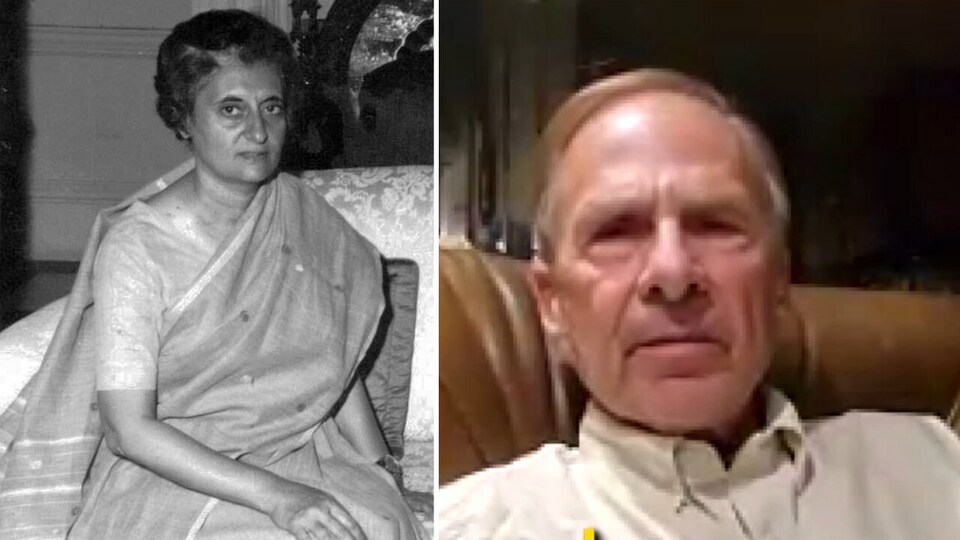
He dubbed her decision a “shame”. He was speaking in an interview with news agency ANI, when he said that the operation was intended to halt Islamabad’s atomic ambitions.
Richard Barlow, who served as a counterproliferation officer in the CIA during Pakistan’s clandestine nuclear development, said he had heard about the plan in intelligence circles but was not directly involved. “I heard about it at some point. But I didn’t get my teeth into it because it never happened,” he added.
The comments came days after US President Donald Trump told CBS News’s 60 Minutes that while the United States has avoided nuclear testing for more than three decades, several countries, including Pakistan, continue to conduct underground nuclear trials.
Reacting to Trump’s statement, ministry of external affairs spokesperson Radhir Jaiswal criticised Pakistan, saying its “clandestine and illegal nuclear activities” were in line with the country’s historical behaviour.
India-Israel ‘planned preemptive strike’
According to reports and declassified accounts, cited by ANI, India and Israel allegedly planned a preemptive airstrike on Pakistan’s Kahuta uranium enrichment plant, which formed the core of its nuclear programme.
The operation was intended to prevent Islamabad from developing and potentially proliferating nuclear weapons, particularly to Iran, which Israel considered a significant adversary.
Barlow also noted that the US administration under then-President Ronald Reagan would have strongly opposed such a strike, especially if executed by Israel, as it could have disrupted America’s covert war effort against the Soviet Union in Afghanistan.
He added that Pakistan exploited this US dependency as leverage. Officials, including Munir Ahmad Khan, former head of the Pakistan Atomic Energy Commission (PAEC), reportedly warned US lawmakers that disrupting aid flows could jeopardise cooperation on Afghanistan.
“I think Reagan would have cut Menachem Begin's ba**s off if he did anything like that. Because it would have interfered with the Afghan problem,” Barlow said, referring to Israel’s former Prime Minister.
Barlow further explained, “As you alluded to, what Munir Khan said was that they were basically using the flow of covert aid to the Mujahideen as blackmail. I think that’s what Munir was saying to [US Congressman Stephen] Solarz—if you pull aid, we’re not going to support the Mujahideen anymore.”
Notably, the Kahuta enrichment facility, established under the direction of Pakistan’s nuclear architect AQ Khan, later became central to Pakistan’s successful pursuit of nuclear weapons, culminating in its first atomic tests in 1998.


