
Leader of the Opposition (LoP) in the Lok Sabha Rahul Gandhi said on Sunday that he, along with senior leaders of the INDIA bloc, travelled to Chennai to meet DMK chief and former Tamil Nadu chief minister MK Stalin and urge him to oppose the Centre's proposed delimitation bills ahead of the special session of Parliament.
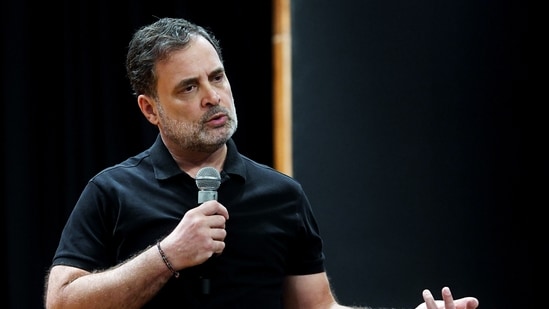
Congress president Mallikarjun Kharge, senior Congress leader Sonia Gandhi, TMC chief Mamata Banerjee and TMC MP Abhishek Banerjee are also travelling to Chennai for the meeting with Stalin.
The 132nd Constitution Amendment Bill and the Delimitation (Second) Bill are expected to be tabled before the Parliament when Lok Sabha reconvenes on Monday and the Rajya Sabha reconvenes on Wednesday.
Rahul's appeal to ‘Brother Stalin’
In a post on X, the Congress MP said that INDIA bloc leaders will request the DMK chief to oppose the bill.
Featured Video
After the delimitation, the number of seats in Lok Sabha seats will increase up to 850, of which 815 will be from states and 35 from Union territories.
Deep Dive
Why did Rahul Gandhi oppose the proposed delimitation bills?
How would the proposed delimitation bill affect representation in southern states?
Why did the DMK later announce support for the delimitation bill?
"An expansion to 850 seats will finish democracy in India. It will give BJP-RSS unlimited space to redraw India's entire electoral map to their advantage," he said.
{{/usCountry}}"An expansion to 850 seats will finish democracy in India. It will give BJP-RSS unlimited space to redraw India's entire electoral map to their advantage," he said.
{{/usCountry}}"Brother Stalin has always stood like a rock against anti-Tamil forces. In the national interest, in Tamil Nadu's interest and to protect the Constitution, we have to defeat this bill together," the Leader of Opposition in the Lok Sabha said.
More details will be added shortly.
ABOUT THE AUTHOR
Follow the latest breaking news, major developments and agenda-setting stories from India and around the world with the newsdesk at Hindustan Times. Operating round the clock, the desk brings together experienced editors, reporters and correspondents to deliver fast, accurate and contextual reporting across subjects that influence public policy, governance, business, society and international affairs. The HT News Desk covers politics, elections, government policies, the economy, business and markets, science and technology, the environment, law and order, infrastructure, education, climate issues and geopolitics, while closely tracking developments across states, institutions and global capitals. The team also leads coverage of major breaking news events, policy announcements, court proceedings, natural disasters, public emergencies and significant international developments. Reports published by the newsdesk are based on information gathered from reporters on the ground, official statements, government agencies, court records, regulatory filings, recognised institutions and other authoritative sources. Stories undergo editorial scrutiny and verification processes to ensure accuracy, fairness and relevance, and are updated as events evolve and additional information becomes available. Whether covering a key political decision in New Delhi, an economic policy shift affecting millions, a landmark court ruling or a major global event, the HT News Desk aims to provide readers with reliable, fact-based journalism that delivers not only the latest developments but also the context and analysis needed to understand their wider implications.