Prime Minister Narendra Modi highlighted key agricultural reforms taken by the National Democratic Alliance (NDA) government in his speech on the occasion of the country’s 74th Independence Day on Saturday, pegging it to his atmanirbhar (self-reliance) campaign.
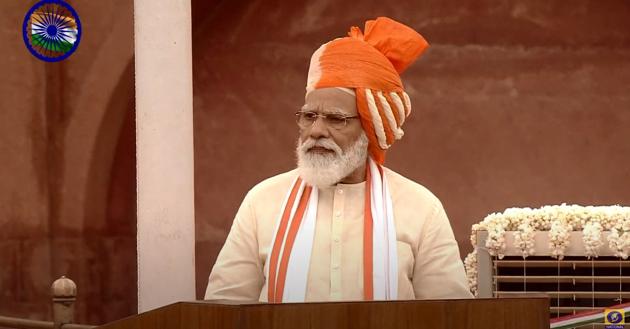
The Prime Minister said the country had undertaken key initiatives to free the country’s agriculture sector which will help to increase farmers’ income and also exports.
“We are self-reliant in agriculture and export commodities to whoever needs it. This is an example of Atma Nirbhar. We have brought laws to free the agriculture sector,” Modi said.
The Prime Minister said the country will similarly adopt policies to export other goods and his government was set on a path of self-reliance on every field.
“I admit there are lakhs of challenges for India to become atmanirbhar (self-reliant), and yes, there is fierce competition from the rest of the world. But I always say that if India faces lakhs of challenges, it also has 130 crore solutions,” Modi said.
He was broadly referring to far-reaching steps to unshackle the country’s farm sector. On June 4, the Union Cabinet had approved amendments to the six-decade-old Essential Commodities Act and cleared two other ordinances, one aimed at freeing up farm trade from all restrictions and the other guaranteeing a legal framework for pre-agreed prices to farmers.
{{/usCountry}}He was broadly referring to far-reaching steps to unshackle the country’s farm sector. On June 4, the Union Cabinet had approved amendments to the six-decade-old Essential Commodities Act and cleared two other ordinances, one aimed at freeing up farm trade from all restrictions and the other guaranteeing a legal framework for pre-agreed prices to farmers.
{{/usCountry}}All these steps, which bring the full force of liberalisation to the farm economy, were announced by Union finance minister Nirmala Sitharaman on May 15 in the second of her series of briefings last month on proposed reforms.
On May 12, in the middle of the lockdown, Modi had announced a package worth ₹20 lakh crore to spur growth, calling for a self-reliant India.
Modi’s reference to the freeing up of the agriculture sector included reading down provisions of The Essential Commodities Act, 1955, to allow for freer trade in farm commodities. The act was mainly used to curb inflation by empowering the Union and state governments to dictate quantities traders can store and also restrict the movement of any commodity deemed “essential”. Under the law, the government generally imposes stock limits to discourage hoarding of items such as pulses and vegetables.
The law was handy during the 1980s when India was still a net importer of food items. The country’s increasing food surpluses have made the law archaic. India currently has over 80 million tonne of foodgrains in warehouses across India. The country’s annual requirement under various welfare programmes is 60 million tonne.
“As said earlier, we are working to double farmers’ income. Some of you may not know this, but unlike any other business, where a businessman has the freedom to sell their product or service in any part of the country or the world and at a price they want, our farmers, till now did not have that freedom. They could only sell to who they were told to sell. Now, we have removed these restrictions and given farmers the freedom to sell at the best price, and to who they want,” Modi said.
The agriculture sector, which supports half of all Indians, hasn’t been generating enough revenues to keep farmers profitable for nearly two decades due to trade restrictions and an obsession with keeping food prices low to avoid inflation, according to the OECD-ICRIER study mentioned above.
The NDA government also brought on June 4 ‘The Farming Produce Trade and Commerce (Promotion and Facilitation) Ordinance, 2020’. The ordinance will effectively bring the curtains down on the decades-old agricultural produce market committees regulations (APMC) system that regulates buying and selling of farm produce.
APMC regulations require farmers to only sell to licensed middlemen in notified markets, usually in the same area where farmers reside, rather than in an open market, scuttling price discovery.
These reforms in “agricultural marketing” have been a long time in the making and various government panels and economists have often argued for changing existing structures of agricultural trade.
The government’s 2017 ‘Doubling of Farmers’ Income’ report had called for greater liberalisation of the farm sector by “removing laws that force farmers to sell to local monopolies”.
The ordinance will pave the way for barrier-free inter-state and intra-state trade of farm goods outside the physical premises of markets notified under APMCs, the Cabinet note said.
The Modi government also approved ‘The Farmers (Empowerment and Protection) Agreement on Price Assurance and Farm Services Ordinance, 2020’, which effectively ushered new rules for contract farming and futures.