For close to a decade, he stalked the ravines of Chambal, the mere mention of his name eliciting fear and dread. He once killed 13 cowherds in one day, and over a decade between the second half of the 1970s and the first of the 1980s, amassed a rap sheet that includes 91 cases of murder and kidnapping . Now 72, Ramesh Singh Sikarwar, who surrendered in 1984, is a “cheetah mitra”, travelling through the villages he once lorded over
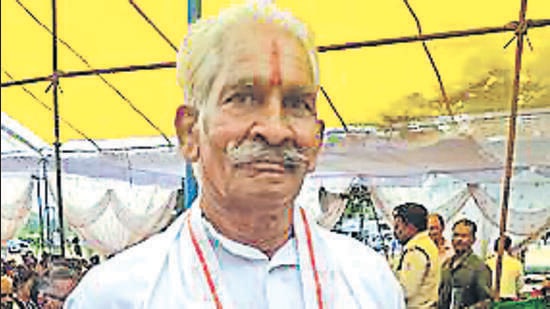
For close to a decade, he stalked the ravines of Chambal, the mere mention of his name eliciting fear and dread. He once killed 13 cowherds in one day, and over a decade between the second half of the 1970s and the first of the 1980s, amassed a rap sheet that includes 91 cases of murder and kidnapping . Now 72, Ramesh Singh Sikarwar, who surrendered in 1984, is a “cheetah mitra”, travelling through the villages he once lorded over to sensitise residents towards their new neighbours -- cheetahs from Africa.
On September 17, eight cheetahs are being translocated to the Kuno National Park from Africa, and will become the first members of the species to prowl Indian jungles in at least 70 years. The event will be inaugurated by Prime Minister Narendra Modi, with the plan in the long term to bring 50 cheetahs to India in the next five years.
Sikarwar, known as “Mukhiya” in as many as 175 villages in Sheopur and Morena, surrendered with 32 of his gang members in 1984, after the state government announced a ₹1.45 lakh reward on his gang. He spent eight years in jail, and upon his release began farming in Karhal.
Like most other dacoits, Sikarwar may have turned away from his life of crime, but his influence and reputation, as a sort of Robin Hood, have remained intact all these years.
In June , Sikarwar was contacted by the state forest department to help familiarise people to the cheetahs that are set to arrive. Sheopur divisional forest officer Prakash Verma said, “The villagers had many misconceptions about cheetahs and we were looking for some influential people to spread awareness. We selected some villagers first but there wasn’t much impact. A range officer then contacted Sikarwar in June. We spoke to him about his concerns that the animal would be dangerous for common people, and then asked him to help us. We are glad that he took up this task as a mission.”
Sikarwar said that before this June conversation with the forest department, villagers had arrived at his door expressing their fear. “They said they were afraid for their lives and also their livelihoods because leopards, black bucks and Neel Gai already create trouble. They said cheetahs are even more dangerous. I was also unaware about cheetahs because we have never seen them. I discussed this with forest officials,” Sikarwar said.
Forest officials told Sikarwar that cheetahs rarely attack humans and pose little threat to lives or livestock. “But yes, cheetahs eat black buck which destroys the crop, so it will resolve our problems. When the forest department asked me and said that I have another chance to show the world that dacoits were not bad people by making the reintroduction of cheetah successful, I didn’t waste a minute before saying yes,” Sikarwar said.
Now, on a daily basis, a white coloured “Cheetah Mitra” scarf around his neck. Sikarwar and two dozen associates roam the villages near Kuno, telling people about the new member of the cat family that will now live near them, warning them against poaching, and asking people not to attack or kill them.
As he speaks about his past, Sikarwar has little sense of remorse and a lingering archaic sense of “honour” and “justice.” “I became a baaghi to fight against injustice and to protect my family from my greedy uncle at the age of 22 in 1975. For nine years, I ruled in Sheopur, Guna and Morena area but I never carried out an unjust act. The cowherders, I killed because they worked against us, and informed the police,” he said.
It is this sense of “honour and influence” however he is leveraging in his conversations with people. “Baaghis(dacoits) did not attack people unless provoked. The cheetahs are the same,” Sikarwar said.
Harendra Singh Jadon, a local villager said, “People still believe ‘Mukhiyaji’ and thus people are now starting to understand the fact that we should welcome cheetahs asthey will bring prosperity in our villages.”
Forest officials said that they have employed 230 “Cheetah Mitras”, and say the awareness programme is crucial because poachers are still a matter of concern. Last month, five people were arrested with a leopard skin in Morawan in Kuno’s buffer zone.
One Subscription.
Get 360° coverage—from daily headlines
to 100 year archives.
Archives
HT App & Website