As the New Year begins amid renewed hope, what will 2023 hold for the economy — both Indian and global? Here are four questions whose answers hold the key.
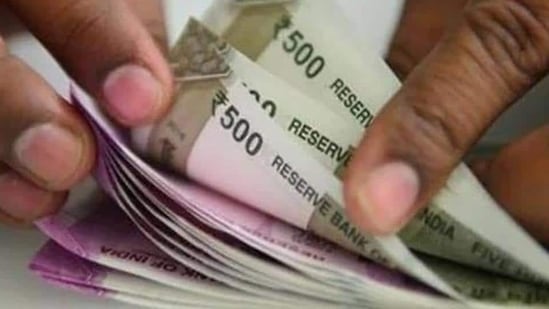
India continues to take proactive steps to reach their goal of $5 trillion economy. (HT file photo)
Will the war in Europe end?
Russia’s invasion of Ukraine in February 2022, the sweeping western sanctions against Moscow, and the supply chain disruptions that followed, set off a surge in the prices of key commodities — from oil to wheat. This caused problems not just for poor countries but also
Data from the Petroleum Planning and Analysis Cell (PPAC) shows that the international price of crude oil (Indian basket) rose to $113 per barrel in March 2022 from $94 in February 2022.
Will low interest rates become a thing of the past?
The year 2022 saw the end of the prolonged period of subdued inflation and ultra-low interest rates in the major advanced economies of the world. In the US, retail inflation, as measured by the Consumer Price Index (CPI), rose to 9.1% in June 2022, the highest since December 1981, before falling to 7.1% in November. Surging inflation also meant that central banks were forced to hike interest rates putting an end to long era of easy money.
The US Federal Reserve has administered a cumulative rate hike of 4.25 percentage points in 2022. Experts do not foresee a change in the Fed’s hawkish stance in 2023. “Most Fed officials believe that they will raise rates to more than 5% next year and refrain from cutting rates until 2024,” reported The Economist on December 13, 2022. “Historical experience cautions strongly against prematurely easing,” said US Fed Chairman Jerome Powell in his December speech . An end to low interest rates will mean persistence of headwinds for growth across the world, with an added impact on emerging markets such as India. The resolution of this question is linked to inflation.
The US Federal Reserve has administered a cumulative rate hike of 4.25 percentage points in 2022.
Can China lifting its strict Covid curbs revive its economic growth?
The Chinese economy contributed to 19.6%, or almost one-fifth, of global growth in the period between 1980 and 2020. The compound annual growth rate of China’s GDP during this period was 9.3%.
IMF’s latest World Economic Outlook expects China’s GDP to grow at just 3.2% in 2022. This is the lowest GDP growth for China since 1980 (excluding 2020). An IMF blog shows that the Chinese economy registered a near-zero growth in the second quarter of 2022.
While structural factors have played a role in the Chinese economic slowdown, the Chinese government’s obduracy in persisting with a “Zero Covid” policy has been a significant factor in the recent economic slowdown.
With China finally beginning to reverse its Covid restrictions, it remains to be seen whether its economy will gain momentum after the initial surge in cases and fatalities. Some analysts believe that this is a distinct possibility.
“We see increased upside risks to 2023 GDP: The quicker reopening could push full-year growth as high as 6.3%, well above our base case of 5.1%”, said Bloomberg economists Eric Zhu and David Qu in an article on December 28, 2022. China’s economic momentum, one way or the other, will have a distinct impact on the global growth situation.
IMF’s latest World Economic Outlook expects China’s GDP to grow at just 3.2% in 2022.
Will India continue to be lucky with the monsoon?
Monsoon rain is not just a temperature regulator for India’s weather. Agriculture, which contributes to around 15% of the country’s output and employs over 40% of its workers, is still heavily dependent on these rains.
This also means that monsoon is an important driver for India’s food security, rural demand and inflation. India on average got 1073mm of monsoon rain in 2022, 10.5% more than the 1961-2010 average of 970mm. In fact, India has been receiving a similar degree of surplus on average consistently since 2019.
Will this good run continue in 2023? While there is no forecast for the 2023 monsoon yet, forecasts for another weather phenomenon suggest that the answer could be no. The El Niño-Southern Oscillation (ENSO) cycle that had largely been helpful to the Indian monsoon since 2019 is expected to turn neutral or unfavourable by the 2023 monsoon. To be sure, first scientific forecasts for the monsoon will only be available around April 2023.
India on average got 1073mm of monsoon rain in 2022, 10.5% more than the 1961-2010 average of 970mm.
Pavitra Kanagaraj is a data journalist. She uses public and private datasets to cover economy, women, and politics. Prior to HT, she did macroeconomic research at UNESCAP and ERF. She co-founded the Rethinking Economics chapter at JNU in 2021.
Abhishek Jha is Assistant Editor-Data at Hindustan Times. He uses statistical programming to generate newsworthy insights from large datasets. He is part of the team that produces Number Theory, a daily data story feature of the paper’s print edition. Since March 2024, he has been writing Weather Bee, a weekly column for the Hindustan Times website. He is a chemical engineer by training, who specialises in stories related to weather, climate, and the environment. Jha has been at HT since 2018, where he offers data-driven perspective and analysis on politics, environment, weather, climate, economy and society. His work includes data coverage of elections in India and abroad, including the 2019 and 2024 Lok Sabha elections; the disasters and extreme weather resulting from changing climate, such as floods, droughts, heat waves, cold waves, and dwindling snow cap in the Himalayas; the factors that drive poor air quality in northern India; the changing patterns of land use; the Covid-19 pandemic and its impact on labour market conditions; the changing pattern of consumer spending seen in the new consumer spending surveys; and social norms seen in the surveys such as the National Family Health Survey.
Get the latest India News, breaking headlines, and real-time updates from across the nation. Stay informed on politics, government policies, crime, weather, and CEC Gyanesh Kumar row Live.
Get the latest India News, breaking headlines, and real-time updates from across the nation. Stay informed on politics, government policies, crime, weather, and CEC Gyanesh Kumar row Live.
Home/India News/Number Theory: Four key questions that will matter for the economy in 2023
{{^htLoading}}
Advertisement
{{/htLoading}}
SHARE THIS ARTICLE ON
{{#usCountry}}{{/usCountry}}
Notifications
Get breaking alerts directly from the newsroom
Notifications are on!You'll be notified when news breaks