
 E-Paper



French Safran to set-up engine MRO in India, offers to partner AMCA project
The French aircraft engine major Safran is all set to announce MRO for commercial engines in India tomorrow with military engines as a next step. The company has also offered to co-develop 110 KN thrust military engines with DRDO for its twin engine fighter project.

 Prefer HTon Google


French aircraft engine major Safran is all set to announce a maintenance repair and overhaul (MRO) facility for leading edge aviation propulsion (LEAP) commercial aircraft engines in India as part of its offset commitments. The MRO facility, said to be based either in Hyderabad or Bengaluru, will apparently be announced tomorrow when Safran CEO Olivier Andres meets Indian Civil Aviation Minister Jyotiraditya Scindia.
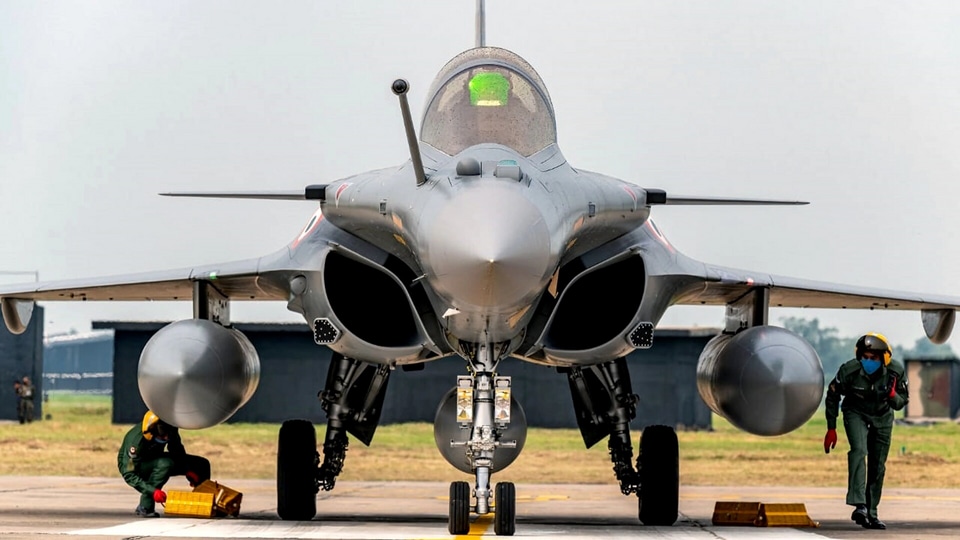
The MRO state-of-the-art facility will be set up through a 100 per cent Indian subsidiary route that will not only service some 330 engines used by Indian commercial carriers but also Safran-GE joint venture engines from other countries in South Asia, West Asia, and Africa. For the facility, SAFRAN is bringing in USD 150 million foreign direct investment with plans of moving into MRO of military engines used in Indian Air Force Rafale and Mirage 2000 fighters in the future to push the “Atmanirbhar Bharat” initiative. The French company is the supplier of M88 engines for IAF’s recently acquired 26 Rafale multi-role fighters and is also the number one helicopter engine supplier to India.
Apart from the MRO facility, the French company has also submitted a proposal to the Indian government to co-develop with DRDO’s Gas Turbine Research Establishment (GTRE) a new state-of-the-art 110 kilo newton thrust engine for India’s futuristic advanced medium combat aircraft twin-engine AMCA fighter project. The cost per engine for 400 engines will work out to 10-12 million euros, which is what we pay for engines today, said a defence expert. That will be for 400 engines, which is what we would need for twin engine AMCAs if we have 6-7 squadrons. Will probably need more, the expert added.
The Safran offer is not subject to International Traffic in Arms Regulations (ITAR), a US regulatory regime to restrict and control the export of defence and military-related technologies to safeguard US national security and further US foreign policy objectives. This means that the proposed Safran-GTRE joint venture will be exporting military engines to third countries without being subjected to restrictive regimes. The French company believes that the new 110 KN engine could be certified by 2035, provided the co-development process gets a green signal this year. The full cost of co-development of the 110 KN engine will be around five to six billion euros.
While the DRDO is also looking at GE-414 engine to power the AMCA project as an alternative, the Safran offer contains performance guarantee, and transfer all required technology for design, development, production and support besides creating a robust industrial aero-engine ecosystem in India.
The GTRE has been trying to develop the Kaveri aero-engine since 1996 and was originally developed to power Tejas LCA fighters. However, the engine was delinked from the Tejas program with the LCA now powered by GE-404 engines.


