The risk of death was more than twice for people who were unvaccinated or were partially vaccinated than those fully vaccinated, a government analysis of deaths that took place among hospitalised people with a positive Covid-19 result has found, officials said on Thursday.
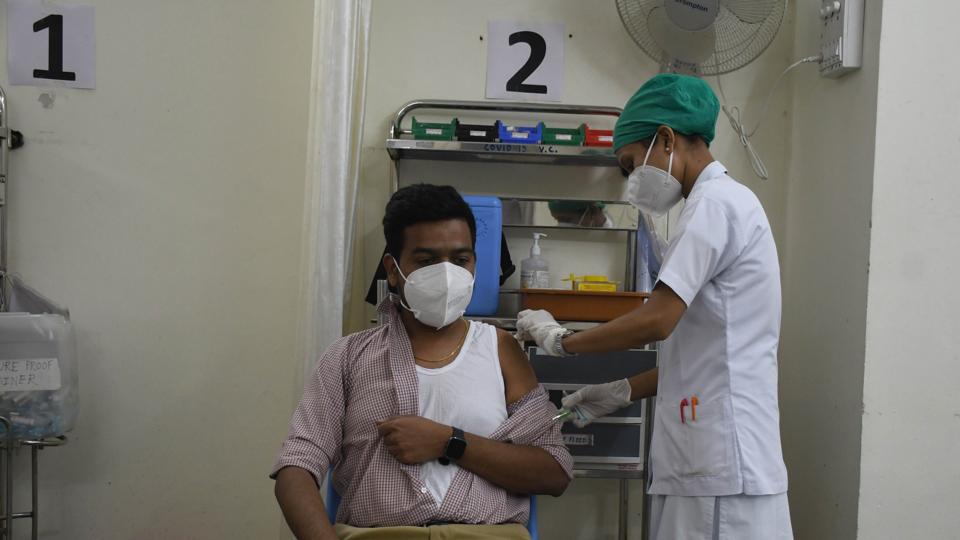
Among all vaccinated people who were in hospital with Covid-19, 10% died while the corresponding share of fatality among all unvaccinated or partially vaccinated people was 22%, the Indian Council of Medical Research (ICMR’s) National Clinical Registry of Covid-19 data found.
The risk of death was more than twice for people who were unvaccinated or were partially vaccinated than those fully vaccinated, a government analysis of deaths that took place among hospitalised people with a positive Covid-19 result has found, officials said on Thursday.
Among all vaccinated people who were in hospital with Covid-19, 10% died while the corresponding share of fatality among all unvaccinated or partially vaccinated people was 22%, the Indian Council of Medical Research (ICMR’s) National Clinical Registry of Covid-19 data found.
|#+|
“Also, requirement for mechanical ventilation was much lower among those who were vaccinated (5.4%) compared to those who were unvaccinated (11.2%),” said ICMR DG Balram Bhargava.
The analysis also found the average age for hospitalisation during the third surge was lower — 44 years — compared to 55 years in the earlier wave, but more of these people in the most recent wave had comorbid conditions.
The predominant symptom during the Omicron wave was of sore throat, and all other symptoms such as fever, cough, breathlessness, loss of smell and taste etc were less frequent in the vaccinated patients. Another conspicuous observation was less use of drugs and lesser complications among those who were vaccinated.
{{/usCountry}}The predominant symptom during the Omicron wave was of sore throat, and all other symptoms such as fever, cough, breathlessness, loss of smell and taste etc were less frequent in the vaccinated patients. Another conspicuous observation was less use of drugs and lesser complications among those who were vaccinated.
{{/usCountry}}The data was collected from 37 hospitals that are a part of the registry, across the country.
Two different time periods were studied: November 15 to December 15, 2021 (presumed dominant strain being Delta; and December 16 to January 17, 2022 (presumed dominant strain being Omicron). The information on dominant strains is based on the INSACOG’s genome sequencing data. “This is essentially emphasising the fact that vaccination helps and not having co-morbidities also helps,” said Bhargava.
The health ministry representative in the briefing also presented data to corroborate that there was no additional risk in post Covid patients in the current surge who were scheduled for a planned surgery as seen in earlier waves.
“The emerging evidence is positive with regards to whether persons, who recently recovered from Covid should go for an elective surgery or not. Earlier, studies seemed to suggest that there was an increased mortality after surgery within seven weeks of Covid-19. Increased risk was even in asymptomatic cases, and the risk normalized only seventh week onwards. Another study from America showed four times risk of complications in surgeries that were performed within four to eight weeks,” said Lav Agrawal, joint secretary, health ministry.
However, a recent study at New Delhi’s All India Institute of Medical Sciences showed there was no additional risk. As many as 53 patients who underwent surgery at AIIMS were used for the study that was carried out from December 20, 2021 and January 20, 2022.
“Among the 53 cases, no complication or death was reported in those who were on regional anesthesia. More severe cases operated under general anesthesia also reported no respiratory stress or related complications. Four deaths that were reported were due to hospital acquired infection, abdominal sepsis and intracranial bleeding and not due to Covid,” said Agrawal.