Atal Bihari Vajpayee is remembered in Kashmir for his April 2003 speech in Srinagar in which he extended his hand of friendship to Pakistan. He reiterated the gun was no solution and went on to resume a composite dialogue process with Pakistan. Kashmir reaped its peace dividend for the next decade with a decline in militant violence.
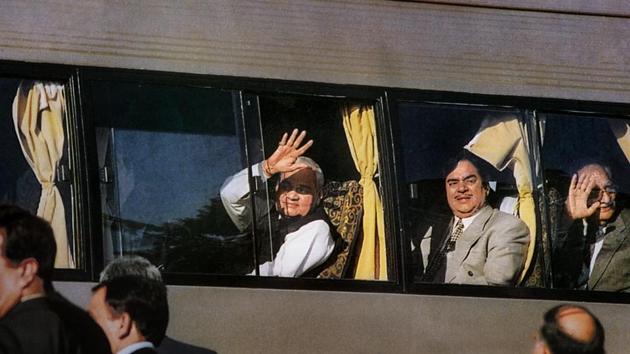
A ceasefire along the Line of Control, the de facto border between India and in Kashmir, was agreed upon in November 2003 and largely observed. Cross-border bus services and trade was introduced between two sides of Kashmir. Vajpayee met Kashmiri separatists in January 2004 while Pakistan put its insistence on the implementation of UN resolution for a plebiscite on the backburner.
Vajpayee’s vision for resolving the problems in Kashmir within the framework of insaaniyat, (humanism) Kashmiryat (inclusive Kashmiri culture) and jhamooriyat (democracy) remains his abiding legacy. It won him accolades from separatists and mainstream politicians alike.
Atal Bihari Vajpayee: ‘Main jee bhar jiya, main mann se marun’
For separatist leader Abdul Gani Bhat, Vajpayee rose “above everything in choosing to address the Kashmir issue.’’ Bhat believes the things in Kashmir “would have been different” had not Vajpayee lost elections in 2004.
Read: Insaniyat set Atal Bihari Vajpayee apart, writes Shashi Tharoor
{{/usCountry}}Read: Insaniyat set Atal Bihari Vajpayee apart, writes Shashi Tharoor
{{/usCountry}}Former Central University of Kashmir dean Noor Baba said Vajpayee was ready to take a difficult path if it was necessary. “He had the clarity and had reached that maturity to realise that India has to make peace with Pakistan.” Baba said he continued with the process despite setbacks. ‘’After (Vajpayee)’s Lahore (visit in 1999), Kargil (war) happened because of Pakistan but he again wanted to talk… But there was a setback in Agra but it was not because of him,’’ he said, referring to the failure of Vajpayee’s summit with Pakistani military ruler, Pervez Musharraf, in 2001.
Baba said the people in Kashmir understand Vajpayee’s commitment to peace and that is why they quote him often. “Not only mainstream (politicians) but also separatists feel Vajpayee was different.’’
Peoples Democratic Party leader Waheed ur Rehman said Vajpayee “won hearts of Kashmiris” because he conveyed to them that they “are owners of the Valley.’’
Read: Vajpayee was an uncompromising patriot’, writes Shakti Sinha
Communist Party of India (Marxist) leader Mohammad Yusuf Taragami said the first unilateral ceasefire during the fasting month of Ramzan was observed under Vajpayee’s rule in 2000.
Congress leader Saifudin Soz said Vajpayee was always interested in solutions. “...it is the reason why he is liked in Kashmir, despite being a big BJP leader. Unfortunately, the system failed him.”