The Pixel 10 Pro and Pixel 10 Pro XL complete a troika of the 10th-generation phones from Google—that is, before the foldable lands in India in a few weeks’ time. You’d expect the new Pro-spec Pixel phones to be solely focused on setting some sort of experiential benchmarks, and while they are to an extent, this generation has also been tasked with correcting some shortcomings from the one it succeeds. The Tensor G5 chip, for instance, sorts out the thermal aspect to an extent. It is a good platform to build on, which the Google Pixel 10 Pro and the Google Pixel 10 Pro XL have utilised as a springboard, as has the Pixel 10, which we’ve already illustrated.
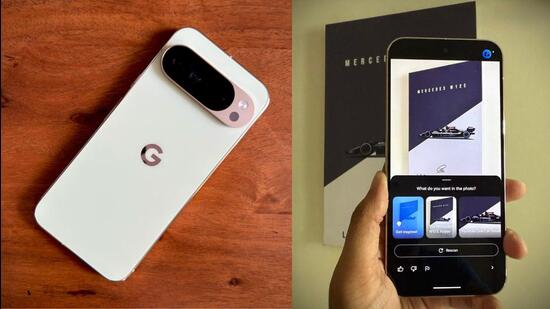
The artificial intelligence (AI) layer is so well integrated within Android that you’re likely to discover something new every day. Chances are, you’ll discover, enable, and then make the best use of the guidance Google’s Camera Coach feature may have for you to take better photos. Most of us think we know better, yet there are instances when the suggestions provide a different perspective to a photo you were about to shoot. Google’s AI transcription in the call recorder is, among the tools available, top tier—that includes the Otter.ai app. Call translation may be relevant to some users, and since the translation processing happens on-device, you get a fairly useful approximation to work with.
Google’s AI pitch with the Pixel 10 Pro phones goes further, encompassing the Pro Res Zoom, which goes up to 100x with this generation’s cameras. The results—though we’ll touch upon the cameras in a moment—are appreciably usable, factoring in well for inevitable camera shake if the phone isn’t properly mounted when taking the photo. Mind you, handheld photos at anything more than 10x zoom need a really stable hand to get the point across as they should.
There are two parts to the Tensor G5 chip story. It is, of course, optimised for all the AI that’s onboard the Pixel 10 Pro phones, and there is appreciable work done to keep thermals in check. Which, in turn, theoretically means these phones hold performance for longer as well. Despite thermal issues, the Pixel 9 Pro series with the Tensor G4 wasn’t ever really short in terms of performance and experience. The G5 is a step forward, which means you won’t have complaints. But then again, this is that rare occasion where it may be important to illustrate that—despite being the newest chip on the block—how it stacks up against the Apple iPhone 16 Pro phones.
{{/usCountry}}There are two parts to the Tensor G5 chip story. It is, of course, optimised for all the AI that’s onboard the Pixel 10 Pro phones, and there is appreciable work done to keep thermals in check. Which, in turn, theoretically means these phones hold performance for longer as well. Despite thermal issues, the Pixel 9 Pro series with the Tensor G4 wasn’t ever really short in terms of performance and experience. The G5 is a step forward, which means you won’t have complaints. But then again, this is that rare occasion where it may be important to illustrate that—despite being the newest chip on the block—how it stacks up against the Apple iPhone 16 Pro phones.
{{/usCountry}}The metric I’ll use to illustrate the differences is the Geekbench 6 benchmark for CPU tests. The iPhone 16 Pro returns scores of 3491 (single-core) and 8598 (multi-core), whereas the Pixel 10 Pro delivers 2320 (single-core) and 6094 (multi-core) in the same tests. This is a fast Android flagship, but most certainly not the fastest. Even within the Android ecosystem, the Samsung Galaxy S25 Ultra returns scores of 2863 and 9484. If you are looking for the outright fastest smartphone experience (though defining that is subjective and nigh impossible), this may fall short.
The Pixel 10 Pro series still doesn’t match some Android counterparts in terms of charging speeds. The Pixel 10 Pro tops out at 30-watt wired charging and 15-watt for Pixelsnap wireless charging with Qi2. The Pixel 10 Pro XL makes do with 45-watt wired and up to 25-watt with a Qi2-certified Pixelsnap wireless charger. The real positive is, both phones are doing well on battery stamina after a few days of settling in. The Pixel 10 Pro XL can manage as much as 9 hours of screen time (with always-on display off, but resolution set to highest), while the Pixel 10 Pro returns close to 6 hours of screen time before you must charge again. In the early days of testing, these numbers were around 30–40% lower, which shows the AI optimisation running behind the scenes has a definitive impact once it learns your usage.
As I had noted in the Pixel 10 review as well, Google didn’t ship any Pixelsnap-compatible Qi2 chargers or other accessories, and therefore it is difficult to comment on everything from the actual magnet hold to real-world utility.
Cameras, of course, would be something you’re interested in. Both phones have the same system to work with — a 50-megapixel wide, 48-megapixel ultra-wide with Macro Focus, and a 48-megapixel 5x telephoto lens with Pro Res Zoom up to 100x and optical quality at 0.5x, 1x, 2x, 5x, and 10x. There is something to be said about the photos that the Pixel 10 Pro and Pixel 10 Pro XL click, compared with an Apple iPhone 16 Pro Max and a Samsung Galaxy S25 Ultra. The sensor size differences for the main wide camera do mean that there will be variations in certain lighting conditions, but the Pixel 10 Pro phones take a definitive advantage in the ultra-wide camera stakes with more details.
The one processing element that needs some fine-tuning is sharpness with most photos—some come across as a little too soft when you zoom in, while others are a smidgen sharper than the background details should be. 5x zoom and 10x zoom are very, very usable, but for some reason, the 30x zoom level doesn’t return as much processed detail as the 100x ones. Mind you, handheld photos at these zoom levels are unmanageable, and you must stabilise the phone on a mount or a temporary stand of sorts. Pixel’s Night Sight makes for some gorgeous photos, with just the right handling of shadows as well as details.
You’ll be parting with ₹1,09,999 for the 6.3-inch Pixel 10 Pro and ₹1,24,999 for the larger 6.8-inch Pixel 10 Pro XL. The thing is, Google’s latest Pixel phones are, as you’d expect, their greatest Pixel phones till now. It is also a reality that these stack up as very good in the broader Android flagship space, considering competition is tough, and Samsung as well as OnePlus and Vivo have experience and their strong points well and truly locked in. It wouldn’t be wrong to say that the Pixel 10 Pro series is less elaborate a collective of upgrades than the Pixel 10. But perhaps, with AI, camera additions, and of course the new Tensor chip, it may have been all that was needed.