There is a certain something about the ‘Pro XL’ Pixel phone every year, that immediately gets my attention. I like large screen phones, that’s pretty obvious. I also have a preference for Google Pixel phones, over most other Android phones, if this was to be a regular device. There are some explainable reasons for the fondness towards Pixel phones (one goes back as far as the Nexus 6 and Nexus 6P from 2014 and 2015), but mostly, it is a subjective preference towards how well everything comes together. There is certainly some disappointment amidst a demographic of the social media audience, since Google didn’t make any wholesale design changes with the Pixel 11 series, but I’m not one of them. This improved design works too.
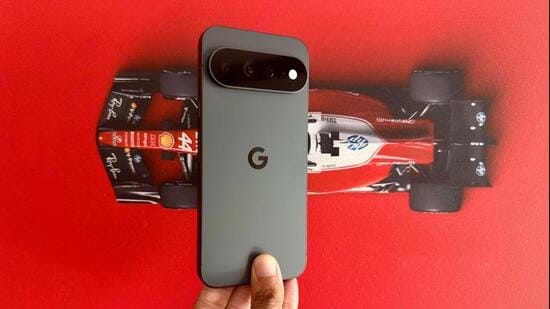
There is (of course there is) a price inflation that has to be factored in, considering how the geopolitical situation has shaped supply chain and bill of materials in recent months. To be fair, the Google Pixel 11 Pro XL with prices starting ₹1,34,999 and the Pixel 11 Pro starting at ₹1,19,999 are exactly ₹10,000 more expensive than last year’s generation. An inflationary trend for sure, but certainly not as harsh as some other phone makers have had to implement. There is almost nothing that Google leaves on the table, compared with flagships from Samsung, Vivo and Xiaomi, for any allegations that the Pixel 11 Pro XL is expensive.
Inflation and geopolitics
One could argue on certain specs, or approach to certain experiential elements, but not the overall proposition. Compared to the generation it replaces, the Pixel 11 Pro XL and indeed the Pixel 11 Pro do make do with 12GB RAM instead of 16GB RAM, but the positive side to that is there is no hint of a 128GB storage version at these prices, with 256GB and 512GB being the two configurations (the latter does get something called Zoned UFS, which may be faster; I cannot testify to those claims, either way). To be fair, at no point in the taxing review process did 12GB of memory ever hint at a bottleneck. It will absolutely not be a problem, even a few years later.
I am somewhat concerned about the comparatively lesser 5,115mAh battery (compared with the Pixel 10 Pro XL’s 5200mAh) battery capacity, though generational improvements elsewhere mean it isn’t faring any worse between charges. You may see different results depending on usage, and my suspicion is Google had to slightly reduce battery capacity to open up a smidgen of space for managing thermals.
{{/usCountry}}I am somewhat concerned about the comparatively lesser 5,115mAh battery (compared with the Pixel 10 Pro XL’s 5200mAh) battery capacity, though generational improvements elsewhere mean it isn’t faring any worse between charges. You may see different results depending on usage, and my suspicion is Google had to slightly reduce battery capacity to open up a smidgen of space for managing thermals.
{{/usCountry}}I do believe that Canyon and Olive colours will find good traction, and there’s a certain likability about the matte finish to the black-ish Obsidian colour on my review device. That said, if you considered last year’s Pro Pixel phones to be a bit slippery if used without a case, that continues here too. It’s an ergonomic observation which may or may not hold true for everyone, but it does, because I prefer not using a case (responsible or foolhardy, depends on your outlook). All said and done, Pixel phones have always been crafted with attention, and this is no different. Attractive, that’s the word I’m probably looking for.
History is repeating, and that’s a good thing
The Gemini notification indicator that now sits on the camera island, called HiLight, is useful for people like yours truly, who like to keep the phone face down on a table, when in a conversation (the idea is to give the human full attention, and not get distracted by the screen lighting up for notifications every few seconds). This will glow if you call out to Gemini with a query, and the visual cues are a good way to know that the artificial intelligence (AI) is listening. Entire conversations can be had, without having to lift the phone.
Secondly, this utility can be extended to favourite contacts—select specific colours for different contacts, and you’re good to go when they call (but perplexingly, not when they message yet). I absolutely don’t mind tech taking a full circle with LEDs on the phone, useful for notifications. Back then, granular customisation was available—colour coding for apps, types of notifications or people in your phonebook. I have no idea why modern tech finds that complex to implement. Just pick up a BlackBerry or a Nokia phone from the late 2000s, folks.
Generational chip upgrade, to the Tensor G6, is the basis on which the new phones have been crafted. Across the board, there are improvements including claims of up to 20% better power efficiency, up to 15% faster app loading responsiveness, and a 50% more power tensor processing unit (TPU) which tasks such as computational photography and the broader AI suite, draw from. While many keep hoping that Google will get into a clock speed, raw performance and benchmark supremacy game with competing flagship chips, the company’s approach has been one of focused optimisation and usability.
This takes me back to that old debate of doing things well as against doing things as fast as possible. The happiness quotient will depend on which boat you’re in.
Subscribe to the Pixel? Well, yes
Where Google shouldn’t have tried to save money is with the Google AI Pro subscription bundle, which is now valid for 6 months unlike previous generation Pixels with which a 12 month subscription was bundled. The gentle nudge here is to build a revenue stream. That simply means 6 months later, your Pixel phone will switch to a subscription model if you’d like to draw full experiential width—the Google AI Plus subscriptions cost ₹650 per month onwards, while the Google AI Pro plans are priced at ₹1,950 per month and ₹3,250 per month.
There’s a big daily relevance aspect with the new Pixel phones and the Gemini collective (and that’ll pretty much push you to buy a Google AI Plus or Pro subscription). Of course, much of this integration is Pixel exclusive for now, and sets it apart from flagship competition. Proactiveness, is the pitch Google is going for, and with time, mileage will certainly get better. Live Translate for media playback and Circle to Search within the camera app, add utility. I’m not entirely sure how much of the AI feature set will work without a subscription if you choose to walk that path, and even for whatever remains unlocked, how those limits will shape up.
Context and personalisation come from the Gemini Personal Intelligence which you’ll be prompted to turn on. This will, for instance, enable contextual cards within the Messages app (you’ll just have to come to terms with a lot of RCS spam) such as location pins and calendar prompts. If you do enable the location based Proactive Assistance too, the Pixel 11 Pro XL will quietly put a prompt on the lock screen or Home Screen with information about the restaurant or store or mall you may be at. All this comes with an element of your data and location history being shared for this active intelligence—comfort level with this sharing, is of course subjective.
All this is the coming together of a massive Android overhaul which Google had detailed ahead of this summer’s I/O keynote. Good to see the addition of AirDrop compatibility with Quick Share, which means Android phones users can again become friends with those who have an Apple iPhone. Rambler’s voice input dictation will serve those well, who like to send voice notes as messages usually (I never open voice messages, be aware).
Doing less, is a smart camera trick
Saving the best for last, in a way. The main sensor 50 megapixel sensor is new, the 48-megapixel 5X telephoto is a new, bigger sensor, and there’s a 48-megapixel ultra wide with macro focus. Google has never shown any intention to insert the Pixel phones into outright megapixel battles, and while opinions and observations about the results of computational photography may differ from photo to photo thus far, there is clearly a humanisation of the algorithms that dictate how you see a photo finally. With sensor changes, there is scope for more light, more data and less for AI to do. That’s always a good thing, and I say that as someone who is a big fan of Leica’s approach to photography with the Xiaomi 17 Ultra particularly.
Subtle changes, such as smoother switching between lenses, and redone controls in the camera app, are noticeable. The 120x Pro Zoom which replaces the 100x Pro Zoom, works its magic with AI but the Pixel 11 Pro XL will also give you a non enhanced version to see the difference. Even those are very usable photos, in more instances than you’d imagine—that’s a good thing, because while long zoom capabilities are great to have, utility is genuinely limited (think about it, how many times have you used almost all of the zoom in the last year). I’m a fan of the Natural camera look, and to be fair, Vanilla also works for some shots. Experiment a bit, you’ll have a lot of fun.
There is absolutely a Pixel-like photography experience with the Pixel 11 Pro XL, in terms of the outputs you see. For most people, that would be more than enough. However, my takeaway from this is (and it has been for a long time) that we perhaps need to stop pushing the AI enhancement envelope. Photos we click today are meant to be memories tomorrow. If computational enhancements take away from the flaws of the moment, are these memories even real. Apple and indeed Xiaomi and Leica’s approach, works for the most part.
Google didn’t reinvent the Pixel, and that’s fine
The focus with the Google Pixel 11 Pro XL is to build with what the Pixel 10 Pro XL delivered (and this holds true for the smaller Pro phones as well). A brighter and more scratch resistant display, the addition of a HiLight (Google, this is only the start, persist please), a photo processing algorithm that isn’t very aggressive for now and a proactive AI layer for those who care, are the pillars the Tensor G6 powered flagship is building with. Maybe the world would’ve been happier with a design overhaul even at the cost of sacrificing much else, but that’s not how experiences or utility can be delivered. It is good that Google is focused on the finer elements, and not playing to the gallery.
(Vishal Mathur is Technology Editor for Hindustan Times. When not making sense of technology, he often searches for an elusive analog space in a digital world.)