
 E-Paper



Haryana likely to keep part of Aravali village out of conservation zone
Haryana plans to go by the 1992 notification of the environment ministry that limits Aravallis only to Gurugram in Haryana, and Alwar in Rajasthan to define the Aravalis in the state. Going by the notification, Aravali stretches in Faridabad or Jhajjar will not be considered as NCZ.

 Prefer HTon Google


The Haryana government is likely to keep 1126.8 acres of Aravalis in Faridabad’s Kot village out of the natural conservation zone (NCZ), where construction is banned, according to a preliminary ground-truthing report of the zone for the NCR regional master plan 2021.
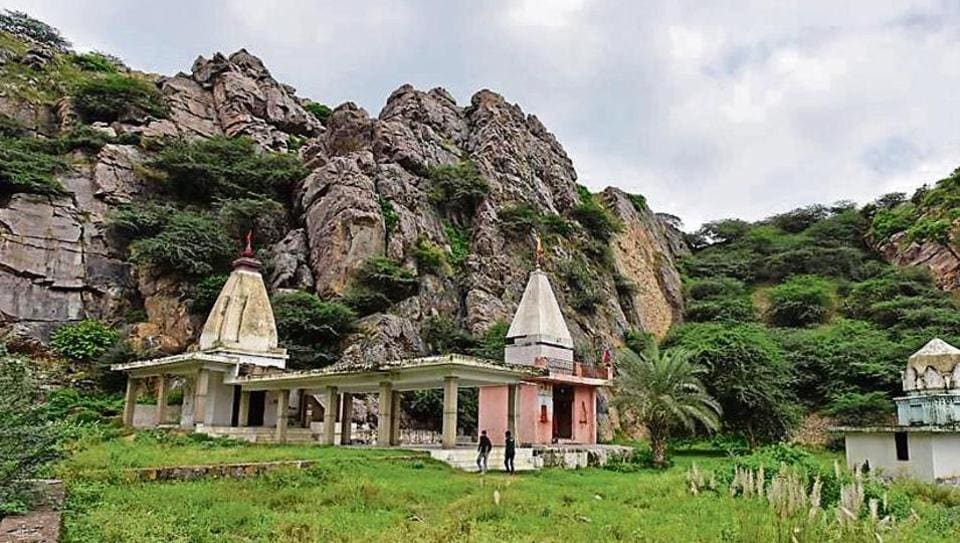
Ground truthing is an exercise where map or remote sensing data is matched with features on the ground.
While Haryana government documents said recognising part of Kot as NCZ is yet to be decided since the state government has begun land consolidation there, environmental activists said parts of Kot are being kept out of NCZ because real estate companies own land there. Kot village is spread across 3,000 acres.
The preliminary report also states that the government will first seek clarification from the environment ministry on whether gair mumkin pahar (uncultivable land of Aravalis) of Faridabad like Mangar, Dhauj, Badhkal, and Sarai Khwaja village are in fact Aravalis before deciding whether they should be declared NCZ or not.
Haryana plans to go by the 1992 notification of the environment ministry that limits Aravallis only to Gurugram in Haryana, and Alwar in Rajasthan to define the Aravalis in the state. Going by the notification, Aravali stretches in Faridabad or Jhajjar will not be considered as NCZ.
“We have satellite images of green zones from 1999 and 2012. But we wanted to verify the actual situation by conducting ground-truthing of these stretches. Many constructions may have come in these areas which then cannot be categorized as NCZ. We also found that the constructions are scattered in some parts of Aravalis which is why they are being kept in ‘yet to be decided’ status . We are examining the areas. A final decision is yet to be taken,” said Makarand Pandurang, director, Town and Country Planning Department, referring to the preliminary report that was last week leaked to environmental activists, who plan to move court against it. A summary of NCZ areas to be recommended from July also states that parts of Kot are in ‘yet to be decided’ status.
“We have decided to go only by the 1992 Aravali notification for demarcation of Aravalis in the state,” he added.
Siddhanta Das, director general of forests, environment ministry, said: “I think what are Aravallis is very clear. Whether all of Aravallis have forests is another question which is being assessed.”
The ground-truthing exercise was carried out based on satellite images provided by National Remote Sensing Centre and the report will be shared soon with the National Capital Region Planning Board.
“The fundamental issue is that consolidation is taken up only for agricultural land, which is fragmented. The Supreme Court in various orders has declared Aravallis to be forests. There is no question of consolidation in a continuous patch of Aravallis, irrespective of ownership. Even if ownership is private in some stretches, it’s still Aravallis and needs to be protected. I suspect there is a bigger game here involving land sharks so that the government can release land to them. During my tenure as a forest officer in Haryana, powerful people tried to ensure land use change in Aravalis through various means,” said RP Balwan, former conservator of forests, Gurugram.
Another official of the town and country planning department, on condition of anonymity, said, “In our preliminary analysis, we had planned to keep the area in ‘yet to be decided’ category because land consolidation is underway but later we conducted ground-truthing of Kot and excluded an area where there are buildings, agriculture or other construction from NCZ category. Land consolidation process in Kot will continue.”
The Haryana government had issued an order on February 1 under the East Punjab Holdings Act, 1948 which said it wants to “take up a scheme for consolidation of holdings under cultivation in the area” for “better cultivation.” The order made Kot villagers and activists suspicious because most of the land in Kot is common, uncultivable rocky land.


