Clothing is a language; what we wear defines us. It reveals more than our aesthetics. Our clothes announce who we are, banker or painter, labourer or merchant, local or outsider. Some attires become iconic, be it the Nehru jacket, the Gandhi cap, Che Guevara’s beret, a priest’s dhoti, a Sikh’s turban and the mullah’s skullcap. However, in sheer popularity, the lungi and its cousins, the tehmat, the puliyakat, the sarong and the dhoti, are the preferred comfort clothing of tens
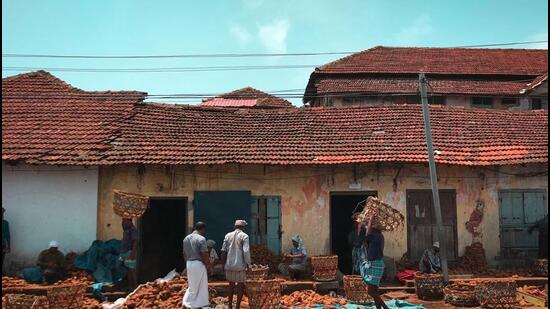
Clothing is a language; what we wear defines us. It reveals more than our aesthetics. Our clothes announce who we are, banker or painter, labourer or merchant, local or outsider. Some attires become iconic, be it the Nehru jacket, the Gandhi cap, Che Guevara’s beret, a priest’s dhoti, a Sikh’s turban and the mullah’s skullcap. However, in sheer popularity, the lungi and its cousins, the tehmat, the puliyakat, the sarong and the dhoti, are the preferred comfort clothing of tens of millions of people across South and Southeast Asia.
The resilient and popular lungi, an unstitched piece of garment draped around the lower body, became part of parliamentary proceedings in the just-concluded monsoon session. Reportedly, Susmita Dey, an MP who was first in the Congress, then the Trinamool Congress and now the BJP, heckled fellow parliamentarian John Brittas (from Kerala) by referring to him as a ‘Lungiwala’, a cultural stereotype pejoratively used for people from southern states as well as Muslims in Bengal and Assam. Lungiwala also has a specific connotation, as it was used by the Shiv Sena in the 1970s and 1980s to target immigrants from south India. The Bombay film industry did its part in spreading the term by using it prominently in Agneepath, a blockbuster starring Amitabh Bachchan and Mithun Chakraborty, among others.
It’s fatuous to use Lungi as an offence even in present times. This simple, elegant drape has been around for longer than empires, ideologies and even religions. References to ‘Lungi’ first come to us during the late medieval period. According to the Oxford Dictionary, Thomas Herbert, an English traveller, refers to it in his book published in 1638. However, its origins date back to prehistory, when we have the first depictions of humans in various rock paintings found throughout the continent. The longer lungi started out as a loincloth. As humans became more advanced and learnt to grow cotton and weave it, a longer piece of fabric made its appearance. In India, the earliest references to these unstitched pieces of cloth date back to at least the first millennium BC. We find references to the ancestor of the lungi, known as the antariya (drape-around for the lower body), the uttariya for the upper body and the kayaband, a sash to hold them in place. In the tropical and subtropical regions of South and Southeast Asia, where the winter season is short, these finely woven pieces of cloth were well suited. The antariya tied around the waist covered the hips and legs; the elite wore it long, while the worker folded it up to the knees when toiling, much like today. The uttariya went around the shoulders and covered the chest; the kayaband tied around the waist held both pieces together. The uttariya, or today’s gamcha, could be tied around the head in hot weather by a worker. These three pieces of cloth were the wardrobe of ancient India. The fineness of the fabric and embellishments of jewellery were the privilege of the rich. Climate decides clothing, and the lungi is a perfect example of it. Allowing for air circulation, foldable and made of cotton, its functionality is what has made it a much-loved garment among the masses. In Manipur and Assam, it is known as the phanek and mekhela, and in Kerala and Tamil Nadu, it is known as the mundu (black or white) and saaram, lungi or vetti, respectively. From coastal communities to inland regions, the lungi thrives. Lungi is popular among men and women in Punjab, but has now gone out of fashion among women, who prefer the kurta and salwar. In Bengal, Assam, Kerala, Tamil Nadu, Andhra Pradesh, Telangana, Karnataka and others, it remains in widespread use.
When passed between the legs, the antariya became a dhoti, allowing for greater mobility. We also had the kurtukas or half-shirts, and turbans; however, it was the unstitched drapes that are most evidenced from available terracotta figurines dating to the early centuries of the Common Era. With the intermixing of cultures enabled by both war and trade between China, Central Asia, Persia and even Rome came new styles of garments. The Kushan king Kanishka’s (127-150 CE) life-size statue housed in the Mathura Museum shows how horse-riding tribes from the northwest introduced trousers, tunics and coats into popular culture. However, the new trouser-tunic and coats remained in use for specialised groups such as soldiers, guards and the nobility. After the Gupta period, stitching became prevalent and these garments too became more common but were still not street fashion, as it were.
Class, Caste and Clothing
As it happens in a strictly hierarchical society, clothes too became a function of birth. So-called upper castes would wear dhotis made of fine fabric, while others would get by in scraggy loincloths. The untouchable castes were denied clothing, or were allowed discarded clothes. For the Chandalas, the Manusmriti prescribes garments taken off dead bodies. Besides various visual markers in the form of tikas, tilaks and the sacred thread, various castes wore their turbans in specific ways and wore their hair in particular ways, and so, when it came to the timeless drape-around, caste intervened there too. The dhoti of elite castes in north India exists in the form of veshti in the south. While the lungi, colourful and stitched, is identified with deprivation (as also with poor Muslims) and the toiling classes, the veshti, often white in colour and embellished with a golden border, is the preserve of elite castes and reserved for religious ceremonies.
With modernity and democracy, these hard distinctions are no longer enforceable. But they are far from extinct and have taken on new forms, such as opposition from upper castes to Dalits wearing suits, riding expensive motorbikes and even playing loud music. Equality still feels like oppression for the historically privileged amongst us. It was these forms of discrimination that had made Dr B R Ambedkar advise Dalits to start wearing their saris in the same fashion as others; his point: underneath the attire, we are all the same and equal. A message that we should all embrace.
HistoriCity is a column by author Valay Singh that narrates the story of a city that is in the news, by going back to its documented history, mythology and archaeological digs. The views expressed are personal.
One Subscription.
Get 360° coverage—from daily headlines
to 100 year archives.
Archives
HT App & Website