
 E-Paper



How will India’s four labour codes change your work life?
Decoding the four codes which consolidate a web of complex labour laws and represent the most wide-ranging policy shift in decades.

 Prefer HTon Google


New Delhi: The Narendra Modi government’s big-ticket labour reforms, passed by Parliament as four labour codes between 2019 and 2020, will bring sweeping changes to the job market in Asia’s third-largest economy, including how much net salaries employees get to take home to how they can be employed and fired.
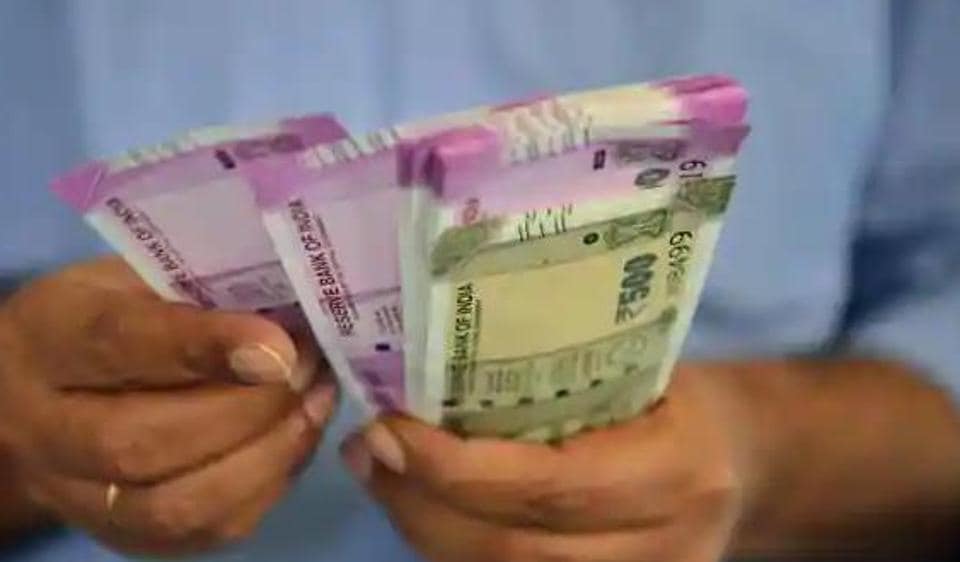
The four codes consolidate a web of complex labour laws and represent the most wide-ranging policy shift in decades. They have attracted both praise and scorn. They are seen as controversial by critics, while economists demanding freer labour policies to boost growth as well as employment are hoping to see an end to anachronistic laws that are no longer in sync with a rapidly-transforming economy.
For instance, the reforms will increase the number and type of companies that can fire workers without government approval, enforce new norms on how unions can call strikes, discard rules that bar women from working night shifts and, importantly, introduce a new social-security regime.
Despite being passed by Parliament, the four codes that will kick off by far the most radical economic reform undertaken by the Modi government are stuck because state governments have yet to finalise rules under the Codes.
Labour falls in the “concurrent list” of the Constitution, which gives both the Centre and states joint jurisdiction over the subject. Therefore, state governments and Union territories need to publish draft rules too.
These drafts then need to be finalised for the new codes to take effect. This process is not yet through as states, ruled by different parties and ideological leanings, scan through the laws. Nearly 90% of states have framed the bulk of draft rules, according to the Union labour ministry's data.
The codes consolidate 29 central labour laws in all. These are the Code on Wages, 2019; the Industrial Relations Code, 2020; The Occupational Safety, Health and Working Conditions Code, 2020; and the Code on Social Security, 2020.
Currently, 31 states and Union territories have framed their share of draft rules under the wages code, while 27 have completed draft rules on social security. On the industrial relations code, 25 have enacted draft rules and on the occupational safe code, 24 have readied the drafts.
Many economists have argued that India’s labour laws are archaic and onerous, hurting efficiency. Stringent hiring and firing rules applied to firms with over 100 employees, making it virtually impossible to lay off workers.
This adversely acted as an incentive for smaller firms to stay small so they could escape the rules. According to the World Bank, with less restrictive laws, India could approximately add on an annual basis “2.8 million more good quality formal sector jobs”.
The old firing rules created two key problems. First, when a company runs into losses, it can’t get rid of staff quickly to save costs. This bleeds firms, ultimately pulling down economic output.
Secondly, many firms might not reveal their total employee strength to escape various laws applying to the formal sector. “Under these laws, firms preferred to stay small and hide their presence to avoid overbearing labour laws,” says Dhruv Prasad Gola, a former economist with the National Labour Institute.
Hiring, firing
In the Industrial Relation Code 2020, simply put, the government has allowed companies with up to 300 workers to fire workers or shut plants without the prior approval of the government.
Firms with more than 300 workers will still need to apply for approval to retrench staff. However, if the authorities do not respond to their request, the retrenchment proposal will be deemed to be approved.
Earlier labour laws required a 30- to 90-day notice period before retrenching “workmen”, which is a class of mainly shop-floor workers.
In the case of manufacturing units, plantations, and mines with 100 or more workmen, lay-offs also required government approval. To be sure, 90% of India’s workforce, which is employed in the informal sector, won’t be affected by these changes.
Not all labour economists agree the changes are good. “The changes simply bring the north American hire-and-fire model to the Indian hinterland economy. They will lead to a basic violation of universal workers’ rights,” said KR Shyam Sundar of the Xavier Labour Relations Institute, Jamshedpur.
Salaries
The Code on Wages, 2019 amalgamates four wages and payment-related labour laws: the Payment of Wages Act, 1936; the Minimum Wages Act, 1948; the Payment of Bonus Act, 1965; and the Equal Remuneration Act, 1976.
When the wages code takes effect, it will change the basic salary structure of an employee. The basic salary will have to be 50% of the gross. The take-home salary therefore will come down but provident fund contributions for the retirement of both the employee and the employer will go up.
Also, a company must pay the full and final settlement to quitting employees within two days of the last working day. Another change is that companies will be allowed to have a four-day work week instead of the current five. However, if this option is chosen, then work hours will increase from 9 to 12 to fulfil the 48-hour weekly benchmark.
Unions’ rights
The Industrial Relations Code lays down new conditions on the right of workers to go on strike. Unions will now have to give 60 days’ strike notice. If proceedings are pending before a labour tribunal or the National Industrial Tribunal, workers cannot go on a strike for 60 days after they are concluded. These conditions apply to all industries. Earlier, workers could go on strike by giving between two weeks and six weeks of notice. Flash strikes will be outlawed.
Workplace safety
The Occupational Safety, Health and Working Conditions Code, 2020, amends laws regulating occupational safety, health and working conditions of employees. Besides updating a variety of technical definitions, such as those of an employee, a firm or an employer, etc, the code ensures that workplaces are free from hazards that can cause accidents, injury or occupational disease to the employees.
Firms must provide free annual health tests to certain classes of employees. Women will be entitled to be employed in all establishments for all types of work and in case they are required to work in hazardous or dangerous operations, the government may require the employer to have specific safeguards in place prior to employment.
Social Security
The Code on Social Security, 2020 promises to universalise social security for the first time, including for both organised and informal workers as well as gig and platform workers.
The Bhupender Yadav-led Union labour ministry plans to achieve this by linking all social safety nets and provisions onto a single digital platform. The model for this is the e-Shram portal, the first-ever national database of unorganised workers and migrant labourers in the country. As on August 23, 280 million workers had registered themselves on the e-Shram portal. The government targets to enrol 380 million workers in all.
Launched on August 26, 2021, e-Shram aims to integrate all social security schemes, from health benefits to insurance, such as the Pradhan Mantri Jeevan Jyoti Bima Yojana and Pradhan Mantri Suraksha Bima Yojana.
The social-security code states that shall" formulate and notify, from time to time, suitable welfare schemes, including schemes relating to provident fund; employment injury benefit; housing; educational schemes for children; skill upgradation of workers; funeral assistance; and old age homes”.
The government can tap corporate social responsibility funds (within the meaning of the Companies Act, 2013) or any other such source as may be specified in the scheme to be used for social security. The code lays down the setting up of a National Social Security Board to recommend to the central government suitable schemes for unorganised workers.


