...
...
Next Story

HT Exclusive: After opening missile manufacturing to private sector, Modi govt targets 1,500km strike range

By allowing the private sector into the missile sector, the government has dramatically scaled up the production numbers.

Updated on: Aug 26, 2026, 17:40:19 IST
Advertisement

A day after Defence Minister Rajnath Singh allowed the entry of Indian private sector into conventional missile sector using DRDO technologies, the Modi government is identifying private players for production of 1000-1500 km range Land Attack Cruise Missile (LRLACRM) and 150-500 km range Pralay quasi-ballistic tactical missile.
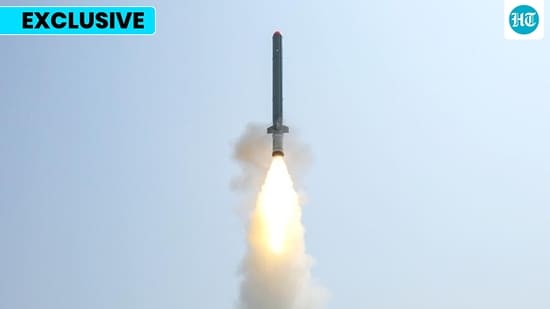
Long Range Land Attack Cruise Missile will now be produced by Indian private companies using transfer of technology route from DRDO.

Long Range Land Attack Cruise Missile will now be produced by Indian private companies using transfer of technology route from DRDO

While Request for Proposals (RFPs) have already been issued for Astra Mark I (110 km range) and Mark II (150 km range) beyond visual range air to air missiles to Indian private sector through transfer of technology route, companies like ICOMM, Hyderabad, Bharat Forge and Adani Defence Systems and Technologies Limited (ADSTL), Bharat Dynamics Limited, Bharat Electronics Limited will be involved in production of the following missiles:

· Next Generation Anti-Radiation Missile (100-300 km standoff range)

· Rudram-II, air to ground hypersonic missile with range up to 300 km.

· Unmanned Aerial Vehicle Launched Precision Guided Missile (ULPGM).

· Long Range Glide Bomb with a stand-off range of 100 km and one ton warhead.

· Quick Reaction ground to air missile with a range of 25-30 km, which can engage six targets simultaneously at a height of up to 10 lkm.

· Very Short Range Air Defence System, shoulder fired, can engage targets at 8 km and at an altitude of 4.5 km. Used against tanks and helicopters.

· Naval anti-ship missile (NASM) Short Range, helicopter launched with 55 km range and a 100 kg warhead.

· Naval anti-ship missile Medium Range, land or ship launched, ramnge upto 350 km with a warhead exceeding 200 kg.

· Medium Range anti-ship missile (MRAShM) with 70 km range, supersonic, 276 kg weight, used against jets, missiles and drones.

· Long Range anti-ship missile (LRAShM) , range over 100 km, private production partner still to be identified.

It is understood that opening of the conventional missile sector to private players is the first step towards opening the strategic missile sector, as many as 50 subsystems for integration in missiles are being supplied by the private sector.

By allowing the private sector into the missile sector, the government has dramatically scaled up the production numbers while giving a major boost to private sector and their ancillary units. This will not only push ‘Aatmanirbhar Bharat’ but also expand India’s military industrial complex.

 
ABOUT THE AUTHOR
Shishir Gupta

Shishir Gupta is Executive Editor at Hindustan Times and one of India's top journalists covering national security, strategic affairs, foreign policy and geopolitics. Over the past three decades, he has extensively reported on India's military, diplomatic and security landscape, covering every major conflict and national security challenge, from the 1999 Kargil War and the 2020 East Ladakh standoff to Operation Sindoor in 2025. He has also covered major terror attacks, including the IC-814 hijacking, the 26/11 Mumbai attacks and the 2025 Pahalgam terror strike, along with numerous Pakistan-backed terrorist incidents in the Kashmir Valley and across India. He has reported on national and state elections for more than three decades. A recognised authority on strategic affairs, Gupta has covered India's nuclear programme since the Pokhran-II (Shakti series) tests in May 1998 and has written extensively on global nuclear issues, Indian diplomacy and the country's expanding global outreach. He has also reported widely on international conflicts and terrorism, with a special focus on the Indian subcontinent. Gupta has interviewed Prime Minister Narendra Modi more than four times, including Modi's first interview with the print media after becoming Prime Minister in May 2014. His other interviews include three with the Dalai Lama, as well as conversations with Benjamin Netanyahu, Amit Shah, Yogi Adityanath, S. Jaishankar, Nirmala Sitharaman and Piyush Goyal. He is the author of Indian Mujahideen: The Enemy Within (Hachette, 2011) and Himalayan Face-off: Chinese Assertion and Indian Riposte (Hachette, 2014). He was awarded the Chevening-Wolfson Joint Scholarship at Wolfson College, University of Cambridge, UK, in 1998 and participated in the International Visitor Leadership Program (IVLP) of the US State Department in 2006. He received the Ben Gurion Prize from Israel in 2011 and the K. Subrahmanyam Prize for Strategic Studies in 2015 from the Manohar Parrikar Institute for Defence Studies and Analyses (MP-IDSA). Since 2024, he has hosted Point Blank, Hindustan Times' weekly YouTube show on global geopolitics.

Get the latest India News, breaking headlines and real-time updates from across the country. Stay informed about politics, government policies, crime, weather major national developments and Karnataka Bandh LIVE.
SHARE THIS ARTICLE ON
Hindustantimes wants to start sending you push notifications. Click allow to subscribe