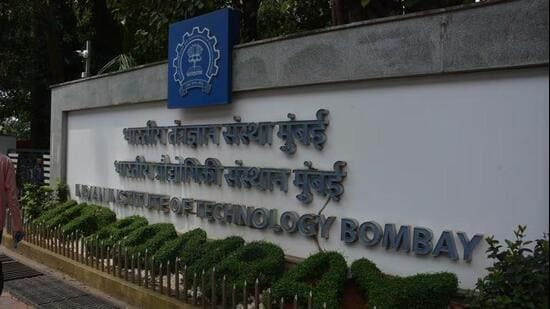
IIT Bombay’s Senate on Wednesday decided to go back to its 2015 rules dealing with unfair means during examinations, giving students a fair opportunity to explain their side before disciplinary action is initiated, officials who attended the meeting said.
The move comes after a committee, appointed by the institute following the September 18 death of a student, reviewed the existing procedure for dealing with examination malpractice and suggested changes.
According to the current rules introduced in 2026, students found to have used unfair means during examinations may receive an FR2 grade and a one-semester suspension. The rules cover the use or possession of unauthorised material and electronic devices, including mobile phones, tablets and smartwatches. Repeat cases can also attract suspension.
The 2015 rules provided for suspension mainly in serious cases such as mass copying, repeat violations and impersonation. The punishment was to be determined by the nature and seriousness of the offence.
The decision was taken after a discussion of around two-and-a-half hours at the Senate meeting, attended by faculty and student representatives. “The emotion has shifted towards being sensitive to students. We are largely going back to the 2015 rules,” the faculty member said.
The 2015 procedure also laid down a process for dealing with students accused of malpractice. If an invigilator detected unfair means, the material found with the student was to be confiscated, and the student was allowed to continue the examination with a fresh answer book. A report was then prepared and sent to the head of the department.
{{/usCountry}}The 2015 procedure also laid down a process for dealing with students accused of malpractice. If an invigilator detected unfair means, the material found with the student was to be confiscated, and the student was allowed to continue the examination with a fresh answer book. A report was then prepared and sent to the head of the department.
{{/usCountry}}The case was subsequently examined by the departmental academic disciplinary action committee. The committee was responsible for reviewing the evidence and determining whether malpractice had actually occurred. The rules also provided that when the evidence was not clear, the benefit of the doubt should be given to the student.
The Senate has now decided to introduce an additional form to the process. Under the new arrangement, the invigilator or faculty member will have to record details of the alleged malpractice before any disciplinary action is initiated. The student will also be given an opportunity to record their version of events.
However, filling the student’s form will not be compulsory. A faculty member said students will have the choice to explain their side through the form or refuse to fill it.
“The only addition is that the faculty has to fill a form, which was not there in the 2015 rules. The student form is not compulsory. If the student says they do not want to fill the form, they have a choice to refute,” the faculty member said.
A joint committee featuring equal faculty and student representation is developing new Standard Operating Procedures (SOPs) that allow accused students to consult mentors and wellness advisors before facing formal disciplinary action.
The review follows widespread student protests after the September 18 death of a second-year student following an alleged examination malpractice incident. Students had raised concerns over the treatment of students during examination-related disciplinary proceedings and demanded changes to the system.
A faculty member also said some practices that had caused concern among students, including frisking and sudden intervention by examination squads, were not part of the 2015 procedure. The faculty member alleged that such practices had contributed to concerns about how students were being treated during examinations.
The institute had introduced stricter examination misconduct rules in July 2026, including a one-semester suspension provision. These rules were brought under review after the September incident and the protests that followed. At this Senate meeting, the academic calendar was also approved. As per the academic calendar approved by the Senate, examinations are scheduled to continue for 13 days from November 10 to 21 and will be held on Saturdays and Sundays as well.
There was no official communication from the institute to students or the media about this Senate meeting and the changes to the rules.