
 E-Paper



In Jaishankar’s 75-minute phone call to China’s Wang Yi, one message stands out
India China row: Jaishankar presented his diagnosis of the hurdles to the normal resumption of bilateral ties in his conversation with Wang Yi, and the steps needed to turn back the clock.

 Prefer HTon Google


After China put out its version of the telephonic conversation between external affairs minister S Jaishankar and his counterpart Wang Yi, India on Friday reiterated that the way to improve bilateral ties only lies through peace and tranquillity at the border and the road to normalcy lies only through disengagement and de-escalation all along the Line of Actual Control (LAC).
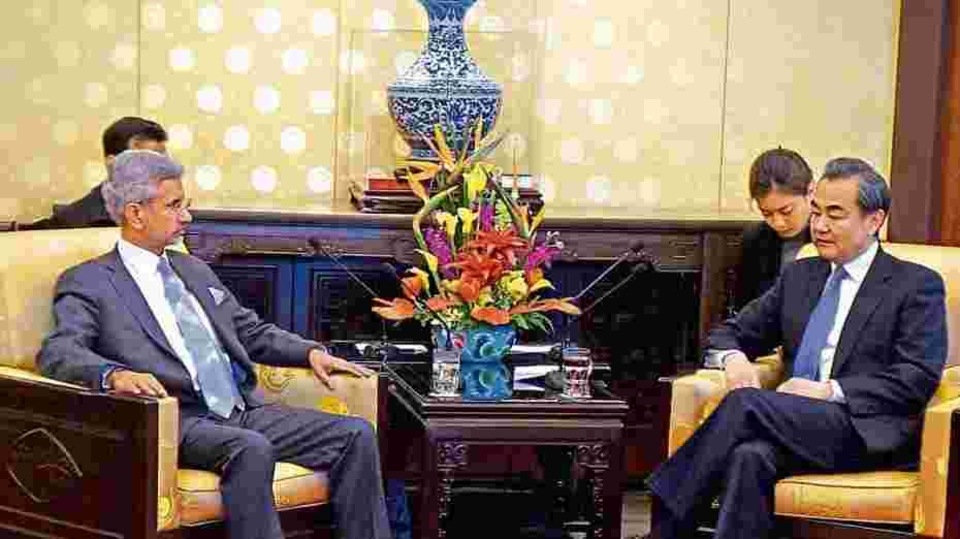
In his 75-minute conversation with China’s Wang Yi on Thursday, the external affairs ministry said S Jaishankar underlined the need to extend the disengagement of the armies near Pangong Tso to other friction points in the East Ladakh sector, asserting that prolonging the friction along the border does not serve either India or China.
Jaishankar’s blunt message emphasised to Wang Yi during their conversation was that disengagement and de-escalation was the only way out.
Also Read: ‘De-escalation in Ladakh is a long way off’: General Naravane
“Normalcy and a border dispute cannot run parallelly as Beijing wants,” said a senior South Block official. “China has not told India why it attempted to change the status quo at Pangong Tso in May 2020 and why it withdrew 10 months later," he said.
Jaishankar, the official said, presented his diagnosis of the hurdles to the normal resumption of bilateral ties in his conversation with Wang, and the steps needed to turn back the clock.
Jaishankar noted, according to a readout of the statement, that bilateral relations between the two countries had already been impacted due to China’s unilateral attempts to alter status quo at the border and according to a readout of the phone conversation by the Indian side.
The Indian statement, issued on Friday hours after the Chinese foreign ministry put out its version of the phone call between the foreign ministers, quoted Jaishankar stressing the need to disengage quickly from other friction points on more than one occasion during the phone call.
The Indian Army and China’s People’s Liberation Army pulled back troops, armoured vehicles and artillery from strategic heights around Pangong Tso last week. The first part of the disengagement was completed last Friday.
Military commanders of the two armies held a marathon 10th round of talks the following day (February 20) - it continued for 16 hours - to discuss disengagement at other friction points, Depsang, Hot Springs and Gogra. There has, however, not been an announcement on extending the disengagement to other sectors yet.
Jaishankar’s stress on quick disengagement from other friction points came in this context, a contrast to the continuing Chinese thrust on treating the border dispute as a reality that Beijing wants to be placed at an appropriate position in bilateral ties. In diplomatic jargon, it is a suggestion that New Delhi shouldn’t let the border dispute stand in the way of the bilateral relations getting back on track, particularly economic relations.
The Indian statement, quoting Jaishankar, said: “A prolongation of the existing situation was not in the interest of either side. It was, therefore, necessary that the two sides should work towards early resolution of remaining issues. It was necessary to disengage at all friction points in order to contemplate the de-escalation of forces in this sector. That alone will lead to the restoration of peace and tranquillity and provide conditions for progress of our bilateral relationship.”
Jaishankar prefaced his outright emphasis on quick disengagement by recalling his September 2020 conversation with Wang Yi in Moscow where he expressed “concern on provocative behaviour and unilateral attempts of the Chinese side to alter status quo”. At this meeting held six months earlier, Jaishankar recalled that both sides agreed that the two militaries should disengage “quickly” and ease tensions.
“Noting the completion of disengagement in Pangong Lake area, EAM emphasized that both sides should now quickly resolve the remaining issues along the LAC in Eastern Ladakh,” New Delhi said. Once disengagement is completed at all friction points, then the two sides could also look at broader de-escalation of troops in the area and work towards the restoration of peace and tranquillity.
“EAM said that Boundary Question may take time to resolve but the disturbance of peace and tranquillity including by violence, will inevitably have a damaging impact on the relationship,” the external affairs ministry statement said.


