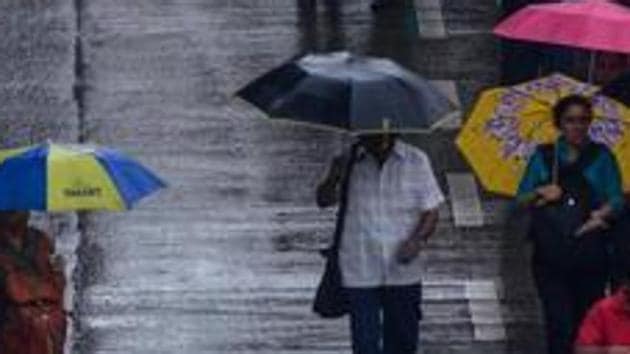
There were 1,000 “extreme rain events” in the first 12 days of August, according to data collated by Centre for Science and Environment (CSE) from the India Meteorological Department. IMD describes “extremely heavy rain events” to be more than 20cm rain in a day and “very heavy rainfall events” to be more than 12cm rain in a day.
CSE head Sunita Narain red-flagged the rise in extreme weather events and how they are going to exacerbate land degradation in future at a media briefing on desertification.
Calling on the attention of leaders gathered at the 14th Conference of Parties to the United Nations Convention to Combat Desertification (UNCCD) being hosted by India between September 2 and 12, Narain said, “We are seeing extremely heavy rain in very few number of days. There were 1,000 extremely heavy rain events in the first 12 days of August and data shows rain has been as extreme as up to 3,000% more rain in a day. There were droughts and floods in the same state this monsoon. We have documented unusually high spikes in rainfall for several states. Nature’s revenge is on us.”
She gave the example of Maharashtra and Kerala, which have experienced both floods and drought this monsoon. “Not climate change alone, our mismanagement of resources is exacerbating impacts. Let’s not let leaders blame the extreme events on the inevitable,” she said.
{{/usCountry}}She gave the example of Maharashtra and Kerala, which have experienced both floods and drought this monsoon. “Not climate change alone, our mismanagement of resources is exacerbating impacts. Let’s not let leaders blame the extreme events on the inevitable,” she said.
{{/usCountry}} 
IMD Pune’s data supports Narain’s suggestion that this year has been particularly stark in terms of extreme rainfall events. According data with IMD Pune, the number of heavy and extremely heavy rainfall days was the highest in August and July of this year compared to the past four years. There were 1,269 weather stations reporting very heavy and extremely heavy rain in August, of which 282 were extremely heavy rainfall events. In July, 914 stations recorded very heavy and extremely heavy rain, of which 161 were of extremely heavy rain events.
“This year has been particularly severe. It supports the pattern we are seeing and have reported in the past that heavy and extremely heavy rainfall events are going up. Stations from Maharashtra reported a lot of extreme heavy rainfall events this August,” said Pulak Guhathakurta, Head, Climate Application and User Interface.
The increase in extreme rainfall events links up with land degradation because one of its major causes is soil erosion. Soil aridity is also increasing in India with rise in land temperature, experts said.
SD Attri, IMD deputy director general, who also presented at the briefing, said, “There is no doubt that climate change is affecting rainfall and weather patterns. It’s obvious from the increase in heat and cold waves.” Attri referred to data that shows a shift in the break monsoon period during monsoon (when the monsoon trough shifts closer to the Himalayan foothills and the plains are largely dry). The break days during monsoon were higher during August until 1947 but since then more breaks are being recorded in July, which is also the sowing season. Until 1990, there were about 500 heat wave episodes on an average annually, which has increased to about 670 annually between 2000 and 2010.