E-Paper



In matters of liberty, delay of even one day is a day too many: Supreme Court
SC has once again underscored the critical need to maintain a balance between ensuring a fair trial and avoiding undue punishment.

 Prefer HTon Google


New Delhi: Depriving a person of their liberty, even for a single day, is a day too many, the Supreme Court said on Wednesday, as it ordered the immediate release of a man who had been granted bail but was required by the Patna high court to spend six months in custody before he could be let out.
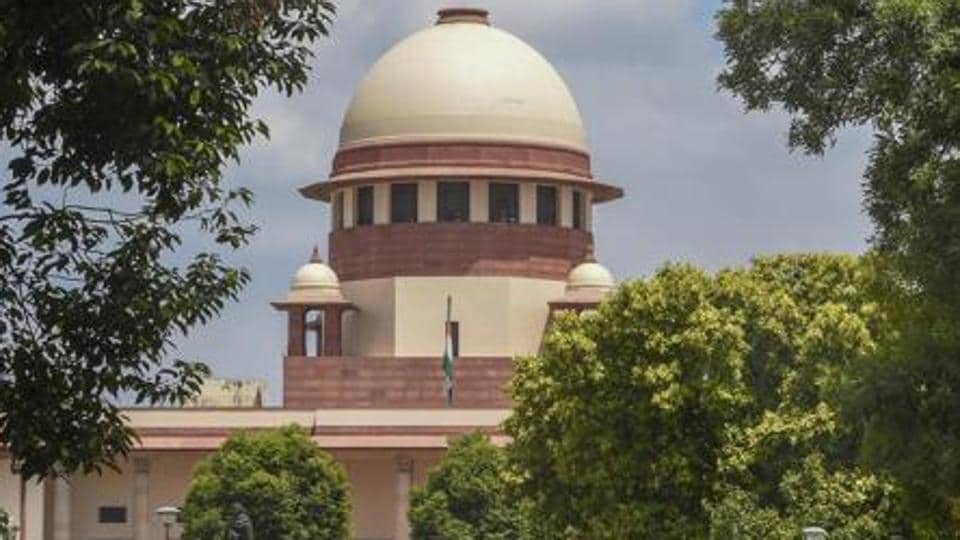
A bench, led by justice Surya Kant, set aside the Patna high court’s condition, asserting that personal liberty should be upheld without undue delay while adding that the process of justice should not turn into punishment.
“In matters of liberty, even one day delay is a day too many... One cannot be deprived of liberty even for a single day. The process should not become punishment. It’s a matter of personal liberty and constitutional right,” observed the bench, also comprising justices Dipankar Datta and Ujjal Bhuyan.
Taking a grim view of the high court’s order that required the man, accused in a prohibition case, to spend six months in jail before being allowed to furnish a bail bond, the bench quashed this condition and directed his immediate release.
“In the facts of the case, we set aside the Patna high court direction that he can furnish bail bond after spending six months behind bars. He must be set at liberty forthwith,” the bench ordered.
The court further mandated that the accused shall cooperate with the trial process, appear before the trial court on all scheduled dates, and ensure there is no delay in the proceedings. Given that the accused had previous criminal cases, the bench remarked that any further infractions would be taken seriously and could lead to adverse consequences.
With this order, the Supreme Court has once again underscored the critical need to maintain a balance between ensuring a fair trial and avoiding undue punishment through prolonged legal proceedings.
In a series of recent judgments, the top court has reaffirmed the principle that bail should be the norm, with jail being an exception, even in cases involving stringent laws like the Unlawful Activities (Prevention) Act, or UAPA, and the Prevention of Money Laundering Act (PMLA). The apex court has also urged lower courts to exercise caution when staying bail orders, highlighting the importance of upholding personal liberty.
On Monday, the Supreme Court ruled in a landmark judgment that a person already in custody for one offence can still seek anticipatory bail for a different offence, asserting that the right to personal liberty under Article 21 of the Constitution must be safeguarded unless specifically restricted by law. In another order on the same day, the court underscored that an accused is entitled to a fair and speedy trial, as guaranteed by Article 21, and that the legal process should not be allowed to turn into a form of punishment.
The present case stemmed from an order passed by the Patna high court on July 25, 2024, in which the court granted Vikash Kumar Gupta bail but with the caveat that he could only furnish his bail bond after completing six months of imprisonment.
Gupta was booked under the Bihar Prohibition and Excise Amendment Act, 2016. The prosecution claimed that 231.6 liters of countrymade and foreign liquor were recovered from three motorcycles, one of which was being driven by Gupta at the time of the recovery. But Gupta, who had been in custody since June 14, maintained his innocence, contending that he was falsely implicated.
The Supreme Court’s order on Wednesday underscores a broader principle of law -- that bail conditions should not be so onerous that they effectively become punitive. While the top court acknowledged that the petitioner had previous run-ins with the law, it stressed that this could not justify a bail condition that extended his deprivation of liberty unnecessarily.