After the British left India, a small number of Anglo-Indians found themselves in the midst of a changing society. Former model and actor now turned photographer, Karan Kapoor, born to actors Shashi Kapoor and Jennifer Kendal, witnessed this first hand.
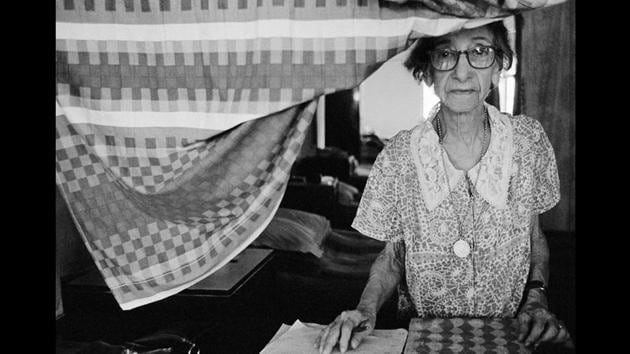
Kapoor’s photographs mirror the lives portrayed in them and there’s little distance between him and his subjects, as they reveal their intimate selves with effortless ease. Unmistakably old world in their overall aesthetic, the photographs from Bombay (now Mumbai) seem like they would rather refrain from responding to time. The Portuguese influence is noticeable in his images of Goa and the intentional slowdown that film lends to his work is charming.
His preoccupation with the elderly is balanced by his observation of the young. As one of his earliest personal projects, the work reveals his interest in the social fabric of that decade. “I was more interested in the older generation as they seemed to be the last remaining remnants of the British Raj- people who remembered the railway cantonments, the Marilyn Monroe lookalike contest, the ‘Central Province,’ and so on, a world long gone.”
The two young boys on a scooter in Goa from 1994 is also a fine illustration of that. Knowing that Goa has changed significantly since then, his photographs become almost evidential as well as historical.
{{/usCountry}}The two young boys on a scooter in Goa from 1994 is also a fine illustration of that. Knowing that Goa has changed significantly since then, his photographs become almost evidential as well as historical.
{{/usCountry}}Time & Tide is accompanied by a new book published by Tasveer, with reproductions of all the photographs from the show and essays by William Dalrymple and Felicity Kendal.
For people interested in the history of culture, this work will definitely bridge the gap between the past and the present, and yet make Goa, Kolkata and Mumbai unrecognizable as they know them today.