India and Canada reviewed security cooperation and agreed to enhance coordination in combating transnational organised crime, terrorism, drug trafficking and the extradition of criminal offenders at a meeting of National Security Adviser Ajit Doval and his Canadian counterpart David Morrison.
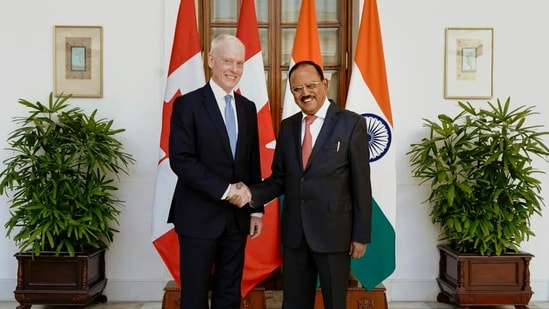
Morrison, who holds the position of senior diplomatic and international affairs advisor to Canada’s PM, visited India during October 5-7. The dialogue between Doval and Morrison, which has emerged as a key mechanism for addressing the security concerns of both sides, was held on Tuesday.
Also Read | India and Canada can create human capital for the future
The two security officials reviewed progress in bilateral security and law enforcement cooperation, including implementation of a shared “security work plan” concluded in February 2026, the two sides said in joint statement on Wednesday.
Deep Dive
What areas of cooperation did India and Canada agree to focus on to combat organized crime?
Why is the extradition of criminal offenders a key focus in India-Canada relations?
How will India and Canada improve communication on security concerns?
The two sides agreed to deepen coordination and cooperation in combating transnational organised crime, terrorism and violent extremism, human and drug trafficking, cybercrime, extortion and the extradition of criminal offenders, the statement said.
They further agreed to identify additional areas for practical cooperation, including the possible establishment of structured dialogues on cyber security and economic security. Both sides also agreed to strengthen existing institutional mechanisms and establish new channels to facilitate “streamlined communication and timely information-sharing on matters of mutual concern”.
{{/usCountry}}They further agreed to identify additional areas for practical cooperation, including the possible establishment of structured dialogues on cyber security and economic security. Both sides also agreed to strengthen existing institutional mechanisms and establish new channels to facilitate “streamlined communication and timely information-sharing on matters of mutual concern”.
{{/usCountry}}Also Read | Canada drops report calling India ‘2nd most pervasive’ foreign interference perpetrator
Security issues were at the core of a downturn in India-Canada ties after former Canadian PM Justin Trudeau alleged in September 2023 that Indian government agents were linked to the murder of Khalistani separatist Hardeep Singh Nijjar. India dismissed the accusation as “absurd” but the issue sent relations into a tailspin.
India’s main concern is the activities of Khalistani elements based in Canada and their links to organised crime, while Canada has raised the operations of transnational criminal gangs with ties to India.
Security officials of the two sides held several meetings even before Canadian PM Mark Carney’s election last year to put the relationship on an even keel and two rounds of the bilateral security dialogue at the NSA-level were held in New Delhi in September 2025 and in Ottawa in February 2026.
The joint statement said both sides were satisfied with the “sustained and constructive” engagements over the past year, which were guided by mutual trust, respect for each other’s concerns and sensitivities, and a shared commitment to strengthen bilateral ties.
Also Read | India, Canada race to seal trade deal; trade minister to visit New Delhi again in October
They also welcomed efforts to advance negotiations for a comprehensive economic partnership agreement and discussed the “growing potential for advancing a substantive bilateral defence relationship”. The two sides also exchanged views on regional and global developments.